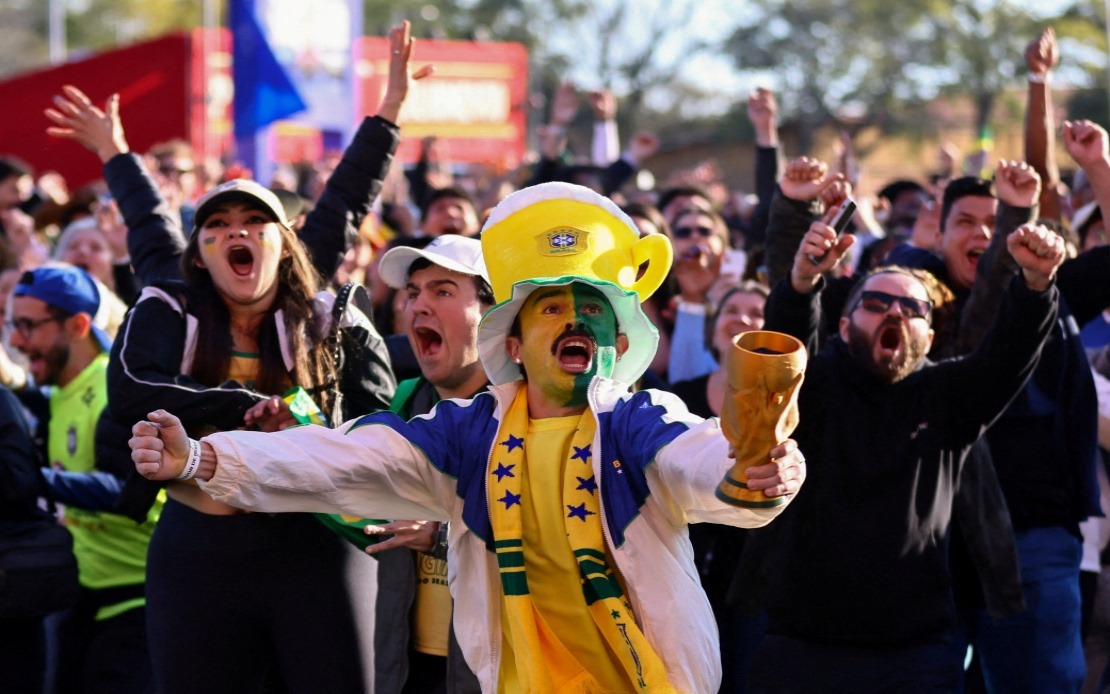
Brazil mounted a stunning second-half comeback to overturn a first-half deficit against Japan, securing a 2-1 victory at Houston Stadium and advancing to the Round of 16 of the 2026 FIFA World Cup. The result ended Japan's hopes of achieving their first World Cup knockout victory, leaving the Samurai Blue to exit the tournament having come tantalizingly close to rewriting their tournament history. For the Selecao, the win sets up a Round of 16 encounter against either Norway or Ivory Coast.
The opening 45 minutes painted a picture of tactical discipline overwhelming attacking ambition. Japan adopted a compact 5-4-1 defensive formation that effectively neutralized Brazil's traditional flair and possession-based approach. The defensive shape left minimal space in wider areas, forcing the Brazilians to recycle possession without finding the penetrating passes that typically unlock their attacking potential. Despite dominating the ball, Carlo Ancelotti's side found themselves unable to generate clear-cut opportunities, their rhythm repeatedly disrupted by Japan's organized resistance.
Japan's reward for their defensive organization came through a moment of individual brilliance in the 29th minute. Kaishu Sano capitalized on a loose pass from Danilo, intercepting the ball and driving forward before unleashing a low drive from outside the penalty area that sailed past goalkeeper Alisson into the far corner. The finish showcased composure and technical quality, marking Sano's maiden goal for his national team at the most significant stage of international football. Japan's players and supporters erupted in celebration, suddenly finding themselves one win away from a landmark achievement.
The significance of Japan's position at halftime extended beyond mere scoreline advantage. A first-ever World Cup knockout victory represented a cultural milestone for Japanese football, a tangible measure of their evolution since their inaugural tournament participation in 1998. The Samurai Blue had steadily improved their World Cup pedigree over successive tournaments, but the knockout barrier remained elusive. As they entered the dressing room with their lead intact, they stood 45 minutes from breaking that historic ceiling and establishing themselves as genuine tournament contenders.
Brazil's second-half transformation reflected the technical adjustment and psychological determination that has defined their footballing tradition. The Selecao emerged with visibly greater aggression and directness, abandoning their measured possession approach in favor of attacking width. Crosses rained into Japan's penalty area with increasing frequency, and the back post became a zone of particular vulnerability for goalkeeper Zion Suzuki and his defensive colleagues. The intensity shift represented both a tactical recalibration and a statement of intent from a team accustomed to overcoming adversity.
The equalizer arrived in the 56th minute when the superiority of Brazil's second-half approach bore fruit. Gabriel Magalhaes delivered a precise cross from the left flank that found Casemiro rising above the Japanese defense at the far post. The midfielder's downward header left Suzuki no chance, restoring parity and breathing new life into the Brazilian contingent in the stadium. The momentum had visibly shifted, with Japan suddenly forced to manage Brazil's heightened attacking rhythm rather than dictate terms through defensive organization.
The dramatic conclusion unfolded in stoppage time when Bruno Guimaraes became the architect of Brazil's fortunes. The midfielder collected the ball on the edge of Japan's penalty area and drove infield before executing a precisely-weighted pass into the path of Gabriel Martinelli. The winger took a touch before unleashing a shot that beat Suzuki despite the goalkeeper's desperate attempt to block it in the 90th minute of regulation play. The late timing of Brazil's winning goal transformed what had been an absorbing tactical contest into heartbreak for Japan's supporters and a reprieve for the Selecao.
The result carried profound implications for both nations' tournament trajectories. Brazil, despite their early struggles against disciplined opposition, demonstrated the ability to impose themselves through sustained pressure and clinical finishing—attributes essential for deep tournament runs. Their path to the final now leads through either Norway or Ivory Coast, opponents they will face with renewed confidence following their comeback capability on display in Houston. The victory vindicated Ancelotti's approach and suggested that Brazil's tournament window remains wide open despite an opening-stage challenge.
For Japan, the loss represented a missed opportunity rather than a failure to compete. The Samurai Blue's organizational discipline and Sano's composed finishing proved insufficient against a side possessing greater resources in the attacking third. The encounter demonstrated that Japan remains a competitive force at international level, capable of frustrating traditional powerhouses and creating genuine scoring opportunities. However, the tournament's knockout stages demand a capacity for sustained excellence across both phases of play—something that Japan could not quite deliver when it mattered most. Their exit reflects the thin margins separating tournament progression from elimination at the world's premier football competition.

