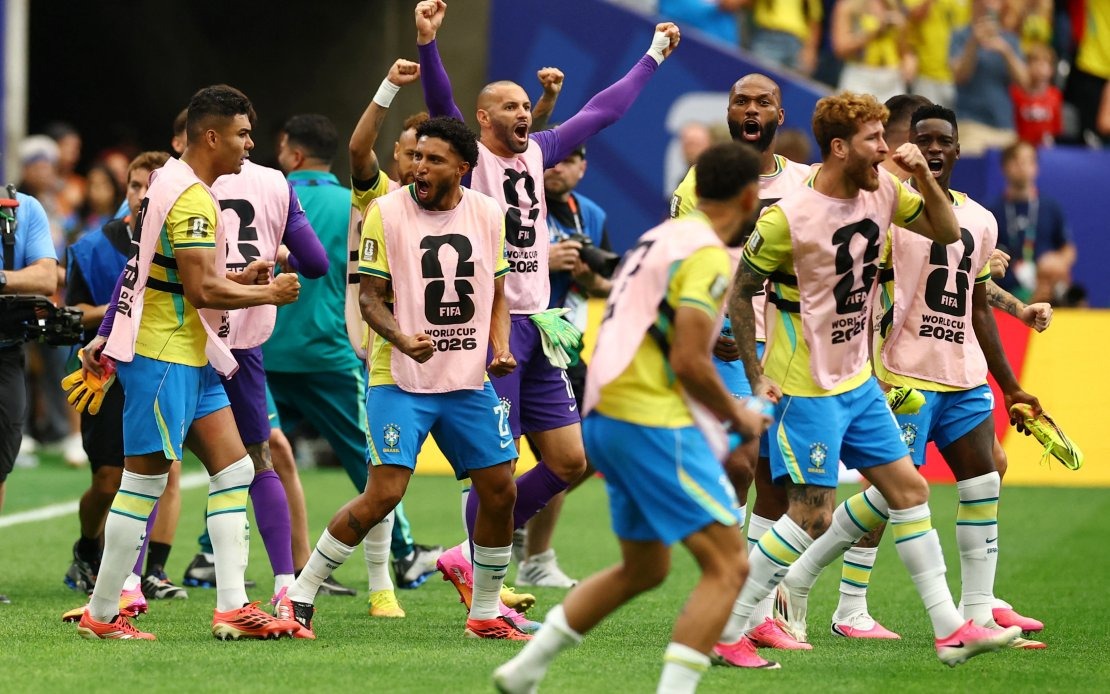
Brazil's five-time World Cup champions narrowly escaped elimination in Houston on Monday evening, recovering from a deficit to defeat Japan 2-1 in a tense round-of-32 encounter. Gabriel Martinelli delivered the decisive blow in stoppage time, securing Brazil's passage to the knockout's second phase and setting up a last-16 clash with either Côte d'Ivoire or Norway. The contest showcased the unpredictability that has come to characterise modern World Cup football, where defensive discipline and clinical finishing often matter as much as technical supremacy.
Both nations arrived at this fixture with perfect group-stage records, a rarity in tournament football that elevated expectations around their mutual talent. Brazil topped Group C with an impressive seven points from their games, demonstrating the attacking potency and defensive solidity that has defined their squad. Japan's journey proved equally impressive, finishing second in Group F with one victory and two draws—a result that confounded many pre-tournament predictions about Asian teams' prospects in the global championship. The contrast in their recent history added narrative tension: Brazil's sole previous World Cup meeting ended in a convincing 4-1 victory, yet Japan had remarkably overturned that dynamic by winning 3-2 in their most recent encounter last year, suggesting the South American giants could not take anything for granted.
For most of the opening quarter-hour, Brazil's technical superiority manifested in sustained possession and territorial dominance. Matheus Cunha generated the match's first genuinely threatening moment in the 14th minute, forcing goalkeeper Zion Suzuki into an awkward one-handed save that indicated Japan's back line would face considerable pressure. Brazil's control appeared to be moving inexorably towards an opening goal, yet World Cup football frequently rewards the patient opportunist rather than the perennial favourite.
Japan's breakthrough arrived unexpectedly in the 29th minute through a sequence that revealed Brazil's vulnerability to swift transitions. Danilo's misplaced pass became the crucial turning point, offering Kaishu Sano the opportunity to intercept and accelerate forward. Sano's burst of pace unsettled the Brazilian midfield as he swept past Casemiro, before unleashing a thunderous strike that found its way past Alisson's reach. The goal silenced the stadium and shifted momentum decisively toward the underdogs, who now possessed not merely hope but tangible evidence that they could compete at the tournament's highest level.
Brazil's response in the ensuing minutes lacked the usual incisiveness. Despite manufacturing several promising positions, their finishing proved uncharacteristically blunt, with few attempts genuinely testing Suzuki's reflexes. This pattern persisted into the second half initially, where Bruno Guimaraes saw a strike denied and Casemiro's header faced a crucial block. The Seleção appeared frustrated by their inability to convert dominance into goals, a psychological pressure that mounted with each passing minute.
The breakthrough arrived in the 56th minute through a moment of redemption for Casemiro, who had earlier struggled defensively. Guimaraes delivered a precisely weighted cross that found the midfielder arriving unmarked at the far post, where he headed firmly beyond Suzuki to restore parity. Brazil's equaliser appeared to energise their attacking movements, with Vinicius Jr producing a moment of individual brilliance moments later as he wove past multiple defenders in a mazy run that ended agonisingly with a strike against the post—a near-miss that demonstrated how fine the margins remain in elite competition.
Brazil's relentless pushing for a winner tested Japan's increasingly fatigued defensive lines. The pattern appeared destined to extend beyond regular time, yet stoppage time delivered the dramatic conclusion that had seemed unlikely. Guimaraes' incisive pass found Martinelli unmarked in the penalty area, and the young attacker demonstrated composure under pressure by calmly finishing past Suzuki in a one-on-one situation. The goal triggered celebrations that reflected not merely relief but vindication of Brazil's superiority in possession and attacking intent across the ninety minutes.
Japan's desperate attempts to engineer a late equaliser came too late in the match's timeline, leaving them to reflect on a spirited performance that ultimately fell short against a technically superior outfit. For Brazil, the victory avoided a potential embarrassment and maintained their World Cup credentials, though the narrow margin suggested complacency could prove costly in subsequent rounds. The match exemplified how modern tournament football rewards patience and precision in the final moments, with the difference between advancing and elimination sometimes determined by a single pass and finish in stoppage time.

