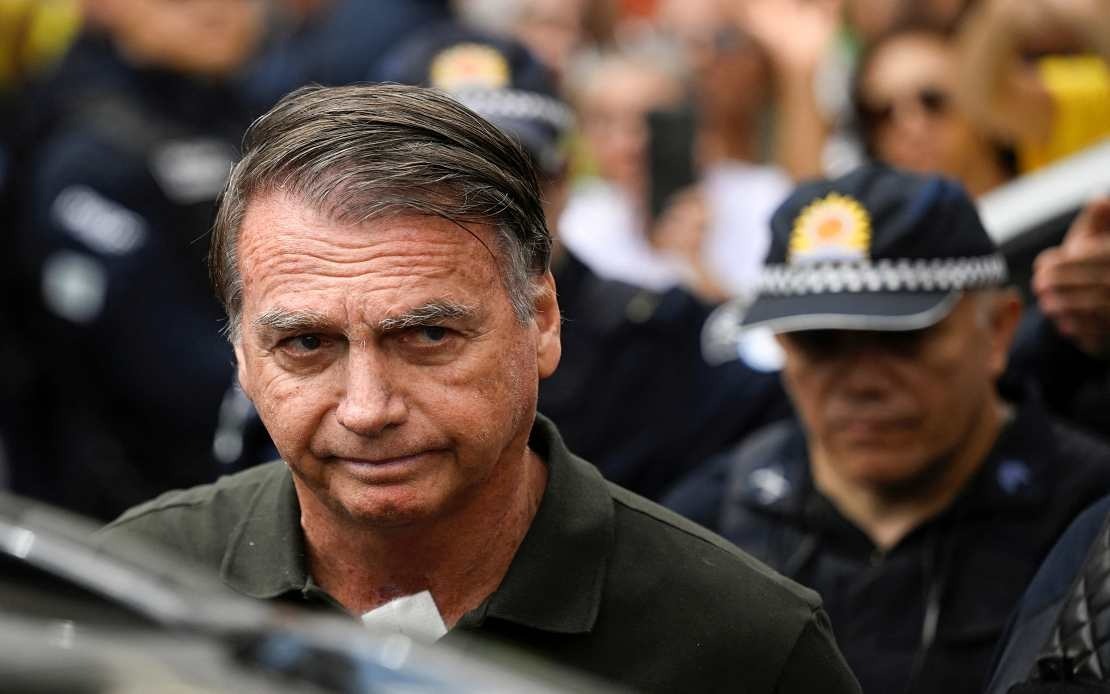
A Brazilian court has blocked Argentine President Javier Milei from meeting with former Brazilian leader Jair Bolsonaro at his home in Brasília, rejecting the diplomatic visit just one day after imposing stricter conditions on Bolsonaro's house arrest. Judge Alexandre de Moraes declined the request on procedural grounds, citing newly implemented restrictions that prohibit the detained former president from receiving politically motivated visitors until after October's election concludes.
The planned meeting was scheduled for July 25, with Milei having announced intentions to travel to Brazil specifically to support Bolsonaro and demonstrate backing for the former president's son, Flávio Bolsonaro, who is pursuing his own presidential campaign. The visit would have represented a significant show of solidarity between two of South America's most influential right-wing political figures, both of whom have cultivated strong followings among conservative voters across the continent.
Judge Moraes substantially tightened Bolsonaro's house arrest terms on the day before the planned Milei visit, implementing a sweeping ban on all political and electoral communications until the presidential election concludes in October. The ruling also extended restrictions to prevent the former president from disseminating political messages indirectly through third parties, effectively isolating him from campaigning activities during this critical electoral window. The court dismissed the defence team's request to allow the Milei meeting as lacking merit under these revised circumstances.
The catalyst for these intensified restrictions stemmed from a handwritten letter penned by Bolsonaro and subsequently published on social media by his son Flávio, in which the former president explicitly endorsed his son's presidential ambitions. Brazilian authorities determined that this message violated the original terms of his house arrest, prompting Judge Moraes to respond with the comprehensive ban on future political interactions and communications.
Bolsonaro, a former two-term president, currently serves his house arrest sentence due to health considerations, having been convicted of attempting to orchestrate an illegal power seizure and sentenced to over 27 years imprisonment. His confinement to his residence represents a middle-ground arrangement between imprisonment and freedom, though with increasingly restrictive conditions that effectively curtail his political involvement during a pivotal election period when his influence could materially affect outcomes.
The presidential race looming in October shapes the entire political calculus surrounding this decision. Incumbent President Luiz Inácio Lula da Silva intends to seek another term and will likely face Flávio Bolsonaro as his primary challenger. With the elder Bolsonaro's substantial political clout and devoted supporter base, any opportunity for him to campaign or publicly endorse his son's candidacy could significantly impact the election dynamics. The court's intervention reflects these electoral stakes and represents an effort to neutralise what authorities may view as an unfair advantage derived from a sitting former president's mobilisation of his political machinery.
For Argentine observers, the blocked visit underscores the complex relationship between right-wing political movements across South America and their varying legal vulnerabilities. Milei, as Argentina's libertarian-leaning president, has cultivated a regional profile emphasising anti-establishment credentials and opposition to what he characterises as excessive state intervention. His planned solidarity mission to Brazil would have positioned him as a champion of persecuted conservative leaders, potentially strengthening his political brand domestically and across conservative circles throughout the continent.
The timing and intensity of Brazil's restrictions also illuminate the broader tension between judicial independence and democratic governance in Latin America. Judge Moraes has become a controversial figure, with critics alleging that his decisions disproportionately target right-wing political figures and limiting their freedoms in ways that progressives interpret as defending democratic institutions from attempted subversion. Supporters contend his actions prevent genuinely dangerous threats to constitutional order, while opponents characterise them as selective legal persecution that erodes the principle of equal treatment under law.
The incident reflects deeper regional patterns regarding political imprisonment and electoral restrictions. Several South American nations have navigated complex questions about whether and how to prosecute former leaders accused of serious constitutional violations. These decisions frequently carry implications extending beyond individual cases, affecting the legitimacy of legal institutions themselves and the perception of whether courts function as neutral arbiters or instruments of political struggle. The broader Latin American community watches closely as such cases unfold, recognising their precedential weight for democratic norms and rule-of-law principles.
For Malaysia's political observers, the Brazilian situation offers cautionary lessons regarding judicial management of political crises and the risks that overly aggressive interventions—however well-intentioned—may ultimately delegitimise legal institutions rather than strengthen them. The case also demonstrates how electoral anxieties can prompt courts to expand restrictions on political communication and association, raising questions about proportionality and whether such measures genuinely protect elections or merely shield particular candidates from competitive disadvantage.
Moving forward, Bolsonaro's legal situation remains precarious, with potential appeals and further restrictions possible as October's election approaches. His son's presidential campaign must navigate the reality that its most prominent advocate remains judicially silenced, potentially limiting the electoral advantages that the Bolsonaro name and legacy might otherwise provide. The blocked Milei visit symbolises the extent to which Brazil's courts have intervened in electoral processes, a development with significance extending far beyond immediate diplomatic arrangements.

