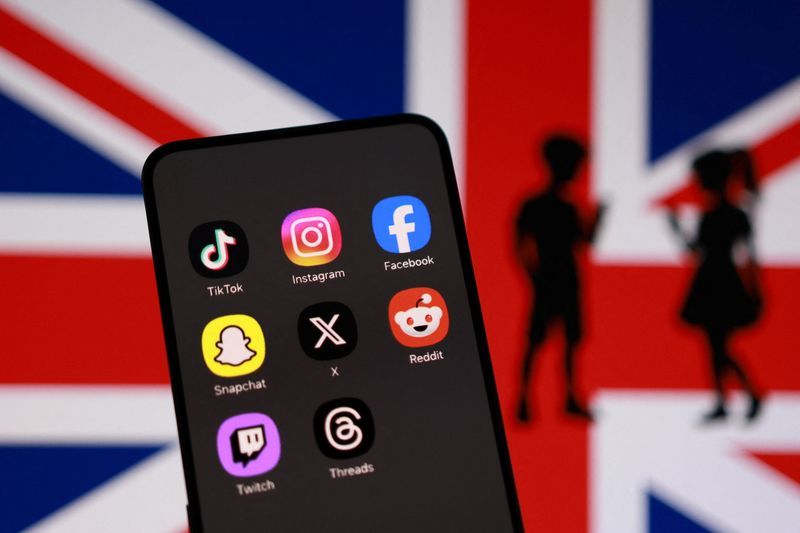
Britain is moving to impose a mandatory overnight curfew on social media use for teenagers aged 16 and 17, following through on its commitment to reshape how young people interact with digital platforms. Announced on Tuesday, the measure would automatically block users in this age group from accessing social media applications between midnight and 6 a.m., compelling them to actively change their settings if they wish to continue scrolling during those hours. This initiative represents the second phase of the government's digital safeguarding agenda, arriving just one month after it revealed plans for a complete ban on social media use by anyone under 16.
Under the proposed framework, technology platforms would be legally mandated to disable features specifically designed to encourage prolonged engagement—such as autoplay recommendations and notification systems—during the overnight period. The responsibility for compliance falls squarely on the companies themselves, with Online Safety Minister Kanishka Narayan emphasising that enforcement will be rigorous. Speaking to LBC Radio, Narayan stated that tech firms would face "very severe regulatory sanction" should they fail to implement the curfew effectively. He also stressed that platforms must strengthen their age-verification procedures, suggesting that inadequate checks have historically undermined similar regulatory efforts.
The government's rationale centres on protecting adolescent wellbeing during critical developmental years. Technology Minister Liz Kendall framed the measures as essential tools for ensuring teenagers obtain sufficient sleep, maintain focus on their education, and nurture offline relationships with family and peers. Sleep deprivation among young people has become an acute concern for educators and parents across the developed world, with research increasingly linking excessive evening screen time to mood disorders, anxiety, and academic underperformance. The curfew mechanism attempts to address this by creating friction that makes late-night scrolling require deliberate action rather than passive default behaviour.
However, the plan has drawn immediate criticism from the opposition Conservative Party. Laura Trott, the party's education policy spokesperson, dismissed the approach as internally contradictory and ineffective. She argued that if the government truly believed 16 and 17-year-olds should not use social media, an easily-disabled curfew would prove toothless. Her remarks highlight a fundamental tension in the proposal: whether default restrictions that users can circumvent serve as genuine safeguards or merely performative gesture designed to appease concerned constituencies without substantially altering behaviour patterns.
This concern gains weight when examining implementation challenges elsewhere. Australia, which recently became the first country to enact a blanket social media ban for under-16s, has encountered significant obstacles in enforcement. An independent review team discovered that major platforms are failing at the most elementary stage of compliance—age verification—meaning the ban itself has been compromised before any substantive restrictions can take effect. If established technology companies cannot reliably confirm user ages, the prospect of successfully implementing more nuanced measures like curfews becomes considerably more uncertain.
The timeline for British implementation remains lengthy. Legislation will be presented to parliament before the year concludes, with actual enforcement anticipated in spring 2027. This extended horizon provides platforms time to develop and integrate the necessary systems, yet also represents a considerable delay between announcement and tangible change. For Malaysian readers and Southeast Asian policymakers tracking global regulation trends, the British model offers both a template for youth protection and a cautionary tale about enforcement realities.
Social media companies have yet to publicly comment on the proposed rules. Meta, ByteDance, and Google—the owners of Instagram, TikTok, and YouTube respectively—are presumably evaluating the commercial and technical implications of mandatory compliance. Their historical reluctance to implement robust age restrictions, combined with profitable engagement-maximisation algorithms that directly contradict sleep-friendly platform design, suggests potential friction during implementation. Recent legal settlements, including separate cases brought by a minor against both Google and TikTok in the United States alleging mental health damage, indicate growing judicial and regulatory pressure on these corporations globally.
The British approach reflects worldwide recognition that social media's impact on adolescent mental health constitutes a legitimate policy concern. From the United States to Australia to Europe, governments are increasingly moving beyond voluntary industry self-regulation toward mandated restrictions. Malaysia and other Southeast Asian nations monitoring these developments should consider how different enforcement mechanisms perform in practice. The gap between policy design and real-world compliance often determines whether safeguarding measures meaningfully protect young people or simply create the appearance of action.
What distinguishes Britain's strategy is its attempt at graduated responsibility based on age—complete prohibition for under-16s, modified access with built-in friction for 16-17 year-olds. This graduated approach theoretically acknowledges developmental differences while maintaining protective guardrails. Yet whether platforms will genuinely prioritise teen welfare over engagement metrics remains an open question. The coming years will reveal whether defaults prove sufficiently powerful to shift behaviour, or whether regulatory frameworks require more fundamental restructuring of how these platforms operate.

