British Columbia faces an ongoing crisis as a devastating wildfire that has consumed more than 100 square kilometres remains beyond the control of firefighting authorities, though officials reported on Sunday that the rate of expansion is beginning to diminish. The uncontrolled fire has displaced more than 20,000 residents from their homes and destroyed or threatened infrastructure across a wide swathe of the province, marking one of the most severe fire events to strike the region in recent times.
The progression of the wildfire has pushed towards Okanagan Lake, a significant geographical feature that appears to be slowing the fire's advance. This development offers some modest relief to emergency responders who have been battling against challenging environmental conditions. The reach of the flames now threatens populated areas, with emergency services focusing resources on protecting residential areas surrounding Summerland, a community of approximately 12,000 people that remains particularly vulnerable to further spread.
The evacuation scale reveals the magnitude of the threat across the affected region. Roughly 10,000 properties have been impacted by evacuation orders, and authorities estimate that as many as 20,000 individuals have been compelled to leave their residences. In dramatic rescue operations, emergency services deployed helicopters to extract more than 50 people who found themselves trapped by advancing flames, highlighting the rapidity with which the fire has moved through populated zones. Police continue investigations into a reported fatality, though confirmatory details remain outstanding.
Canada's federal government has mobilised resources to address the humanitarian consequences of the disaster. Eleanor Olszewski, Minister of Emergency Placement Management, announced on X that a formal request for federal assistance from British Columbia authorities has been approved, committing resources towards temporary accommodation and support services for displaced residents. This coordinated response underscores the severity of the situation and the need for cross-jurisdictional cooperation in managing such large-scale emergencies.
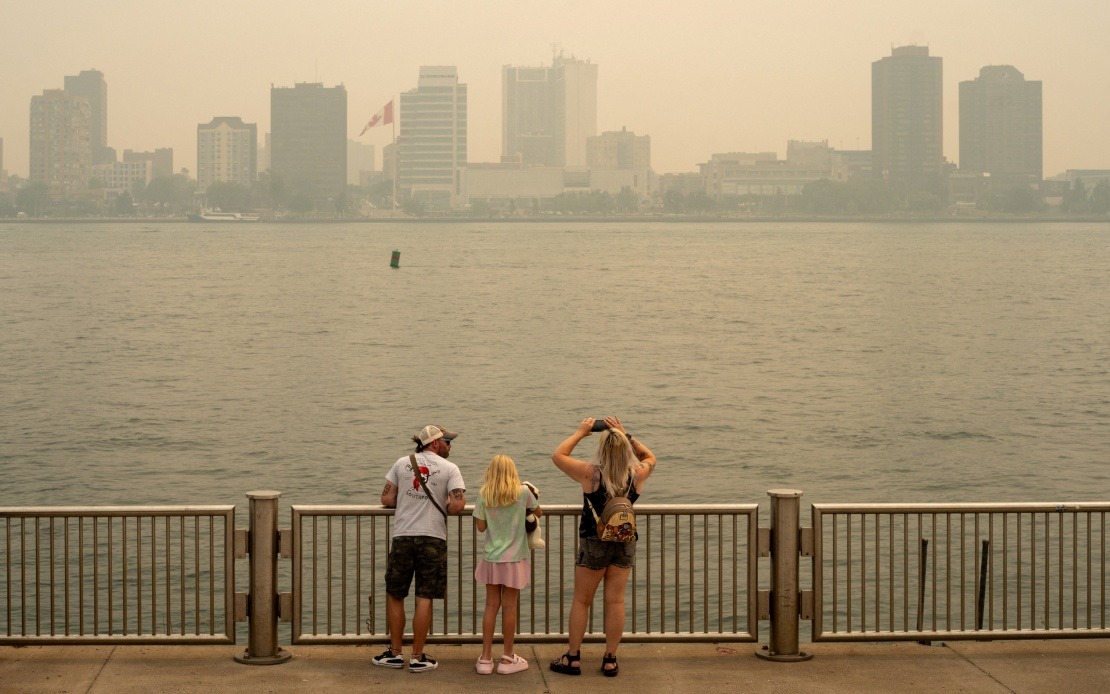
Weather conditions have emerged as a critical obstacle to containment efforts. High temperatures, persistently dry atmospheric conditions, and dense smoke blanket the fire zone, all factors that have historically accelerated wildfire behaviour and complicated suppression activities. These meteorological challenges have not only hampered the effectiveness of ground-based firefighting operations but also restricted visibility for aerial support and evacuation operations, creating compounded difficulties for emergency personnel.
International assistance has supplemented domestic firefighting capabilities, demonstrating the cross-border nature of crisis response in North America. Personnel and resources from Mexico, Australia, and New Zealand have joined Canadian emergency services in attempting to manage the blaze. Such partnerships reflect the global exchange of wildfire expertise and the recognition that contemporary fire seasons often demand multinational coordination and resource sharing.
The broader context extends beyond this single fire. British Columbia declared a provincial state of emergency on Saturday in response to numerous concurrent wildfires burning across its territory. Official tallies reveal more than 100 active fire incidents, with authorities indicating that nearly half of these remain uncontrolled. This widespread fire activity suggests systematic conditions—likely linked to prolonged drought, elevated seasonal temperatures, or fuel accumulation—that have created an environment conducive to large-scale fire proliferation throughout the province.
Canada's eastern provinces are experiencing parallel challenges. Both Ontario and Quebec have documented major wildfire incidents during the current season, indicating that elevated fire risk extends across broad geographical areas of the nation. This pattern suggests that underlying climatic or environmental factors affecting British Columbia may be influencing fire behaviour in other regions, pointing towards potential systemic pressures on Canadian forest management and emergency response systems.
For Malaysian and Southeast Asian observers, the British Columbia wildfire illustrates the escalating challenges that developed nations face in managing environmental disasters. The scale of evacuation, the deployment of international resources, and the coordination across government agencies demonstrate that even advanced economies with substantial firefighting capacity can find themselves overwhelmed by natural disasters. The implications carry particular relevance for Southeast Asia, where transboundary haze from forest fires has historically created regional environmental and health challenges. The Canadian experience underscores how vulnerable populations become when fire seasons intensify, and how preparedness requires not only domestic resources but also regional and international cooperation frameworks that Southeast Asian nations have increasingly recognised as essential.

