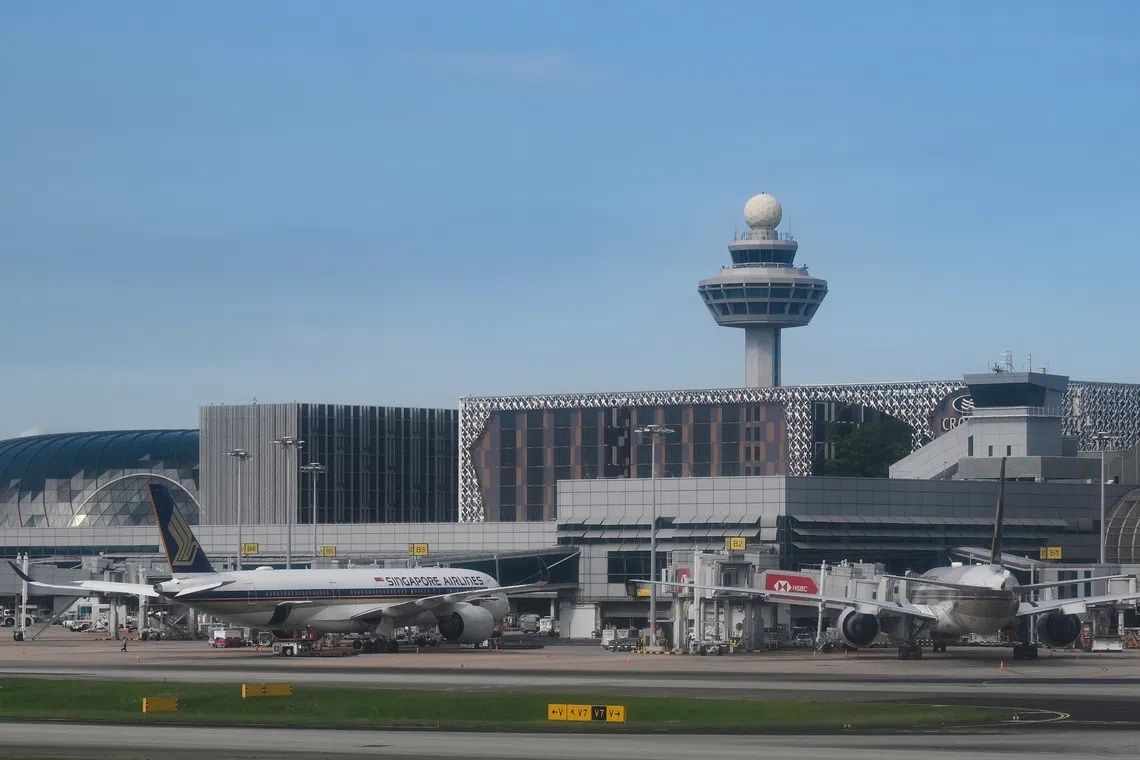
A British national aged 25 is set to face multiple charges in Singapore following a disruptive incident at Changi Airport Terminal 1 that resulted in a 45-minute delay to a flight bound for Kuala Lumpur. The case, confirmed by Singapore police in a statement released on Tuesday, August 11, underscores ongoing concerns about passenger behaviour at one of Asia's busiest aviation hubs and the safety protocols required to manage such situations.
According to police records, officers responded to a report on July 20 at approximately 4:05 pm concerning a passenger creating a disturbance at a boarding gate in Terminal 1. Initial investigations revealed that the man, believed to be intoxicated at the time, had been speaking and shouting loudly in the departure lounge, behaviour that visibly disturbed fellow passengers waiting for their connection. The incident occurred during what would typically be a routine boarding procedure, highlighting how quickly airport operations can be disrupted by individual misconduct.
When two members of airline staff approached the passenger to address his disruptive conduct, the situation escalated rapidly. The man responded with anger, directing vulgar language and abusive remarks toward one of the staff members. His refusal to comply with standard conduct expectations led the airline to make the decision to offload him from the flight due to his intoxicated state. Such measures are standard practice across international aviation, designed to ensure the safety and comfort of other passengers and crew members during flight operations.
What transpired next, however, crossed into more serious territory. After being informed of the airline's decision to remove him from the flight, the man became increasingly aggressive. He allegedly pushed past members of the airline staff in an attempt to board the aircraft despite having been officially removed. In doing so, he gained unauthorised access to a protected area of the airport—a restricted zone normally accessible only to authorised personnel and boarding passengers. During this forceful attempt, one airline staff member was knocked to the ground, sustaining injuries to her left arm and wrist that required attention.
The man's conduct did not cease once airport security became involved. He continued to behave aggressively, directing vulgarities and abusive language at airport security personnel who were attempting to manage the situation. His prolonged disruptive behaviour directly contributed to a 45-minute postponement of the flight's scheduled departure, affecting not only the passengers on his intended flight but potentially creating cascading delays for subsequent departures and operations at the terminal. The incident illustrates the operational impact that individual misconduct can have on an airport's efficiency.
Singapore's authorities have determined that the man's conduct violated multiple sections of the law. He is expected to appear in court on August 12 facing three separate charges: causing annoyance while intoxicated in a public place, using threatening, abusive or insulting words or behaviour, and unauthorised entry to a protected place at the airport. Each charge carries distinct penalties that reflect the seriousness the legal system assigns to such infractions.
Under Singapore law, conviction for causing annoyance while intoxicated in a public place carries a maximum penalty of S$1,000 in fines, imprisonment for up to six months, or both sanctions combined. The charge relating to threatening, abusive or insulting words or behaviour carries a fine of up to S$5,000. The most serious charge of unauthorised entry to a protected place—a restriction designed to maintain airport security and operational integrity—carries penalties reaching up to S$20,000 in fines and imprisonment of up to two years, or both.
For Malaysian readers and regional travellers, this incident serves as a reminder of the serious consequences that can result from disruptive airport behaviour. Singapore's strict approach to public order offences, particularly those involving airport security breaches, reflects the broader Southeast Asian approach to maintaining safety standards at critical infrastructure. The injury sustained by the airline staff member also raises questions about passenger conduct training and de-escalation procedures that airports throughout the region employ.
The case demonstrates how quickly situations can deteriorate when passengers become intoxicated at airports and refuse to comply with staff instructions. Airlines across Southeast Asia increasingly face challenges managing intoxicated passengers, leading many carriers to implement stricter policies regarding alcohol service and boarding protocols. The incident at Changi—one of the world's leading airports by passenger traffic—highlights that such problems are not confined to smaller regional hubs but affect major international aviation centres.
Chang Airport itself remains one of Asia's premier transportation gateways, handling millions of passengers annually. Maintaining order and safety at such busy facilities requires cooperation from passengers, staff, and security personnel. Incidents like this one strain those relationships and create operational challenges that ripple through schedules and affect thousands of other travellers who had no involvement in the disturbance. The 45-minute delay, while not catastrophic, represents lost time, potential missed connections, and disrupted travel plans for innocent parties.
As Singapore's courts prepare to hear this case, the proceedings will likely serve as a cautionary example for other travellers in the region. The fact that airport security zones are explicitly protected areas underscores the importance of maintaining clear boundaries between public areas and restricted zones. For airline and airport staff throughout Southeast Asia, the case reinforces that support from law enforcement and courts will back up their decisions to remove disruptive passengers and protect colleagues from harm.

