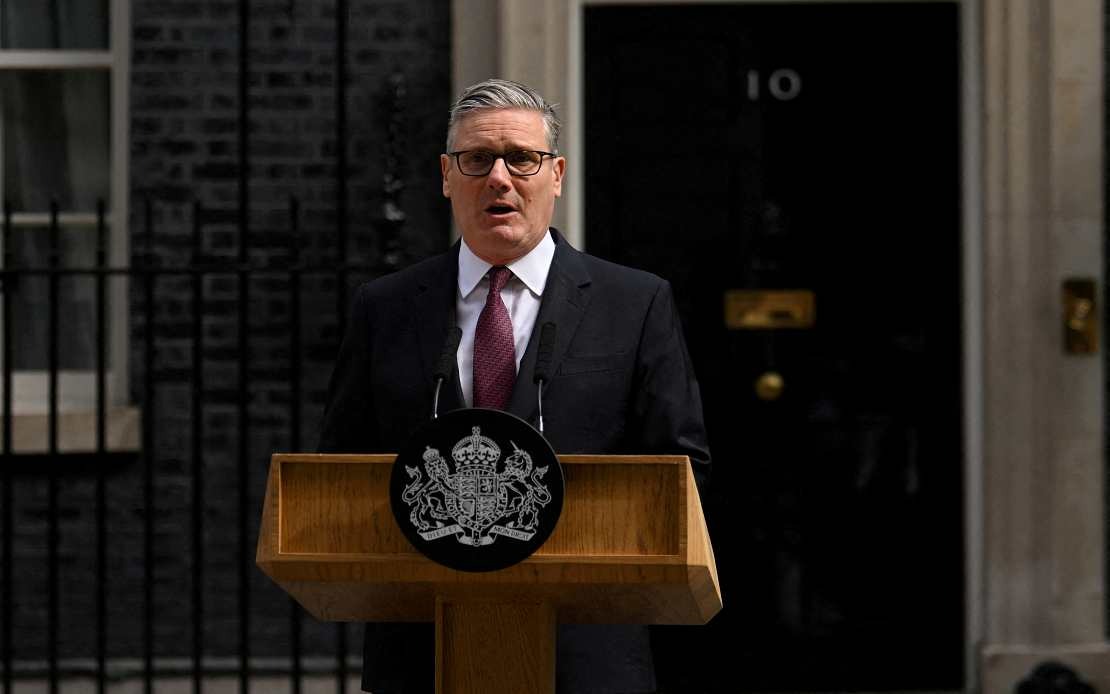
Prime Minister Keir Starmer confirmed on Monday that he intends to resign from his position, with a successor to be installed before parliament reconvenes in September, according to Reuters. The declaration marks a dramatic reversal of fortune for a leader who captured an overwhelming electoral mandate less than two years ago with a mandate to restore stability to British governance.
Starmer's political standing has deteriorated sharply over recent months, culminating in a series of developments that forced his hand. His approval ratings have fallen to levels unprecedented for any sitting British premier, reflecting widespread public dissatisfaction with his administration's performance. The Prime Minister indicated he would back whomever the Labour Party selects to lead the party and nation, signalling an attempt to manage the succession process and maintain some influence over the party's direction during what promises to be a turbulent transition.
The collapse of Starmer's political position accelerated dramatically on Friday when Andy Burnham, the mayor of Greater Manchester, won a parliamentary seat in a special election with a commanding margin. Burnham's victory over a Reform UK candidate proved particularly significant because it demonstrated that Labour could still mobilise its base when local figures with proven electoral credentials led the charge. The result energised backbench Labour lawmakers who had grown increasingly restless with Starmer's leadership and fading popularity, suggesting that Burnham could potentially reverse the party's deteriorating standing with voters.
Burnham's profile as a seasoned politician with strong communication abilities has made him an attractive prospect for those seeking an alternative to Starmer. The Greater Manchester mayor has cultivated a reputation as an effective operator during his years in senior positions, skills that party activists believe could help Labour recover lost ground. However, Burnham has remained notably vague about substantive policy positions beyond vague promises to deliver systemic reform and address the cost-of-living crisis gripping British households. His views on critical matters including foreign policy, economic management, and defence spending remain largely undefined, raising questions about whether a Burnham-led government would represent a genuine departure from current Starmer administration policies.
Whether Burnham or another candidate ultimately becomes the next Prime Minister, they will inherit an exceptionally difficult governing environment. Britain faces a fiscal situation characterised by the highest borrowing costs among Group of Seven nations, accumulated debt burdens, stubborn economic stagnation, and substantial spending pressures across defence, healthcare, and infrastructure. Bond market investors have imposed stringent constraints on the fiscal space available to any British government, effectively limiting options for implementing ambitious policy programmes or substantially raising public expenditure.
Analysts at Citibank highlighted the inherent tension facing any successor to Starmer, warning that "a Burnham premiership would inherit a precarious fiscal situation with few tools to deliver meaningful change." This assessment captures the fundamental challenge confronting British policymakers: voters are angry and demanding improvements to living standards, public services, and immigration enforcement, yet the financial architecture constraining government action leaves little room for transformative interventions. Burnham himself suggested in September that Britain had become excessively dependent on appeasing bond market operators, yet some economists question whether his government would genuinely prioritise voter demands over market reassurance once holding office.
The frequency of prime ministerial transitions in Britain has reached extraordinary levels in recent years. Starmer's successor will become the seventh person to hold the office since the 2016 Brexit referendum, a rate of turnover unmatched in nearly two centuries of British parliamentary history. This extraordinary instability reflects deeper fractures in British politics and society, where successive governments have struggled to build durable electoral coalitions or deliver tangible improvements in public welfare, thereby exhausting voter patience with individual leaders and parties.
Starmer's decision to announce a departure timeline rather than fighting for survival attempts to stage-manage what was becoming an involuntary removal. By signalling his intention to remain in office until a successor emerges, he can oversee key events including a planned United Kingdom-European Union reset summit scheduled for July, preserving some executive authority during the transition period. This arrangement would also grant Burnham or another prospective successor several weeks to prepare for the full responsibilities of office, though some observers question whether this compressed timeframe allows sufficient preparation for such a monumental transition.
The Malaysian and Southeast Asian implications of this British political turmoil extend beyond merely observing Westminster drama. Britain's economic weakness and fiscal constraints affect global trade patterns, capital flows, and investment decisions that ripple through the region. A prolonged period of British political instability could intensify pressure on sterling, potentially affecting currency markets and investment sentiment across Commonwealth nations with historical ties to Britain. Additionally, the broader pattern of political instability in mature democracies raises questions about institutional resilience and the capacity of established political systems to adapt to voter demands for change and improved governance.
For policymakers in Southeast Asia, the British experience offers cautionary insights about the dangers of allowing public perceptions of governmental incompetence to persist without delivering visible improvements. The speed with which Starmer's initial landslide mandate evaporated demonstrates how quickly voter goodwill can dissipate when governments fail to translate electoral victories into measurable improvements in ordinary people's lives. As Malaysia and other regional nations navigate complex economic challenges and rising public expectations, the British precedent illustrates the necessity of maintaining strong governance delivery and public confidence in institutional performance.