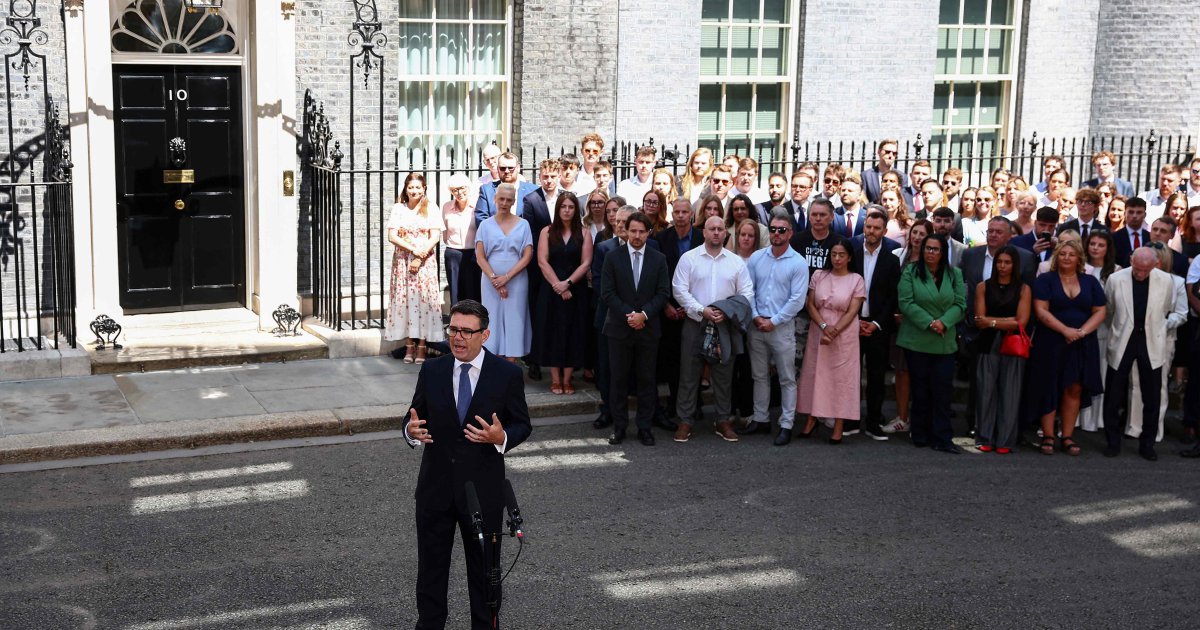
The appointment of Andy Burnham as Britain's seventh prime minister in just under a decade represents a watershed moment for a nation exhausted by constant shifts in political leadership. Voter sentiment captured in recent weeks reflects a profound weariness with the revolving door of Number 10, a phenomenon that has become emblematic of institutional instability across Westminster. The scale of turnover—seven different individuals holding the highest office in approximately ten years—stands as a stark indicator of deeper fractures within the British political system and the electorate's eroding confidence in governance.
For many British citizens, the succession of prime ministers since early 2016 has created a fog of uncertainty that pervades daily life. Claire Walker's resigned exclamation—"not another one"—encapsulates the sentiment shared across much of the country, transcending traditional political divisions. The emotional exhaustion accompanying each leadership transition has left voters questioning whether their elected representatives possess the stability and vision necessary to address mounting challenges facing the nation, from economic stagnation to deteriorating public services.
The historical context underscores how anomalous this period has become. While Britain has experienced leadership changes throughout its democratic history, the compressed timeline and frequency of recent transitions are unprecedented in the modern era. This sustained instability has coincided with profound challenges: the Brexit negotiations, economic volatility, the cost-of-living crisis, and healthcare system strain have all unfolded amid leadership uncertainty, preventing coherent long-term strategic planning.
From a regional perspective, this political turbulence carries implications extending beyond Britain's shores. Southeast Asian observers, including those in Malaysia, typically regard British political institutions as models of stability and continuity. The spectacle of successive prime ministers struggling to retain office for meaningful periods challenges assumptions about Westminster's durability and raises questions about the resilience of established democracies when confronted with contemporary pressures.
Burnham's assumption of office occurs against this backdrop of accumulated frustration. His predecessors—a procession that includes figures who served months or mere weeks—have left an institutional legacy of diminished public trust and weakened executive authority. Each transition has brought fresh promises of renewal, yet the pattern of disappointing outcomes has reinforced voter cynicism about whether leadership changes alone can resolve systemic governance failures.
The psychological impact on the electorate deserves careful consideration. Beyond policy disputes, which have always animated British politics, this period has introduced a corrosive element: the sense that the political system itself has become dysfunctional. Voters report feeling unmoored, unsure whether their representatives possess the mandate or capacity to implement meaningful change. This detachment poses particular risks for democratic participation, as disaffection often translates into reduced electoral engagement or protest voting.
Burnham's background as a regional politician carries symbolic weight within this narrative. His ascent from Greater Manchester politics to the premiership represents an attempt to signal renewal through figures perceived as grounded in local realities rather than Westminster insider networks. Whether such symbolism can translate into tangible restoration of public confidence remains uncertain, particularly when the underlying institutional pressures that have destabilized previous governments remain largely unaddressed.
The broader economic and social context amplifies citizen frustration. Years of austerity, regional inequality, and social fragmentation have created communities questioning whether their concerns receive adequate attention from distant political leaderships preoccupied with internal succession struggles. This disconnect between Westminster's institutional dramas and citizens' material concerns has deepened alienation, particularly in areas beyond London and the Southeast where economic opportunity remains constrained.
International observers watching Britain's political convulsions recognize a cautionary tale. The assumption that mature democracies possess self-correcting mechanisms capable of restoring stability has been tested severely. Malaysia and other nations navigating their own political complexities can observe how even institutionally established systems risk legitimacy erosion when leadership instability combines with unresolved policy challenges.
Burnham enters office aware that merely securing the position represents insufficient accomplishment. Restoring voter confidence requires demonstrable progress addressing material concerns and institutional reform that provides greater predictability. The accumulation of voter disappointment across seven successive administrations suggests that incremental approaches risk reinforcing cynicism rather than rebounding confidence.
The seventh premiership in a decade serves as a concrete metric for assessing democratic health. Rather than representing normal democratic cycling, this frequency indicates systemic stress requiring examination of parliamentary dynamics, party structures, and the electoral system itself. Whether Burnham's tenure stabilizes British politics or merely extends the pattern of transitional instability will significantly influence public perception of democratic governance for years ahead.
As Burnham assumes leadership, he confronts not merely traditional policy challenges but a deeper imperative: rebuilding public faith that political institutions can function with sufficient coherence to merit citizen investment. The sighed "not another one" from ordinary voters reflects justified skepticism that leadership change alone addresses institutional fragmentation. Meaningful restoration of political stability requires acknowledgment that voter fatigue itself constitutes evidence demanding systemic reassessment.

