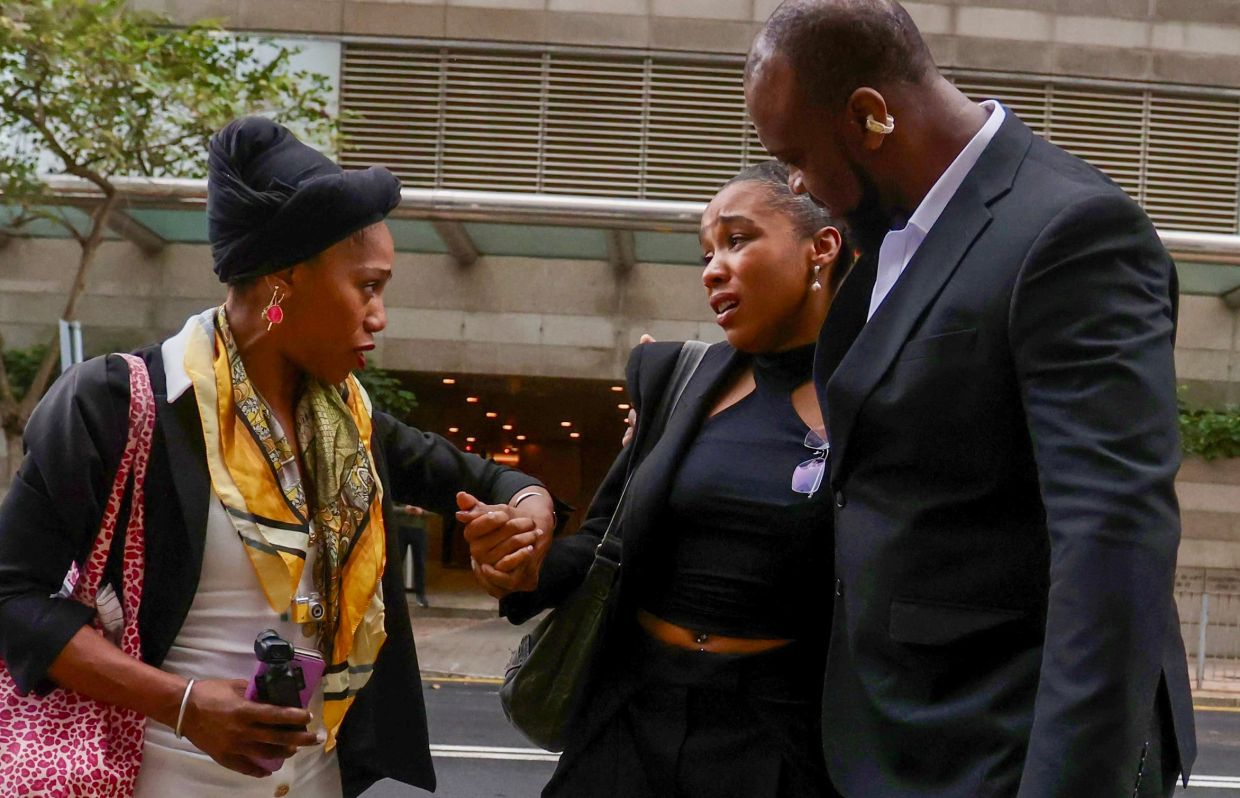
A Hong Kong court has handed down a six-year prison sentence to a British woman convicted of blackmailing a fellow British national for £100,000 through false rape accusations. Isabel Anonia Barbra Eudora Rose, 26, an event management professional from London, was found guilty of blackmail and perverting the course of justice by the District Court on Wednesday, with Judge Adriana Noelle Tse Ching presiding over the case that highlights the serious consequences of malicious false allegations and attempted extortion.
Rose arrived in Hong Kong on January 31, 2024, to visit a man she had met during a holiday to Thailand the previous month. She claimed that on the night of her arrival, the man sexually assaulted her in his one-bedroom apartment located in Central Hong Kong's business district. However, the court's investigation into the matter would eventually reveal a far different narrative from what Rose initially presented to authorities.
The pivotal evidence came from text message exchanges that took place the day following the alleged incident. Rather than showing distress or trauma consistent with her rape claim, Rose's communications with the man contained messages discussing compensation and remuneration for what had supposedly occurred. In one exchange, Rose stated "You basically raped me," to which the man responded by expressing revulsion and denying such behaviour aligned with his nature. These messages would later form a crucial part of Judge Tse's reasoning in rejecting the rape allegation entirely.
According to the man's testimony, which the judge accepted, Rose had asked him to perform oral sex but refused his advance. When he subsequently apologised for "misreading her signals" and "rushing her," his tone suggested regret rather than criminal intent. The man stated he felt mildly frustrated but was impressed by Rose's restraint. Critically, forensic examination of Rose revealed bruising on her neck but notably absent was any genital injury, a finding that contradicted the nature of the alleged assault she described to police.
Rose reported the supposed rape to police on February 3, 2024, triggering an investigation in which the man was initially arrested and questioned. However, police subsequently arrested Rose herself the following day, eventually charging her with offences related to blackmail and obstruction of justice rather than pursuing the sexual assault claim. This reversal in the police investigation's direction signalled that authorities had come to view Rose's account as fundamentally unreliable.
The crux of the prosecution's case centred on Rose's escalating financial demands made shortly after the alleged assault. Initially, discussions between the pair focused on compensation for accommodation and travel expenses, which appeared superficially reasonable. The man agreed to Rose's request for £2,000, but she subsequently increased her demand to £5,000. Rose then escalated further, writing that "You've given 10 per cent of what I'm owed, 100 per cent of my soul gone," a cryptic message signalling expectations of substantially greater payment.
Messages subsequently recovered from their communications revealed the man protesting that he could not afford a £100,000 payment, stating "I have no way of paying you that." Rose countered with instructions that "You have half of it which can be sent. And the other half tomorrow," indicating she believed he possessed the funds despite his denials. Although the £100,000 figure did not appear in standard text message records, Judge Tse concluded that Rose had communicated this sum through disappearing messages or voice communications that she subsequently deleted to cover her tracks.
Judge Tse's verdict was scathing in its assessment of Rose's conduct. The judge determined that Rose had deliberately fabricated the rape allegation, with evidence suggesting her intention was predatory from the outset. Tse stated that Rose had "taken advantage of the man's kindness, naivety, friendship and romantic interest," exploiting his vulnerability to extract money through threats. The judge characterised the blackmail demand as occurring within merely two days of Rose's arrival in Hong Kong, suggesting calculated opportunism rather than any genuine victimhood.
In sentencing, Tse imposed a five-year starting point for the blackmail charge and ordered one additional year from the perverting justice conviction to run consecutively, resulting in the six-year total sentence. The judge described Rose's conduct as "cruel and evil," emphasising that her false police report represented "vengeful and wicked behaviour" designed to punish the man for his refusal to comply with her financial demands. Tse concluded that Rose was "an author of her own wrongdoing," a phrase encapsulating the judge's view that Rose's imprisonment resulted entirely from her deliberate criminal actions.
The case carries particular significance for Southeast Asia, where concerns about false accusation and the misuse of justice systems remain contentious issues. The Hong Kong verdict demonstrates that courts in the region are prepared to pursue vigorous prosecution against those who weaponise sexual assault allegations for financial gain, protecting accused persons from malicious false claims while maintaining the seriousness with which genuine sexual assault is treated. The judgment underscores that fabricating allegations not only harms the accused individual but constitutes serious criminal conduct warranting substantial imprisonment.
Rose's reaction to the guilty verdict in March saw her breakdown emotionally in court, after which she was held in custody pending sentencing. In subsequent comments to media, Rose expressed bewilderment at developments, stating "I reported the rape. But within 24 hours, there was no rape any more." She claimed that police officers told her they would prioritise the blackmail investigation over pursuing the sexual assault claim. Rose's apparent disbelief at the legal system's response reflects her failure to grasp the evidentiary weaknesses in her own account, particularly the contradictory nature of her communications with the man immediately following the alleged assault.
For Malaysian and broader Southeast Asian readers, this case offers important lessons about the credibility of sexual assault allegations and the dangers posed by false accusations to judicial systems. While genuine victims of sexual violence absolutely deserve protection and justice, the Hong Kong court's rigorous examination of evidence demonstrates that allegations must withstand scrutiny, particularly when contemporaneous communications suggest alternative narratives. The sentencing also illustrates that attempting to leverage false criminal allegations for personal financial gain represents a serious offence warranting lengthy imprisonment, a principle that protects the integrity of justice systems across the region.

