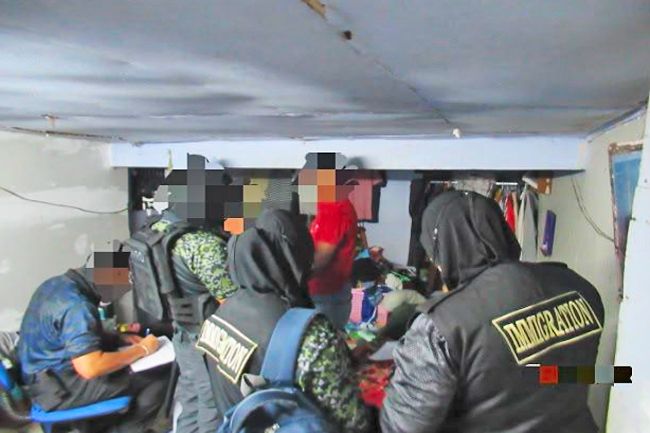
Brunei's immigration authorities have intensified their compliance drive across the country, executing a coordinated series of enforcement operations designed to combat widespread immigration breaches. The Immigration and National Registration Department (INRD), operating under the Ministry of Home Affairs, has ramped up inspections through its ongoing 'Operasi Kakas 2026' initiative, demonstrating a systematic approach to rooting out violations that range from unauthorized employment to documentation failures.
The enforcement campaign reflects growing concerns within Southeast Asia about irregular migration patterns and workplace compliance. For Malaysian readers familiar with similar operations conducted by Immigration, Labour and Industrial Court (ILAC) in Malaysian jurisdictions, Brunei's multi-pronged approach mirrors regional strategies to combat foreign worker violations. The operations showcase how smaller nations within ASEAN maintain tight immigration controls, particularly regarding employment authorization and residency status verification.
During 'Operasi Kakas 86/2026', authorities inspected thirteen foreign nationals at a commercial market location in Mukim Sengkurong. Seven individuals were detained and transferred to the Law Enforcement Division following preliminary findings that they had engaged in employment while holding only visitor passes. This violation—working under an inappropriate visa category—represents one of the most common immigration breaches across the region, affecting both employers who knowingly hire undocumented workers and migrant workers themselves who operate outside legal frameworks.
The second operation, designated 'Operasi Kakas 87/2026', targeted rental accommodations in Mukim Berakas 'A', where inspectors encountered three foreign nationals. Two were apprehended and referred for investigation after evidence suggested they were similarly employed contrary to their visa restrictions. These residential inspections indicate that authorities are extending surveillance beyond traditional workplace settings, recognizing that enforcement effectiveness requires monitoring housing areas where many migrant workers reside.
A particularly significant enforcement action occurred during 'Operasi Kakas 88/2026' at another rented property in Mukim Berakas 'A'. Eight foreign nationals were present during the raid, with six detained after failing to produce valid original documentation. Investigators subsequently determined that five of these individuals had overstayed their permitted residency periods after their immigration passes expired. Additionally, these individuals had violated regulations by switching employers without authorization—they were no longer working for their original sponsoring employers. This compound violation suggests a pattern of worker mobility within informal economic sectors, where employment relationships are fluid and regulatory oversight limited.
The overstaying violations uncovered in this operation carry particular significance for understanding migration dynamics in Brunei. Extended stays beyond authorized periods often result from workers remaining in employment after visa expiration, frequently due to contract disputes, employer non-compliance, or workers' inability to secure timely pass renewals. For Malaysian policymakers observing Brunei's approach, such findings underscore the importance of integrating employer accountability mechanisms into immigration enforcement, ensuring that sponsoring companies facilitate proper documentation renewal.
In contrast, 'Operasi Kakas 89/2026' demonstrated successful compliance in parts of the foreign worker population. When authorities inspected four foreign nationals at a rental property in Mukim Berakas 'B', all possessed valid documentation and current immigration passes. This outcome, while perhaps less headline-generating than violation discoveries, provides important perspective: systematic enforcement combined with clear regulatory frameworks does achieve substantial voluntary compliance from segments of the migrant population.
The coordinated nature of these four consecutive operations reveals administrative sophistication within Brunei's immigration apparatus. Rather than reactive responses to complaints, the INRD has clearly adopted proactive, geographically distributed inspection campaigns. This approach allows authorities to maintain consistent pressure across different residential and commercial zones simultaneously, reducing opportunities for informal warning networks to alert violators before enforcement arrives.
For the broader Southeast Asian region, Brunei's enforcement intensity carries implications for migration management strategy. As a relatively wealthy hydrocarbon-dependent economy with limited domestic labour availability, Brunei necessarily relies on foreign workers across multiple sectors. However, the nation has demonstrated commitment to maintaining regulatory control over this migrant population rather than tolerating informal employment arrangements. This contrasts with some regional economies where enforcement remains inconsistent or under-resourced.
The violations identified also reflect economic realities within the migrant worker population. Foreign nationals accepting employment outside their authorized scope, or extending stays beyond permitted periods, often do so for financial necessity. Wage earnings in Brunei, though modest compared to developed economies, exceed significantly those available in workers' home countries. The regulatory framework thus reflects tension between immigrant workers' economic motivations and state interests in maintaining orderly labour markets and preventing exploitation.
Looking forward, the INRD's sustained enforcement commitment suggests that Brunei intends to maintain strict immigration discipline as part of its governance model. Malaysian immigration authorities and other regional counterparts will likely monitor Brunei's enforcement results and compliance outcomes. The department's public reporting of these operations serves notice to both employers and workers that violations carry real investigative and legal consequences. Such transparency, alongside operational effectiveness, comprises the dual strategy through which smaller nations maintain immigration control despite resource constraints compared to larger regional economies managing substantially larger migrant populations.

