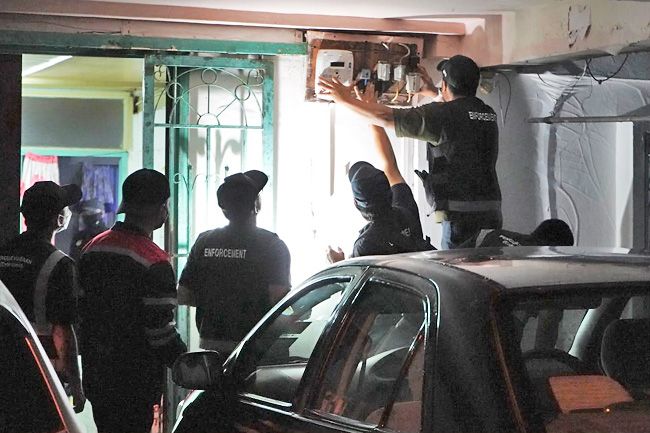
The Royal Brunei Police Force mounted an extensive multi-agency enforcement operation in the heart of Bandar Seri Begawan this week, culminating in the detention of two foreign nationals and the discovery of numerous breaches spanning immigration, labour, and electrical safety regulations. The coordinated action, spanning two separate locations within the capital district, demonstrates the government's intensified focus on regulatory compliance and public safety across diverse sectors of the economy.
Immigration authorities detained one foreign male and one foreign female at locations visited during the operation, both now facing investigation under provisions of the country's Immigration Act. While specific charges remain under investigation, the detentions underscore ongoing concerns about undocumented residents or those operating outside the bounds of their visa conditions in the capital. Immigration enforcement has become increasingly prominent across Southeast Asia, where irregular migration remains a persistent challenge for governments attempting to maintain border integrity and labour market oversight.
The Labour Department's findings reveal systemic failures in employer compliance with accommodation and workplace standards. Inspectors identified three breaches under Section 81 of labour legislation, centring on inadequate worker housing provision and substandard environmental conditions at employment sites. Additionally, two further violations under Section 86 emerged, relating to employers' failure to properly register workers' accommodation details in applications for foreign worker licences. These violations suggest that some employers within Bandar Seri Begawan's commercial and service sectors may be circumventing disclosure requirements or deliberately minimising their legal obligations toward migrant labourers.
Electrical safety proved another area of concern, with inspectors from the Department of Electrical Services identifying two breaches of the Electricity Act. While the operation's summary does not detail the nature of these infractions, electrical code violations typically involve non-compliant wiring, unlicensed installations, or failure to maintain safety standards in commercial or residential premises. Such breaches pose tangible risks to workers and residents, making electrical enforcement a critical component of public safety operations in densely populated urban centres.
A dedicated human trafficking investigation unit interviewed 19 individuals during the sweeps, reflecting the authorities' commitment to identifying exploitation beyond conventional labour disputes. The absence of detected trafficking offences during this particular operation is noteworthy, though it does not diminish the broader regional challenge of human trafficking networks that continue to operate across Southeast Asia. Brunei's systematic approach to interviewing workers at enforcement sites demonstrates institutional awareness of the nexus between labour violations and human trafficking, where employers often exploit vulnerable foreign workers simultaneously across multiple regulatory domains.
The operational scope and coordination required to execute such an enforcement initiative underscores the complexity of modern regulatory compliance in urban economies. More than 200 personnel drawn from ten separate government agencies and departments assembled to conduct the operation under the leadership of Acting Commanding Officer Superintendent Mohamad Noor Abd Rahman. This includes units from the Brunei-Muara Police District itself, alongside specialists from the Narcotics Control Bureau, the Royal Customs and Excise Department, the Internal Security Department, the Bandar Seri Begawan Municipal Department, and the Religious Enforcement Division, each bringing distinct expertise and statutory authority.
For Malaysian readers and Southeast Asian observers, Brunei's enforcement strategy carries broader implications. The sultanate's approach mirrors patterns evident across the region, where governments have progressively integrated labour inspection, immigration control, and trafficking prevention into unified operational frameworks. This integration recognises that labour law breaches, immigration violations, and human trafficking frequently occur simultaneously within the same enterprises, making compartmentalised enforcement ineffective. Malaysia's own periodic joint operations conducted by authorities in states like Selangor and Kuala Lumpur follow comparable models, though often at larger scales reflecting Malaysia's more substantial migrant workforce populations.
The operation's success in identifying multiple categories of violations across different regulatory areas suggests that Brunei's enforcement agencies have developed functioning inter-agency communication systems. Rather than separate departments conducting parallel inspections that might miss cumulative evidence of wrongdoing, the integrated approach allows inspectors to build comprehensive pictures of employer non-compliance. A business violating labour accommodation standards under Section 81 whilst simultaneously failing to declare those same premises under Section 86 and operating unsafe electrical infrastructure simultaneously presents a pattern indicative of systemic disregard for legal compliance rather than isolated administrative oversights.
The stated commitment to ensuring law compliance and safeguarding public safety reflects language increasingly common in official statements across Southeast Asia, particularly as governments navigate tensions between economic development and regulatory enforcement. Foreign workers remain essential to Brunei's construction, hospitality, and service sectors, yet their vulnerabilities to exploitation create recurring friction points between employers seeking cost minimisation and authorities tasked with protecting vulnerable populations. This operation suggests that Brunei's government is tilting toward stricter enforcement without yet implementing wholesale restrictions on foreign labour, a positioning similar to approaches adopted by several other regional states.
The implications for business compliance in Brunei's capital are immediate and significant. Employers discovered breaching multiple regulations simultaneously may face compounding penalties rather than isolated fines, potentially creating greater deterrents against non-compliance. Foreign workers interviewed during such operations gain awareness that authorities actively monitor their conditions, potentially emboldening complaints in subsequent interactions with labour inspectors. The visible deployment of 200 personnel across an urban area also communicates governmental resolve to the broader business community, signalling that regulatory enforcement represents genuine priority rather than perfunctory administrative routine.
Looking forward, the frequency and scale of such operations may intensify as governments across Southeast Asia allocate greater resources to compliance monitoring. Brunei's operation exemplifies the resource-intensive nature of effective enforcement, requiring coordination across multiple bureaucracies and specialist training for personnel involved in trafficking investigation and labour inspection. For Malaysian policymakers and enforcement agencies observing regional peer activities, Brunei's example demonstrates both the operational complexities and the political dividends of visible enforcement campaigns targeting vulnerable worker protection.

