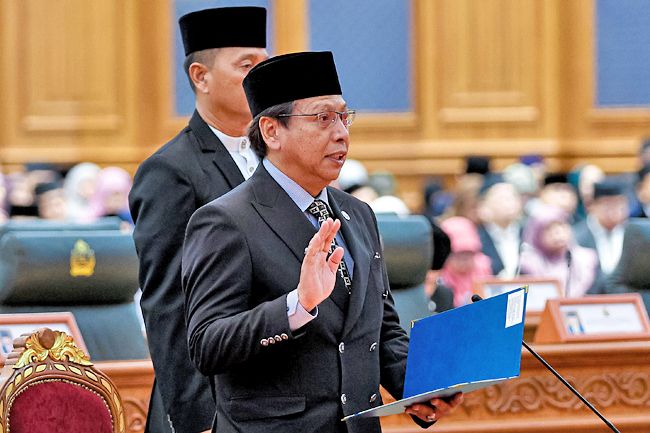
Four senior members of Brunei's Cabinet have been formally sworn into the Legislative Council during a constitutional ceremony marking the commencement of the Second Meeting of the 22nd Legislative Council Session. The swearing-in took place on Monday in Bandar Seri Begawan, with the new ex-officio appointees joining the legislative body in accordance with provisions established under Brunei's 1959 Constitution. The ceremony reflects the country's established practice of integrating executive ministers into the legislative framework to ensure ministerial representation and coordination between branches of government.
The four ministers elevated to Legislative Council membership represent key portfolios across Brunei's administrative structure. Datuk Seri Setia Awang Sufian Sabtu assumes a position as Minister at The Prime Minister's Office with responsibility for Security and Law matters. His appointment reflects the government's emphasis on maintaining senior-level oversight of security and legal affairs within the legislative body. The inclusion of security-focused ministers in the Legislative Council typically signals attention to national stability and rule-of-law considerations.
A second senior appointment went to Datuk Seri Setia Awang Mohamad Azmi Mohd Hanifah, who holds the position of Minister at the Prime Minister's Office overseeing Energy, Upstream and Downstream portfolio responsibilities. This appointment underscores the significance Brunei places on legislative engagement regarding its energy sector, which remains central to the sultanate's economy and regional positioning. Energy policy decisions require visible ministerial participation in legislative discussions, particularly given the sector's strategic importance to national finances and development planning.
Religious affairs governance was represented through the appointment of Pengiran Datuk Seri Setia Mohammad Tashim Pengiran Hassan, serving as Minister of Religious Affairs. His inclusion in the Legislative Council reflects the institutional priority placed on religious governance and Islamic institutional matters within Brunei's administrative and legislative frameworks. Religious policy in the sultanate carries particular weight given the country's constitutional status as an Islamic monarchy and the comprehensive role religious affairs play in governance and society.
The fourth minister sworn in, Datuk Seri Setia Awang Mohammed Riza Datuk Paduka Mohammed Yunos, holds the combined portfolio of Minister of Transport and InfoCommunications. This appointment signals legislative-level attention to infrastructure development and digital communications expansion, areas increasingly vital to regional economic competitiveness and business facilitation across Southeast Asia. The bundled nature of this portfolio suggests government recognition of the interconnected nature of physical and digital infrastructure investments.
The ceremonial proceedings were conducted according to constitutional framework established over six decades ago, demonstrating Brunei's adherence to formal institutional processes despite the sultanate's absolute monarchy structure. The 1959 Constitution provisions governing ex-officio membership reflect a deliberate design integrating executive representation into the Legislative Council's operations. This constitutional arrangement distinguishes Brunei's governance model within the regional context, where similar mechanisms exist but operate under varying political systems across ASEAN nations.
The ceremony was presided over by Pehin Orang Kaya Seri Lela Datuk Seri Setia Awang Abdul Rahman Datuk Setia Mohamed Taib, the Legislative Council Speaker. His presence as formal witness to the swearing-in ceremony underscores the procedural significance attributed to the legislative transition and the integration of new ex-officio members. The Speaker's involvement in ceremonial functions reinforces the institutional legitimacy and formal standing of the Legislative Council within Brunei's governance architecture.
For Malaysian observers, the Bruneian legislative developments warrant attention as they reflect broader patterns of executive-legislative integration visible across the region. While Malaysia operates under a different constitutional framework with greater separation between executive and legislative branches, the comparative governance models offer perspectives on how diverse ASEAN nations structure representation and ministerial accountability. Brunei's approach of ex-officio Cabinet membership in the legislature represents one model of ensuring executive-legislative coordination and communication.
The timing of these ministerial appointments and their formal induction into the Legislative Council during a new legislative session suggests scheduled government reorganization or emphasis on particular policy areas requiring enhanced legislative attention. The Second Meeting of the 22nd session indicates ongoing legislative business and the continuation of established governance routines. Understanding these institutional movements provides insights into Brunei's governance priorities and the government's structural approach to policy implementation and parliamentary oversight.
The four newly inducted ministers now participate in legislative discussions and voting procedures as ex-officio members, a status that grants them formal legislative standing while maintaining their executive responsibilities. This dual positioning creates interdependencies between cabinet decisions and legislative outcomes, potentially streamlining policy implementation but also potentially concentrating executive influence within the legislative chamber. The appointment of ministers to legislative roles remains a distinctive feature of Brunei's constitutional system and continues to shape the sultanate's legislative dynamics and executive-parliamentary relationships.

