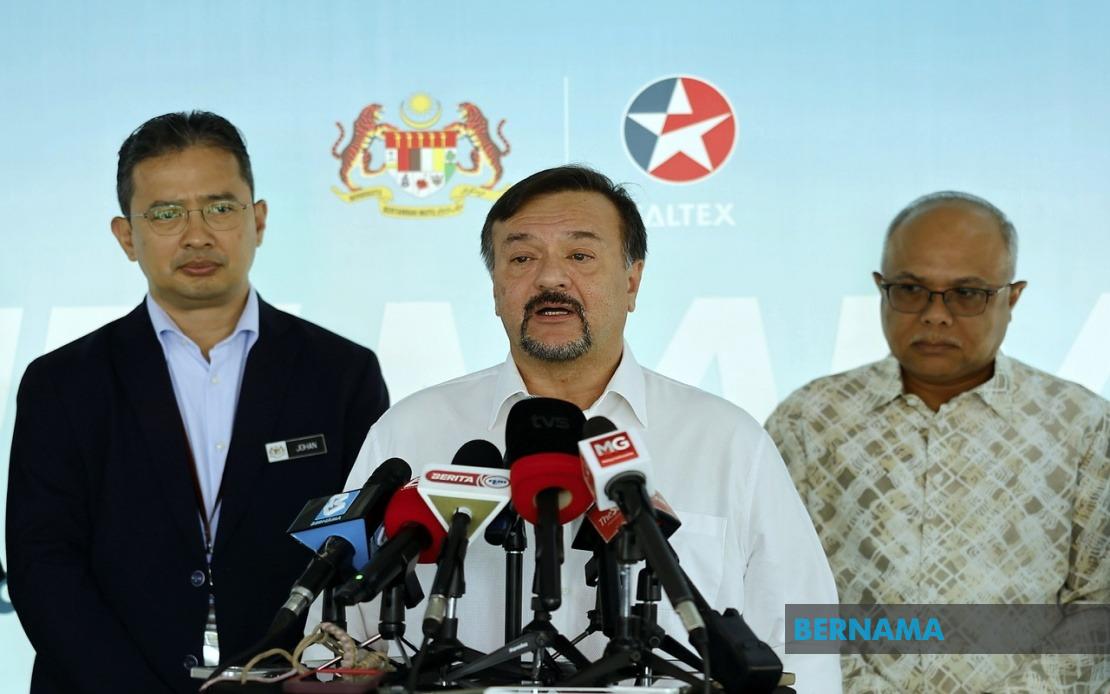
The government has formally commenced a nationwide consultation process to shape the 2027 Budget, which will be presented to Parliament this coming October. Finance Minister II Datuk Seri Amir Hamzah Azizan confirmed that the Ministry of Finance and its partner agencies across multiple government departments are actively soliciting input from stakeholders and communities to inform the budget allocation and policy priorities for the fiscal year ahead.
Speaking following an observation of the BUDI Diesel programme at a petrol station in Putrajaya, Amir Hamzah underscored that this consultative methodology reflects the government's commitment to maintaining fiscal coherence with the nation's overarching strategic direction. Rather than proceeding with budget formulation in isolation, the administration is deliberately creating multiple touchpoints to gather perspectives and feedback from key stakeholders before finalising its spending and revenue proposals.
The budgetary framework continues to draw from the MADANI Economy paradigm, which has emerged as the foundational economic philosophy guiding all major government initiatives. This approach operates on a dual mechanism: strengthening the upper tiers of economic activity to boost global competitiveness and productivity, whilst simultaneously reinforcing the foundational layers through expanded welfare, education, and livelihood opportunities that benefit lower-income Malaysians. The intention is to cultivate more balanced and durable economic growth that reaches broader segments of society rather than concentrating benefits among elite sectors.
Beyond the MADANI Economy framework, other recently established strategic blueprints are feeding into the 2027 Budget conversation. The 13th Malaysia Plan, which sets developmental priorities for the coming years, the National Semiconductor Strategy designed to position Malaysia as a regional hub for chip manufacturing and design, and the National Energy Transition Roadmap mapping the shift toward renewable and cleaner power sources all represent critical policy anchors shaping budgetary priorities. These initiatives collectively signal the government's intent to modernise the economy, reduce dependency on fossil fuels, and capture high-value manufacturing opportunities in emerging sectors.
Amir Hamzah was careful not to disclose specific budgetary proposals or figures ahead of the formal parliamentary presentation, maintaining the conventional practice of preserving surprise elements for the official budget unveiling. However, he reiterated that the government remains steadfast in its structural approach and philosophical grounding within the MADANI framework, suggesting continuity in policy direction rather than dramatic departures from current trajectories.
The minister also reaffirmed the government's ambitious target of achieving developed-nation status by 2030. This objective informs much of the budget thinking, as achieving high-income status within seven years necessitates sustained investments in human capital, infrastructure, technological innovation, and economic diversification. The budget engagement process thus serves as a critical conduit for identifying where public resources can yield the greatest multiplier effects in advancing toward this goal.
For perspective on government spending patterns, the 2026 Budget represented a significant fiscal undertaking totalling RM419.2 billion. This comprised RM338.2 billion allocated to operating expenditure, covering routine government administration, salaries, and service delivery, alongside RM81 billion designated for development expenditure focused on infrastructure, projects, and capital investments. Additionally, the government mobilised RM50.8 billion through investments channelled via government-linked investment companies, Federal statutory bodies, and public-private partnerships, effectively leveraging public sector resources to stimulate broader economic activity.
This three-pronged spending approach—direct operating budgets, development capital, and leveraged investment vehicles—demonstrates the increasing sophistication of Malaysia's budgetary mechanism. Rather than relying solely on direct government expenditure, policymakers have recognised the multiplier potential of co-investing with private sector partners and state-owned enterprises to stretch public resources further while spreading financial risk.
The nationwide engagement sessions underway represent an evolution in democratic governance practices within Malaysia. Rather than a top-down approach where central planners dictate spending allocations, these consultations acknowledge that optimal resource deployment requires ground-level input from communities, business sectors, and government frontliners who understand local needs and implementation challenges. This participatory methodology, whilst potentially lengthening the decision-making timeline, should produce budgets with greater buy-in and more realistic implementation prospects.
For Malaysian businesses and investors, the 2027 Budget engagement process offers an opportunity to signal priorities and concerns to policymakers. Companies operating in semiconductors, renewable energy, and advanced manufacturing sectors have particular incentive to participate, given government emphasis on these areas. Similarly, small and medium enterprises, agricultural interests, and regional development advocates should view the consultation window as a platform for advocating their sectoral needs.
The timing of these consultations also reflects regional economic dynamics. Southeast Asia faces intensifying competition for foreign direct investment in high-value sectors, particularly semiconductors and green technology. By anchoring the 2027 Budget in strategic frameworks addressing these competitive pressures, Malaysia positions itself to capture investment flows that might otherwise migrate to Vietnam, Thailand, or other regional competitors. Budget allocation toward research institutions, technical education, and infrastructure supporting these sectors thus carries broader geopolitical and economic significance.
As the October parliamentary presentation draws nearer, the Finance Ministry's consultation process will likely intensify, with various ministries consolidating feedback into spending proposals. The resulting 2027 Budget will serve as a practical manifestation of whether the government's ambitious rhetoric around the MADANI Economy framework, semiconductor strategy, and energy transition translates into tangible fiscal commitments. The budget engagement sessions currently underway are thus not merely procedural exercises but critical moments in translating vision into financial reality.

