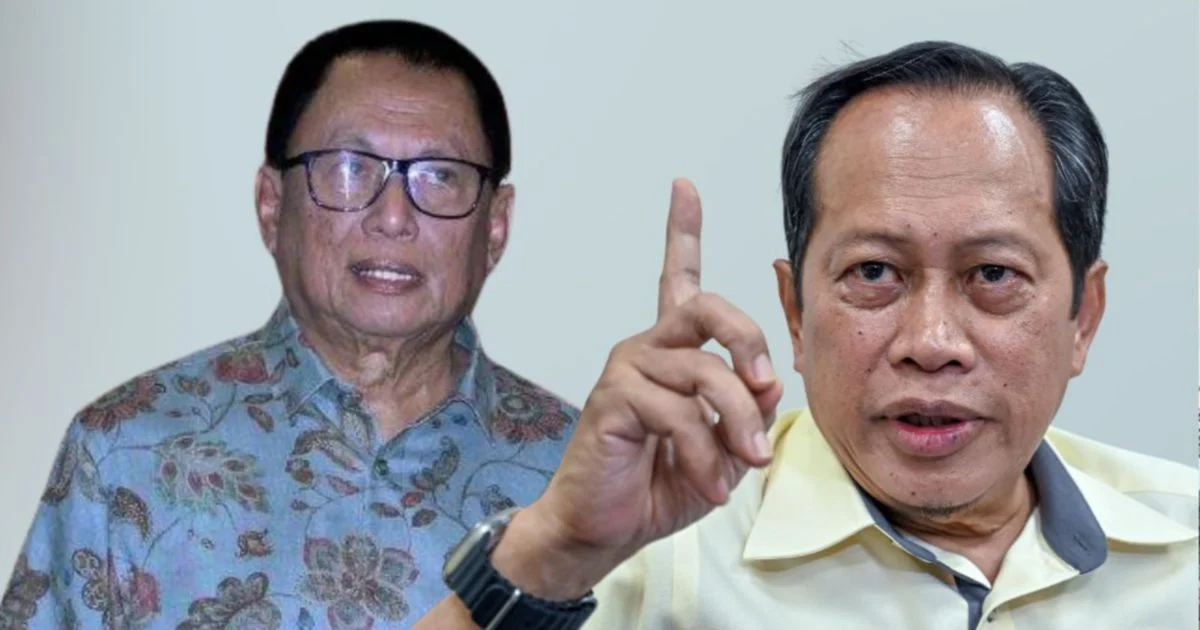
Datuk Seri Ahmad Maslan, the deputy chairman of Umno in Johor, has underscored a fundamental principle in party politics: the cultivation of competent leaders cannot be hurried. Speaking in Johor Baru, he stressed that aspiring politicians must understand the extended nature of their journey toward senior positions and electoral candidacies, dismissing any notion that the path to prominence can be compressed into a brief timeline.
The warning comes at a time when Malaysia's political landscape continues to shift, with parties constantly evaluating their talent pipelines and succession planning. Ahmad Maslan's comments reflect broader concerns within Umno about maintaining organisational stability and ensuring that those who advance through party structures possess the necessary skills and credibility to lead effectively. His remarks also suggest an awareness of impatience among younger or ambitious party members who may seek rapid progression within the hierarchy.
The metaphor of a marathon versus a sprint is particularly instructive for understanding the current state of Malaysian politics. Umno, as the nation's oldest and largest Malay-Muslim political party, has historically relied on a hierarchical system where seniority and accumulated experience play crucial roles in determining access to prominent positions. This system has bred both loyalty and frustration—those who have invested decades in party work expect recognition, while newcomers sometimes chafe at what they perceive as slow advancement.
Ahmad Maslan's intervention suggests that the party leadership is concerned about maintaining this traditional model amid pressures for change. The emphasis on "time, experience and commitment" reflects a philosophy that effective governance requires leaders who have been tested through various roles and have demonstrated resilience and understanding of their constituents' needs. This perspective stands in contrast to more meritocratic arguments that prioritise talent and capability over duration of service.
For members watching the Johor branch of Umno, Ahmad Maslan's statement carries implicit warnings about what they might expect in terms of internal competition for seats and positions. The message is clear: accelerated advancement is not simply unavailable, but philosophically at odds with how the party conducts its business. Those hoping to secure candidacies in upcoming elections cannot rely solely on recent efforts or political connectedness; they must demonstrate a track record that spans years of consistent engagement.
This approach has significant implications for how Umno addresses generational change. While the party has successfully retained power through multiple electoral cycles, it faces the challenge of attracting and retaining capable younger members who increasingly expect faster recognition of their contributions. The tension between the traditional system Ahmad Maslan describes and the expectations of contemporary Malaysian professionals and activists remains a potential source of internal conflict.
The statement also reflects the reality that Malaysian politics operates within specific cultural and institutional contexts. The emphasis on patience and commitment aligns with Malay-Muslim values of respect for hierarchy and earned status. In this framework, rushing someone to a leadership position without adequate preparation is viewed not just as strategically unwise but as contrary to established norms. This cultural dimension makes Ahmad Maslan's remarks more than merely tactical advice; they represent the philosophy underpinning how Umno sees itself functioning.
Moreover, the deputy chairman's insistence on "no shortcuts" addresses a practical concern about candidate quality and party credibility. Elections in Malaysia are increasingly contested, with voters showing willingness to switch support based on perceived competence and integrity of representatives. Umno's experience at recent polls has demonstrated that simply placing candidates in positions without strong community roots or demonstrated commitment can prove costly. Ahmad Maslan's message therefore serves both an internal party function and a practical electoral rationale.
The timing of such statements also matters in Malaysian politics. With electoral cycles approaching and internal party dynamics constantly evolving, reminders about patience and proper procedure help senior leaders maintain control over succession processes and prevent factional disputes from destabilising the organisation. By articulating this principle publicly, Ahmad Maslan signals to ambitious members, rival factions, and the broader party machinery that the leadership remains committed to orderly progression rather than ad-hoc arrangements.
For Southeast Asian political observers, Umno's approach to leadership development offers interesting contrasts with how other major parties in the region handle succession and advancement. While some political organisations have embraced more fluid hierarchies or meritocratic systems, Umno has largely maintained its structured, experience-based model. This reflects both the party's strength as a cohesive organisation and its potential vulnerability to criticism about inclusivity and fresh perspectives.
Looking forward, the effectiveness of Umno's strategy will depend on whether the party can genuinely nurture talent and provide meaningful opportunities for growth within its framework. If the marathon approach becomes a barrier preventing demonstrably capable individuals from contributing, it risks losing them to rival parties or civil society. Conversely, if properly implemented, the emphasis on sustained development can produce leaders with deep roots in their constituencies and genuine understanding of governance challenges.
Ahmad Maslan's remarks ultimately serve as a reminder that Malaysian political parties operate according to their own internal logics and historical patterns, and that understanding these dynamics is essential for anyone seeking to navigate or analyse the country's political system. His assertion that leadership positions cannot be achieved hastily is a statement both about party strategy and about how Umno understands its role in Malaysian society.

