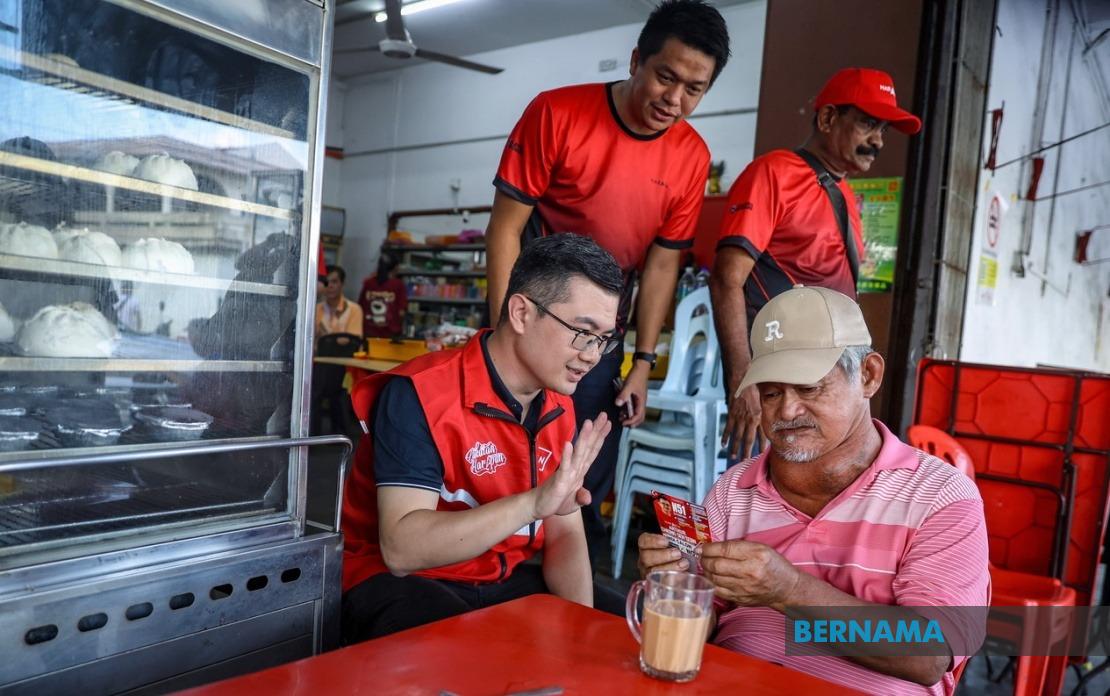
Arthur Chiong Sen Sern, the Bukit Batu state assemblyman, enters the 16th Johor State Election confident that his track record of ground-level engagement will translate into a stronger mandate than his narrow 137-vote victory two years ago. The 36-year-old Pakatan Harapan representative is counting on visible community support and consistent development work across the 49,963-registered-voter constituency to overcome the anxieties that come with defending such a tight margin.
Chiong's 2022 victory, while historic for PH in the seat, was narrow enough to serve as both vindication and motivation. Where others might have seen a precarious position, he has interpreted the result as a mandate to prove his worth to residents who had narrowly chosen his party. Over nearly a full term in office, he has pursued an aggressive ground presence strategy, regularly visiting constituencies regardless of political affiliation and addressing concerns from infrastructure to flood management. This accessibility has become his calling card as he seeks to build on that slim foundation.
A significant portion of Chiong's campaign narrative centres on his direct intervention in chronic flooding problems that have plagued areas like Kampung Rahmat and Kampung Seri Paya. Working in collaboration with the Department of Irrigation and Drainage, he has positioned himself as a responsive leader who shows up during crises. He notes that residents have come to expect his presence when flash floods strike, an expectation born from repeated appearances at ground zero. Such tangible engagement contrasts with abstract promises and speaks to voters who prioritise visible action over rhetoric.
Beyond flood management, Chiong has invested in youth development and community infrastructure. His allocation of RM20,000 toward installing lights at a local futsal court exemplifies the type of visible, grassroots investment that resonates with everyday constituents. The continued use of these facilities serves as a physical reminder of his tenure. Additionally, his regular visits to Felda areas and funding support for non-governmental organisations demonstrate an attempt to create a coalition of beneficiaries who might translate gratitude into electoral support.
The political landscape in Bukit Batu remains crowded, with four opponents challenging Chiong in what will be a four-cornered contest at minimum. Barisan Nasional has fielded R. Kumaran, who holds the position of PKR Kulai chief, introducing a complexity to the race. Ikatan Demokratik Malaysia-MUDA presents M. Premanand as an alternative reformist voice, while Bersama fields G. Tamili. An independent candidate, Kamaruzaman Ali, completes the roster. This fragmentation could benefit an incumbent with an established base, but it also means votes could be split among multiple challengers in unpredictable ways.
Chiong's 2022 victory came in a similar four-cornered contest where he secured 9,439 votes ahead of BN's Datuk S. Suppayah, Perikatan Nasional's Tan Heng Choon, and Warisan's Lee Ming Wen. That distribution of opposition votes across three formidable challengers allowed PH to prevail despite the narrow margin. The reappearance of comparable competition might again splinter anti-PH sentiment, though the specific identity of challengers and their respective campaign momentum remains uncertain.
Chiong has been vocal in expressing appreciation to PH leadership, particularly Prime Minister Datuk Seri Anwar Ibrahim, for nominating him to defend the seat. Such public acknowledgment serves multiple purposes: it demonstrates loyalty to the party hierarchy, signals confidence from his leadership, and creates an implicit obligation to deliver stronger results. For a young politician in a competitive state like Johor, such endorsement is crucial currency in proving viability for higher office down the line.
The broader context of Johor politics adds another layer to Chiong's challenge. Johor remains one of Malaysia's most politically volatile states, with voters demonstrating willingness to shift support across the political spectrum. The state has witnessed rapid changes in fortunes for both PH and BN in recent elections, suggesting that no seat can be taken for granted. For a representative with a 137-vote margin, this volatility is both terrifying and potentially advantageous if sentiment has genuinely shifted in his favour since 2022.
Chiong's strategy represents a pragmatic response to his precarious position. Rather than banking purely on party machinery or divisive campaigning, he has invested heavily in a grassroots presence and visible service delivery. This approach recognises that in tight contests, voters often decide based on perceived competence and accessibility rather than party affiliation alone. Whether this bet on personal capital will translate into the larger majority he seeks remains to be determined.
The polling date of July 11, with early voting on July 7, will provide the definitive test of whether Chiong's two years of community engagement have strengthened his position sufficiently. His confidence appears grounded in genuine feedback from constituents rather than wishful thinking, but the fragmented opposition field and broader state-level dynamics add uncertainty to any prediction. For Bukit Batu voters, the choice will ultimately reflect their assessment of whether Chiong's demonstrated commitment to ground-level problem-solving merits enhanced support or whether they wish to explore alternative representations of their interests.

