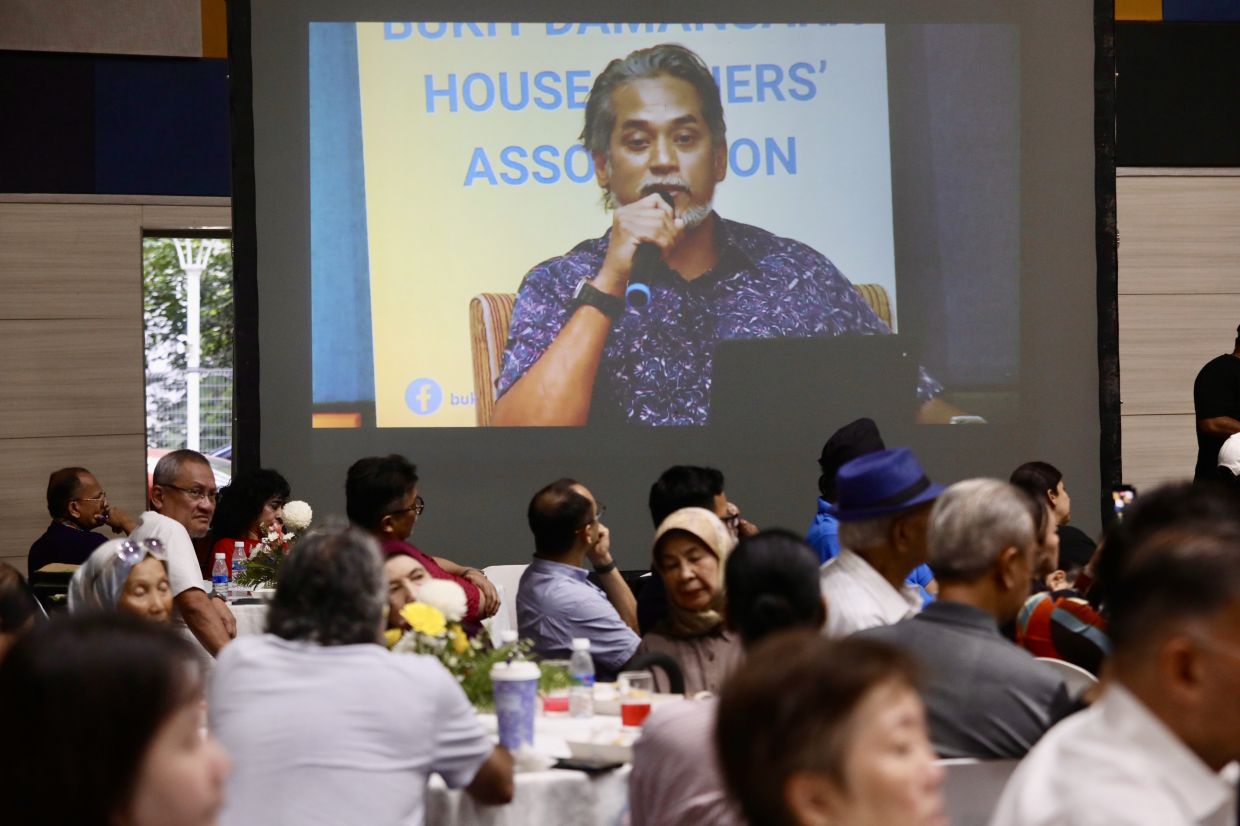
Residents of the prestigious Bukit Damansara neighbourhood have escalated their opposition to a controversial residential renovation project by demanding that Kuala Lumpur City Hall immediately revoke the construction permit granted for converting a double-storey semi-detached house into a three-storey structure. The call came during a town hall dialogue organised by the Bukit Damansara Home Owners' Association, which drew approximately 400 residents seeking answers about the development that has already commenced despite considerable community resistance.
The gathering, held at Pusat Komuniti Bukit Damansara, represented the first major community engagement since Khairy Jamaluddin assumed the presidency of the residents' association in early August. Titled "Your Voice Matters", the three-hour dialogue reflected growing frustrations among residents who contend that the planning approval process failed to involve affected neighbours adequately. The town hall brought together key stakeholders, including Rosli Nordin, the City Hall Planning Department's town planner executive director, and Supt Ahmad Firdaus Mustafia Kamal, Brickfields deputy police chief, both tasked with addressing resident grievances and offering workable remedies.
The core objection centres on how the proposed renovation fundamentally undermines the architectural coherence that defines the residential enclave. Resident A. Zakki, who mobilised a petition capturing the opposition of 19 neighbours, explained that the original double-storey design harmonised with surrounding properties along the row. The addition of a third floor transforms the building envelope in a way that breaches the established aesthetic parameters of the area. Such uniformity in residential design is often a defining characteristic that homeowners in established neighbourhoods like Bukit Damansara factor into their property decisions and long-term investment valuations.
The timeline of administrative decisions underscores the contentious nature of the approval process. City Hall initially granted permission in December 2025, prompting immediate objections from residents. By January 2026, authorities had issued a stop-work order, suggesting some acknowledgment of community concerns. However, the reversal came approximately two months before the town hall, when approval was reinstated in June. Construction now stands at roughly 10 percent completion, with structural pillars already installed on the property's flanks. This oscillating regulatory stance has left residents questioning the consistency and transparency of City Hall's decision-making mechanisms.
Beyond aesthetic concerns, residents highlighted tangible physical damage linked to the ongoing construction activities. Neighbouring properties have developed visible cracks attributed to the building works, raising questions about compliance with construction standards and the adequacy of mitigation measures to protect adjoining structures. This practical dimension of the dispute extends beyond neighbourhood preferences into matters of property rights and structural integrity—concerns that resonate deeply with homeowners whose residences represent their most significant financial assets.
City Hall's response, articulated through Rosli, indicated an intention to acknowledge resident grievances without committing immediately to the permit withdrawal residents demanded. The planning official stated that City Hall would document the issues emerging from the renovation, positioning the dialogue as an information-gathering exercise rather than a decision-reversing mechanism. This measured official stance suggests that the city authority may view the project through a regulatory lens focused on technical compliance rather than broader community impact, a perspective that diverges markedly from residents' emphasis on neighbourhood preservation.
The town hall also surfaced secondary issues affecting the area's livability, including traffic congestion occurring during peak school-drop-off and pick-up periods outside SK Bukit Damansara and Stella Maris International School Damansara. Traffic gridlock stretching from 7 am to 7:30 am and again from 2 pm to 4 pm reflects broader urban mobility challenges that plague residential areas proximate to educational institutions. Supt Ahmad Firdaus indicated that police were addressing the matter, though the Brickfields deputy chief's response lacked specific commitments regarding enhanced enforcement mechanisms or permanent solutions.
Ameirul Azraie Mustadza, representing the school's Parent-Teacher Association, disclosed resource constraints hindering more aggressive traffic management interventions. The association had explored engaging Rela, a volunteer civil defence corps, to manage traffic discipline but lacked financial backing for the initiative. The school has appealed to traffic police for consistent daily monitoring rather than sporadic enforcement, a request that illustrates how community organisations depend on government resources and commitment to implement basic livability improvements.
A separate infrastructure concern emerged regarding aging water pipeline networks throughout Bukit Damansara, with residents calling for comprehensive inspections following multiple burst incidents. An Air Selangor representative acknowledged awareness of the pipeline failures and outlined plans to progressively replace the aging infrastructure network serving the neighbourhood. This issue highlights how aging utility systems in established residential areas create ongoing maintenance burdens, with repair work often disrupting community life and requiring sustained engagement between service providers and residents.
Khairy's framing of the town hall as a bridge between residents and decision-makers emphasises the associational role of community leaders in channelling neighbourhood concerns upward through governance structures. His commitment to follow up on issues and facilitate faster problem resolution represents the advocacy function that residents' associations fulfil, particularly in affluent areas where homeowners possess both the organisational capacity and motivation to mobilise collectively. However, the actual capacity of such forums to influence official decisions remains uncertain, especially when governmental agencies maintain discretionary authority over approvals already granted.
The Bukit Damansara dispute encapsulates broader tensions in urban governance affecting Malaysian residential communities. The conflict between individual property rights—the owner's entitlement to develop their land within regulatory frameworks—and collective neighbourhood interests regarding aesthetic consistency and structural integrity reflects evolving expectations about how development should be governed. The case also reveals potential gaps in consultation mechanisms, despite formal processes existing, and questions whether permit approval systems adequately balance competing interests or default to technical compliance at the expense of community cohesion.
For residents across similar established neighbourhoods in Kuala Lumpur and other Malaysian cities, the Bukit Damansara situation demonstrates both the potential and limitations of organised community action. While town halls provide platforms for residents to articulate concerns and engage officials directly, the actual influence over administrative decisions remains contested terrain. The outcome of this particular dispute will likely set precedents for how City Hall addresses future development proposals in heritage residential areas, making the stakes of this dialogue extend beyond Bukit Damansara itself.

