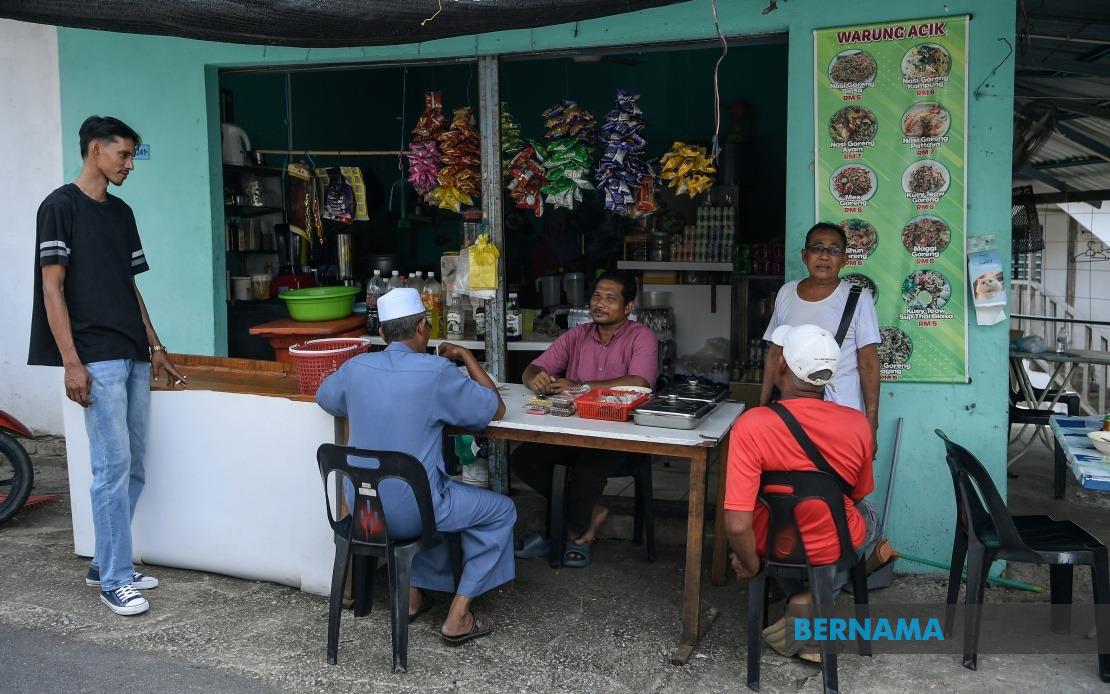
The residents of Bukit Malut in Langkawi are mounting a public campaign to dispel what they characterise as a deeply entrenched and damaging perception of their community, which has long been unfairly associated with illegal immigration and refugee landings. Leadership and members of the neighbourhood have come forward to challenge these allegations, arguing that misinformation spread through social media and repeated finger-pointing by authorities has poisoned public opinion without any factual foundation. The effort represents a broader frustration among a settled population struggling against stereotypes that have defined their locality for years, regardless of their actual circumstances.
Mohamad Fadzli Abdullah, chairman of Bukit Malut Neighbourhood Watch (KRT), articulated the residents' central grievance during recent remarks to the press. He explained that the community has become accustomed to bearing the brunt of blame whenever refugee or illegal immigration incidents occur across Langkawi. The pattern, he suggested, follows a reflexive pattern whereby external observers automatically assume Bukit Malut's involvement without empirical basis. Abdullah emphasised that this repetitive association has created a false narrative that residents find increasingly untenable and corrosive to their collective identity and standing within the broader island community.
A critical aspect of the residents' counter-narrative involves the geographic and strategic positioning of their settlement. Bukit Malut sits in close proximity to operational bases of the Malaysian Maritime Enforcement Agency (MMEA), the Royal Malaysian Customs Department (RMCD), and the Royal Malaysian Navy (RMN). This clustering of enforcement infrastructure would logically create substantial obstacles for any covert landing or settlement operations, given the constant surveillance and patrols such agencies conduct. Abdullah pointed out the inherent contradiction in claims that refugees could establish themselves in a zone so heavily monitored by multiple security apparatus, suggesting that credibility of such allegations should be questioned from first principles.
Beyond refuting the refugee settlement narrative, residents also addressed a secondary layer of stigmatisation involving public access and safety concerns. Abdullah denied suggestions that the neighbourhood operates under restrictive entry conditions or that security vulnerabilities exist within Bukit Malut. He stressed that the area welcomes visitors and that consistent security monitoring by authorities supports the normality of daily life there. The rejection of these access restrictions undercuts another dimension of the unfair characterisation—the suggestion that something unsavoury justifies keeping outsiders away, when in fact the settlement functions as an ordinary residential community subject to regular law enforcement oversight.
The economic profile of Bukit Malut further contradicts the image of a settlement harbouring irregular populations. According to Abdullah, approximately 85 per cent of the neighbourhood's households depend on fishing as their primary livelihood, a maritime occupation deeply rooted in Langkawi's identity and history. The remaining residents comprise traders, car rental operators, civil servants, uniformed personnel, and university graduates employed across various professional sectors. This composition reflects a conventional Malaysian village economy rather than the shadowy refuge suggested by allegations, demonstrating integration into formal employment structures and economic institutions.
Hashanah Zakaria, a 42-year-old long-term resident, offered a personal testimony challenging the narrative that governs outside perception of Bukit Malut. She urged members of the public to visit the neighbourhood firsthand rather than accepting unverified claims circulating on social media platforms, which she identified as primary vectors for misinformation. Speaking from two decades of residence in the settlement, Zakaria characterised Bukit Malut as a functioning village community without pronounced crime problems or legitimate safety concerns. Her appeal to direct observation rather than rumour reflects a frustration that reasonable people would accept allegations without personal verification.
The impact of this stigmatisation extends beyond adult residents to affect the younger generation. Zakaria disclosed that the negative reputation attached to Bukit Malut has spilled into her child's experience at a boarding school elsewhere in Langkawi, creating social friction rooted in geography rather than individual conduct. She described her response as one of encouragement—urging her child to disregard such associations and concentrate on academic pursuits. This intergenerational dimension of stigmatisation illustrates how reputational damage accrues within communities and shapes opportunity and social integration for cohorts who have no agency in the allegations affecting their place of origin.
Abas Salam, a 62-year-old whose residency in Kampung Tanjung Lembung spans more than three decades, articulated perhaps the sharpest rebuke to refugee-related allegations. He expressed particular frustration with claims specifically linking residents to Rohingya populations, demands that he and others cease being labelled as connected to external groups when residents possess legitimate Malaysian citizenship status. Salam identified himself and his neighbours as Kedah Malay-Muslims with full citizenship standing, framing the allegations as implicitly questioning their authenticity as Malaysians. This dimension of the stigma carries particular weight in the Malaysian context, where citizenship and ethnic-national identity remain sensitive and politically charged concepts.
Salam's personal history within Bukit Malut positions him as one of the settlement's founding generation. He recalled the early stages of community development when residents manually constructed homes, a mosque, and a religious school with minimal external assistance. This narrative of self-initiated development and institutional building contrasts sharply with characterisations of the area as passive recipient of external populations. The progression from these humble origins to a contemporary community where children and grandchildren pursue formal education represents a generational trajectory of normalcy and advancement rather than a stasis of illegality.
The residents' push-back against the refugee settlement narrative reflects broader challenges facing Malaysian communities labelled as problematic without substantive evidence. Langkawi, as a tourist destination and maritime zone, faces genuine issues related to immigration control and law enforcement, yet the concentration of these concerns upon particular neighbourhoods without proportionate evidence can perpetuate cycles of discrimination and exclusion. The residents of Bukit Malut are essentially demanding that public discourse about their community be anchored in verifiable fact rather than assumption and hearsay that circulates with little accountability.
This dispute also raises questions about institutional communication and the role of authorities in either validating or challenging stereotypes about particular communities. When enforcement agencies investigate incidents across a district and then singular neighbourhoods become associated with all such incidents, official messaging—or lack thereof—can inadvertently reinforce public misconceptions. The residents' emphasis on the proximity of MMEA, RMCD, and RMN bases suggests frustration that these agencies' actual surveillance and interdiction operations have not adequately communicated to public consciousness the improbability of refugee settlement occurring under their operational watch.
Moving forward, the residents of Bukit Malut are positioning their campaign for reputation rehabilitation within the context of Malaysian national identity and citizenship standards. By insisting on recognition as legitimate Malaysians contributing productively to local economy and maintaining community institutions, they resist reductive characterisations that conflate place of residence with irregular immigration status. This assertion of belonging and legitimacy represents a reclamation of narrative that residents believe has been unfairly dominated by external observers and unverified rumours, a struggle increasingly familiar across Malaysian communities facing stigmatisation in the digital age.

