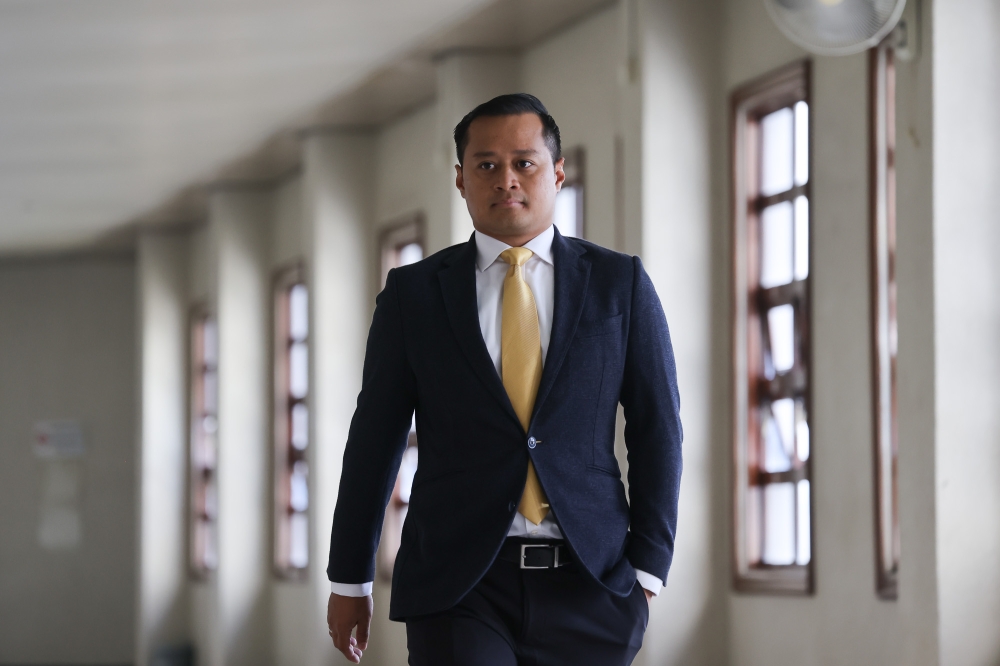
The trial of former Prime Minister Muhyiddin Yassin has taken a revealing turn as a businessman disclosed in High Court proceedings that he remained ignorant of a substantial donation his brother channelled from their jointly-held company to Bersatu, the political party Muhyiddin leads. The testimony, delivered in Kuala Lumpur, provides an uncommon window into how political donations flow through Malaysian business channels and raises fresh questions about corporate oversight and accountability within family-run enterprises.
Shahrin Shamsuddin appeared as a witness in what has become one of the most closely watched legal proceedings involving Malaysia's recent political leadership. His account centred on discovering belatedly that his brother had redirected a significant portion of funds held within their shared company toward supporting Bersatu, the Bumiputera Empowerment Action agenda that emerged as a prominent force in Malaysian politics following the 2020 collapse of the Pakatan Harapan government. The RM13.7 million sum represents a meaningful corporate contribution to political activities, reflecting the intricate relationship between Malaysian business interests and party funding mechanisms.
The circumstances surrounding this donation illuminate broader patterns in how Malaysian political parties secure financial backing. Unlike formal institutional fundraising channels or transparent membership contributions, corporate donations often flow through complex webs of intermediaries, family networks, and business relationships. The fact that Shahrin discovered the transaction only after the fact suggests either remarkable informality in managing such substantial sums or deliberate compartmentalisation of decision-making within the family enterprise. This raises pertinent questions about governance standards that Malaysian businesses are expected to maintain, particularly when deploying funds for political purposes.
For Malaysia's corporate sector and investor community, such revelations carry significant implications. Companies that have established protocols for major financial transactions typically require multiple approvals and documentation trails. The apparent ease with which one brother could direct such a large sum toward political activities without consulting his partner indicates either exceptionally loose corporate controls or a conscious bypass of standard procedures. This disconnect between professional business practices and actual behaviour in Malaysian firms merits scrutiny from regulators and corporate governance advocates.
The testimony also illuminates how Bersatu has consolidated its financial base since its formation in 2016. The party emerged initially from within the Malaysian United Indigenous Party structure before carving out an independent identity that eventually attracted Muhyiddin and several prominent figures from other political parties. Corporate contributions such as the one described in this trial have undoubtedly strengthened Bersatu's capacity to maintain party machinery, fund electoral campaigns, and sustain operations between election cycles. Understanding these funding sources provides crucial context for assessing how the party navigated its dramatic rise to national prominence.
Muhyiddin's tenure as Prime Minister, which lasted from March 2020 to August 2021, benefited substantially from Bersatu's political positioning and financial resources. During this period, the party emerged as a kingmaker in Malaysia's fragmented parliamentary landscape, holding leverage disproportionate to its parliamentary seat count. The corporate donations flowing into party coffers during this time would have enhanced its negotiating position and allowed sustained investment in political operations. Tracing the funding mechanisms behind Bersatu's ascendancy thus provides historians and political analysts with vital clues about the party's structural consolidation.
The trial proceedings themselves form part of Malaysia's broader reckoning with post-2018 governance standards and financial accountability. Since the ousting of Najib Razak, Malaysian courts have become venues for testing whether the political establishment can successfully prosecute its own members for financial impropriety. The presence of a businessman testifying about corporate fund flows toward Bersatu suggests prosecutors are building a comprehensive case that explores not merely individual misconduct but institutional patterns of political financing that may contravene legal strictures.
For Malaysian voters and civil society organisations monitoring political finance, such courtroom disclosures offer rare transparency into transactions that typically remain opaque. Political parties in Malaysia face minimal mandatory disclosure requirements compared to democracies in the West, and corporate contributions often leave minimal public traces. When such information emerges through litigation, it provides invaluable material for understanding which business interests maintain relationships with which political entities. This particular case thus serves an educational function beyond its immediate legal implications.
The broader Southeast Asian context amplifies the significance of this testimony. Across the region, questions about corporate-political nexuses remain persistently contentious, with multiple countries grappling with appropriate regulations for business donations to parties. Malaysia's judicial system, through cases such as Muhyiddin's trial, is effectively establishing jurisprudential precedents about acceptable boundaries between corporate activity and political support. These precedents will likely influence how other Southeast Asian jurisdictions approach similar issues in coming years.
Shahrin's account raises practical questions for Malaysian company directors and shareholders. When substantial sums are deployed for political purposes without full partner knowledge or consent, potential vulnerabilities emerge around company liability, regulatory exposure, and partnership relations. The trial will likely generate renewed discussion about whether Malaysia's corporate governance framework adequately addresses scenarios where significant company resources become entangled with political activities through informal channels or unilateral decision-making by individual shareholders or directors.

