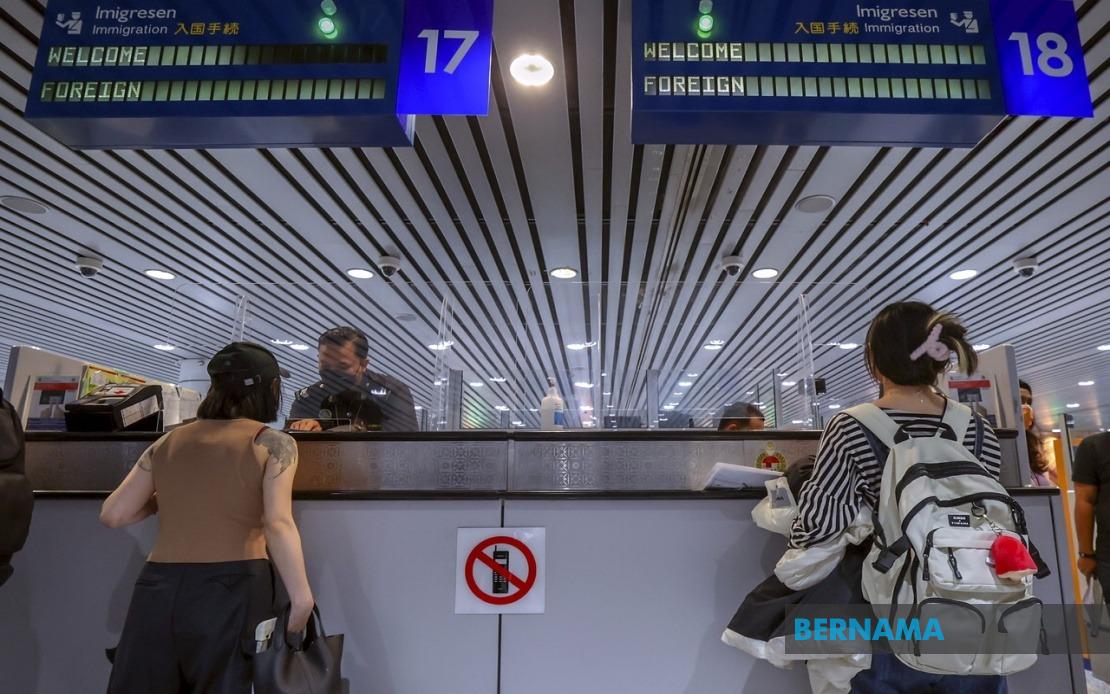
Malaysia's Cabinet has given the green light to a comprehensive 17-point security enhancement framework designed to tighten controls at Kuala Lumpur International Airport and the nation's other international gateways. The approval came during yesterday's Cabinet session, with the Home Ministry and Ministry of Transport jointly presenting the initiative following heightened public concern about breaches in airport security procedures.
The overarching strategy encompasses both immediate deployment and phased long-term transformation. The initial push will concentrate on tactical improvements—refined technologies, increased staffing, and strengthened personnel capabilities—while later phases will focus on systemic modernisation, intelligence networks between agencies, and ethical governance structures. Implementation will eventually extend across all international entry points nationwide, tailored to the specific threat profile and operational context at each location.
Six actions have been flagged for immediate rollout as quick-win measures. The first involves implementing risk-based screening protocols that zero in on flights, passengers, crew, and baggage flagged through intelligence analysis. This approach moves beyond blanket procedures toward precision targeting of high-risk movements, potentially improving both security effectiveness and passenger experience by reducing unnecessary delays.
The second measure focuses on e-Vetting and access control systems, a response to vulnerabilities in how the aviation sector manages personnel clearance. Flight crews, airline workers, ground handlers, airport employees, and contractors requiring entry to secure zones will face enhanced examination procedures. This recognises that insider threats—whether deliberate or through negligence—represent a significant security vector that previous systems may have underweighted.
Drug screening for aviation personnel forms the third pillar of immediate action. The framework mandates pre-employment testing, routine periodic checks, and random assessments targeting pilots, cabin crew, and related aviation staff. This measure directly addresses documented cases where individuals within the aviation workforce have become vectors for narcotics trafficking, exploiting their access and trusted positions.
Three additional immediate priorities round out the short-term agenda: bolstering the visible security presence at airports, establishing robust information-sharing protocols between agencies, and forming a dedicated Home Ministry-Transport Ministry Technical Committee to oversee coordination. These structural changes aim to dismantle information silos that may have previously prevented security personnel from connecting disparate intelligence dots.
The Cabinet's decision follows a string of incidents that exposed gaps in Malaysia's border security apparatus. Most prominently, a Malaysian pilot was apprehended at Indonesia's Soekarno-Hatta International Airport with approximately 25 kilograms of MDMA in his possession, a case that reverberated across the region and sparked urgent questions about how qualified aviation personnel could become entangled in drug trafficking operations. Separately, a Malaysian was detained in Indonesia on suspicion of involvement in large-scale drug smuggling, further underscoring the permeable nature of Southeast Asian entry points and the risks they pose to Malaysia's reputation.
KLIA will serve as the testing ground for this new security architecture before expansion to other border crossings. The phased approach reflects practical recognition that different entry points—whether airports, seaports, or land borders—face distinct operational realities and threat landscapes. A policy rigid enough to function at one location might prove unworkable at another, or conversely, might impose unnecessary burdens on lower-risk gateways.
The government has emphasised that implementation will proceed with professional rigour, legal compliance, and respect for individual rights and data protection. This language appears calibrated to preempt criticism from civil liberties advocates or industry groups concerned that security overreach could compromise passenger privacy or impose onerous compliance costs on airlines and ground service providers. The aviation industry, which relies on predictable international standards and passenger confidence, has legitimate concerns about unilateral tightening that might disadvantage Malaysian carriers or discourage transit traffic.
For Malaysia specifically, the initiative carries strategic weight. The nation functions as a crucial international aviation hub and transit point, with KLIA ranking among Asia-Pacific's busiest facilities. Any durability of security concerns threatens not only traveller confidence but also the country's positioning as a reliable partner in global aviation networks. Neighbouring countries and international aviation authorities will scrutinise how effectively Malaysia translates these Cabinet recommendations into tangible operational improvements.
The security overhaul also reflects Malaysia's broader vulnerability within Southeast Asia's increasingly sophisticated transnational drug trade. The region has become a critical nexus in the movement of synthetic narcotics from production zones to consumption markets globally. Trafficking networks exploit permeable borders, corrupt officials, and gaps in inter-agency coordination. By tightening controls at major entry points and improving intelligence sharing, Malaysia signals commitment to disrupting these networks, though success will ultimately depend on sustained implementation and regional cooperation that extends beyond Malaysia's unilateral measures.
Government spokesman Datuk Seri Fahmi Fadzil characterised the Cabinet decision as part of the MADANI administration's broader commitment to institutional integrity and public safety. Whether these 17 recommendations translate into meaningful security enhancement will become clear over months of implementation. The success metric will not merely be bureaucratic—whether procedures were written and committees formed—but operational: whether actual smuggling attempts are interdicted and whether aviation workers remain focused on safety and legality rather than exploiting their access for illicit purposes.
The immediate priority now shifts to the Technical Committee and implementing agencies. They must balance security imperatives against the realities of a thriving aviation sector. Too heavy-handed an approach risks strangling the industry; too lenient invites further breaches. For Malaysian travellers and the international aviation community, the coming months will reveal whether Cabinet approval translates into genuine systemic strengthening or merely procedural theatre.

