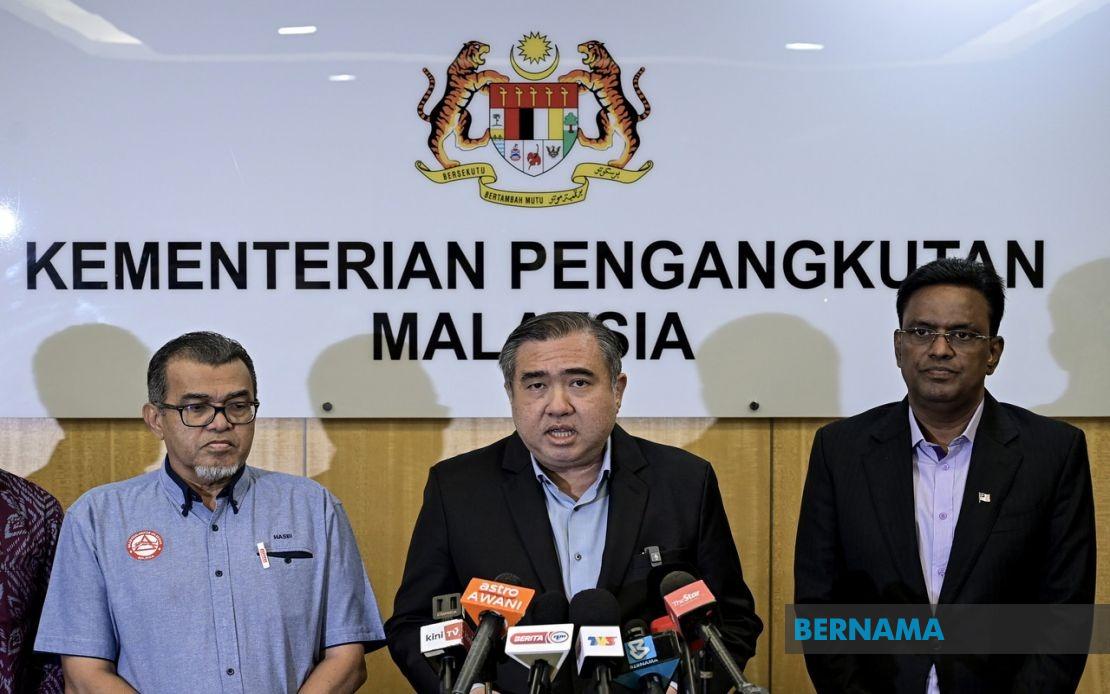
Malaysia's Cabinet has endorsed the principle of amending the Road Transport Act 1987 to introduce court-ordered compensation for road accident victims, marking a significant shift in how the country addresses the human cost of traffic violations. Transport Minister Anthony Loke unveiled the proposal on Wednesday in Putrajaya, indicating that the government intends to strengthen accountability among offenders beyond traditional penalties such as imprisonment, fines, and driving bans. This mechanism represents an attempt to bridge the gap between criminal punishment and the tangible losses suffered by victims and their families, who have historically relied solely on insurance claims or separate civil litigation to recover damages.
The proposed amendments would apply to a broad spectrum of road offences, ranging from driving under the influence of alcohol or drugs to reckless driving, though the ministry has signalled that the final scope will be determined through detailed consultation. Rather than implementing a standardised compensation formula imposed by government authorities, Loke emphasised that courts would assess appropriate compensation amounts on a case-by-case basis, taking into account the severity of the violation, the nature and extent of injuries or fatalities, documented losses incurred by victims or their families, and the financial capacity of the offender to pay. This judicial discretion approach aims to ensure fairness and proportionality, acknowledging that the circumstances surrounding each incident differ substantially.
The compensation framework would operate as a supplementary penalty rather than a replacement for existing sanctions under the law. Offenders facing prosecution would still encounter prison sentences, monetary fines, and driving disqualifications as determined by the courts, but would now face the additional obligation to provide financial restitution to those harmed by their actions. Loke stressed this distinction during his announcement, reinforcing that the government views compensation as complementary to, not substitutive of, criminal penalties. This layered approach recognises both the public interest in punishing traffic violations and the private interests of victims in recovering losses resulting from injuries, medical expenses, lost income, and emotional trauma.
Crucially, the amendments would not interfere with existing legal pathways available to accident victims. Insurance claims and civil lawsuits would remain available as parallel remedies, allowing victims to pursue multiple avenues for compensation simultaneously. This preservation of existing rights is significant for Malaysian readers who may already have insurance coverage or who might pursue civil damages through the courts independently. The government's intention to keep these channels open reflects an understanding that judicial compensation orders, while valuable, may not always fully address the economic burden imposed by serious accidents.
The Ministry of Transport will now proceed with drafting specific legislative language to operationalise this framework, but recognises that considerable groundwork remains before Parliament considers the bill. The ministry intends to conduct extensive engagement sessions with other government departments, relevant agencies, and stakeholder groups—particularly the insurance industry—to refine operational details and address practical concerns. Key issues requiring clarification include determining which categories of road offences should trigger compensation obligations, establishing clear definitions of what constitutes serious injury for compensation purposes, and developing protocols for situations where an offender lacks financial means to satisfy a court-ordered compensation award.
These consultative processes carry particular weight given the insurance sector's direct interest in how compensation mechanisms interact with existing policy frameworks. Insurers will need to understand whether court-ordered compensation affects their liability exposure, how subrogation rights function when victims receive compensation from both insurance and court orders, and whether premium structures require adjustment to reflect this new legal environment. The engagement process also provides an opportunity for civil society groups representing accident victims to advocate for victim-centred provisions that maximise their access to meaningful remedies.
Loke indicated that the government aims to present the bill for parliamentary consideration during the end-of-year sitting, contingent on completing both the drafting and stakeholder engagement phases. However, he emphasised that the legislation would not apply retroactively—only road offences committed after Parliament passes the amended Act would be subject to the compensation requirement. This temporal limitation reflects fundamental legal principles that prevent criminal penalties from being applied to conduct that was not punishable at the time it occurred, though it also means the amendment's impact will accumulate gradually over time as new cases proceed through the courts.
The minister has also proposed establishing a parliamentary special select committee to examine the bill in depth before it reaches the wider legislature. This institutionalised approach seeks to generate cross-party consensus on a matter affecting public safety and victim welfare, rather than allowing the legislation to become mired in partisan debate. Such committees often produce more carefully considered legislation and can facilitate compromise between competing interests, though the effectiveness of this mechanism depends on genuine commitment from all political factions to engage substantively.
For Malaysian motorists, these amendments carry both practical and symbolic implications. At the practical level, offenders face a new financial risk beyond traditional penalties, which could enhance deterrence effects if combined with robust enforcement of existing traffic laws. The reforms also signal government acknowledgement that road accidents impose measurable harm extending beyond the victim to their dependents and that offenders should bear some responsibility for remedying these harms. At the symbolic level, the amendments reflect a broader policy orientation prioritising victim welfare and holding wrongdoers accountable for consequences beyond the courtroom.
The proposed changes also address a persistent frustration among accident victims and advocates for road safety reform. Malaysia's road fatality rate remains relatively high by regional standards, and many accident victims struggle financially following injuries that damage earning capacity or require expensive treatment. Current legal frameworks often leave victims dependent on insurance proceeds, which may be inadequate or unavailable, or forced into protracted civil litigation that consumes time and resources. Court-ordered compensation as a criminal sentence could provide a more direct and accessible remedy, though success depends on offenders actually possessing assets or income available for restitution.
The insurance industry's response to these proposals will likely shape their final form. Insurers may advocate for mechanisms protecting them from double payment or for clearer rules governing how court awards interact with insurance obligations. Conversely, victim advocacy groups may push for provisions ensuring that offenders' inability to pay does not eliminate compensation or that government establishes a victim compensation fund for cases where court orders remain unsatisfied. These competing interests will become apparent during the engagement sessions, potentially requiring substantive compromises before the bill reaches Parliament.
The proposed amendments also occur within a broader regional context of road safety initiatives. Neighbouring countries have experimented with various approaches to victim compensation, from insurance-based schemes to criminal restitution mandates, offering lessons for Malaysian policymakers. The government's decision to subject the bill to parliamentary scrutiny through a special committee suggests recognition that comprehensive road safety reform requires sustained attention and expert input rather than hasty legislation.
Ultimately, the Cabinet's approval signals genuine movement toward making road offenders financially accountable to their victims, though the distance between principle and practical implementation remains substantial. The detailed consultations now beginning will reveal whether the government can craft a compensation framework that genuinely aids victims while remaining administratively workable and economically viable. The outcome will significantly affect how Malaysian courts address serious traffic violations and whether accident victims finally obtain direct financial responsibility from the wrongdoers who harmed them.

