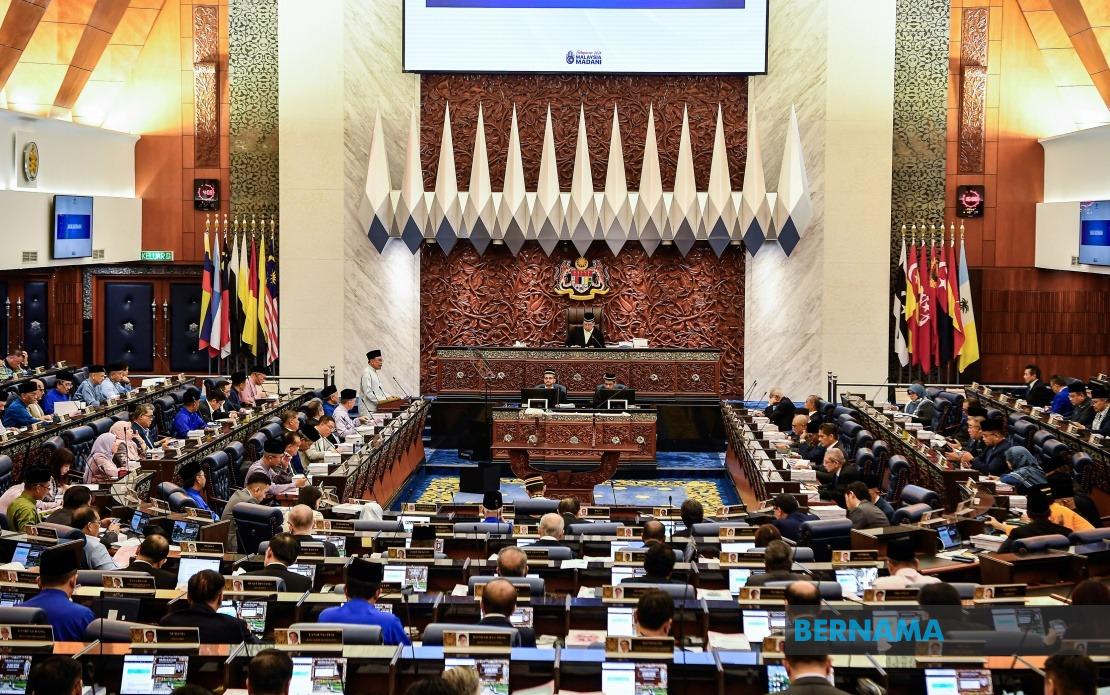
Malaysia's Cabinet has endorsed a constitutional amendment that significantly expands Parliament's role in the appointment process for the Public Prosecutor, reflecting the MADANI Government's commitment to institutional reform and the strengthening of democratic checks and balances. The amendment, which will be debated in Parliament on July 13, represents a deliberate attempt to clarify and separate the distinct functions of the Attorney General and the Public Prosecutor—a distinction that has long been the subject of legal and political debate in Malaysia's governance framework.
The proposed changes stem from work conducted by the Special Select Committee on Constitutional Amendments Related to the Separation of Roles of the Attorney General and Public Prosecutor, which was formally established in March 2026 after the Bill underwent its first parliamentary reading in February. This committee composition deliberately included lawmakers from both government and opposition benches, signalling an intent to build broad consensus on an issue that transcends partisan lines and touches on fundamental aspects of the judicial system.
The committee's deliberations spanned seven formal meetings, during which members examined the legislative framework, set clear terms of reference, and engaged with multiple stakeholder groups ranging from constitutional law experts to civil society organisations. This consultative approach reflects a significant departure from how institutional reforms have historically been pursued in Malaysia, where such measures have occasionally been characterised as executive-driven without adequate parliamentary input. The breadth of consultation appears to have yielded substantive amendments rather than cosmetic revisions, particularly regarding how candidates will be nominated and vetted.
Under the revised framework outlined in the amended Clause 18 of Article 145A, potential Public Prosecutor candidates will be submitted to the Speaker of the Dewan Rakyat for presentation to the full House. This step creates a transparent entry point for legislative scrutiny, ensuring that Parliament has visibility over the candidate pool from the outset rather than merely ratifying a decision made within the executive or the Judicial and Legal Service Commission. Following parliamentary presentation, a dedicated Select Committee will conduct detailed scrutiny of the nominated candidates, examining their qualifications, experience, and suitability for the prosecutorial role.
After the Select Committee completes its assessment, the Dewan Rakyat will issue formal recommendations that will be transmitted to the Judicial and Legal Service Commission. Critically, the JLSC will not simply rubber-stamp parliamentary recommendations but will instead use them as a substantive input when advising the King on the final appointment. This three-layered process—parliamentary presentation, Select Committee scrutiny, and JLSC advice—creates multiple checkpoints that should theoretically enhance the legitimacy and quality of prosecutorial leadership in Malaysia.
The underlying motivation for this reform addresses a longstanding tension in Malaysia's constitutional governance. The Attorney General serves primarily as legal adviser to the Crown, Cabinet, and Ministers, while the Public Prosecutor exercises independent prosecutorial discretion and powers. In practice, these roles have sometimes been conflated, raising concerns about whether prosecutorial decisions reflect political influence rather than independent legal judgment. By creating clearer institutional separation and enhancing parliamentary oversight, the amendments attempt to signal that prosecutorial independence is a valued principle worthy of structural protection.
For Southeast Asian observers and Malaysia-watchers abroad, these amendments acquire additional significance in the context of regional democratic trends. Several ASEAN nations have grappled with questions about the independence of prosecution systems, and Malaysia's attempt to embed parliamentary oversight mechanisms may serve as a potential model—or cautionary example—for how middle-income democracies can strengthen judicial independence without fundamentally altering constitutional arrangements. The approach appears calibrated to preserve executive functionality while introducing transparent, legislated constraints on prosecutorial appointments.
The statement from the Legal Affairs Division emphasises that the amendments aim to preserve the balance between prosecutorial independence and institutional accountability—a formulation that itself reflects considerable debate about how these values can coexist. The government's framing suggests that parliamentary oversight strengthens rather than undermines independence, on the theory that a prosecutor chosen through a transparent, multi-layered process enjoys greater legitimacy and protection from unilateral executive pressure. Whether this theoretical protection translates into practical independence will depend on how parliamentary Select Committees exercise their scrutiny powers in future appointment cycles.
The timing of the constitutional amendment is noteworthy. Coming at a moment when Malaysia is consciously re-evaluating its institutional architecture following the MADANI coalition's formation, the reform signals broader intent to redistribute power away from concentrated executive control toward more diffuse parliamentary and legal institutions. Other democracies have undergone similar institutional recalibrations during periods of political transition, and Malaysia's moves in this direction may indicate that current political leadership views institutional legitimacy—rather than concentrated control—as the foundation for durable governance.
For Malaysian legal professionals, particularly those in prosecutorial service, the amendment carries implications for recruitment, career progression, and the perceived standing of the Public Prosecutor's office. An appointment process that is transparent and legislatively structured may enhance the prestige of the office while also raising expectations about the appointee's qualifications and track record. Prosecutors entering service under such a regime may expect greater institutional protection and autonomy, though actual practice will ultimately determine whether parliamentary oversight proves a genuine shield or merely a symbolic gesture.
The civil society organisations and legal experts consulted during the committee's work will likely scrutinise the implementation phase closely. Constitutional amendments alone do not guarantee institutional change; enforcement mechanisms, the quality of parliamentary scrutiny, and the JLSC's willingness to regard parliamentary recommendations substantively will all shape outcomes. The government's statement emphasises commitments to administering justice independently, transparently, and with integrity, aspirations that resonate with international best practices but require consistent institutional behaviour to realise.
The July 13 parliamentary debate will provide the first substantial public test of how lawmakers from different political camps view this amendment. While the Cabinet's endorsement signals governmental support, opposition scrutiny during second reading could reveal points of contention or opportunity for further refinement. The debate may also clarify parliamentary and executive understanding of how the Select Committee should operate, what criteria should guide evaluation of candidates, and how the JLSC should interpret parliamentary recommendations as advisory versus binding guidance.
Ultimately, this amendment represents Malaysia's calculated attempt to reconcile executive efficiency with democratic legitimacy in a critical institutional domain. The success of such reforms depends less on the precise constitutional language than on the sustained political will to implement them faithfully and the development of institutional practices that respect both the letter and spirit of the amendments. For a region watching Malaysia's democratic trajectory closely, the next few years of prosecutorial appointments under this new regime will provide valuable evidence about whether institutional restructuring can meaningfully advance the stated goals of independence, transparency, and accountability.

