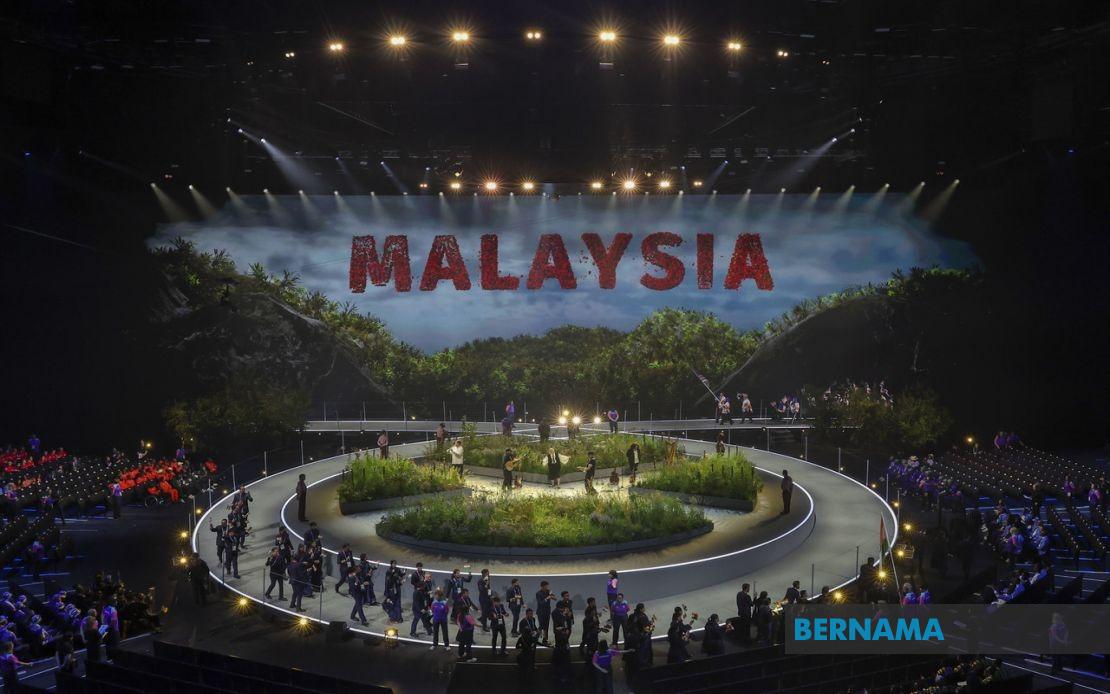
The Malaysian Cabinet has extended its congratulations to the national sporting contingent following their impressive display at the Glasgow 2026 Commonwealth Games, where the team exceeded expectations and delivered the country's strongest showing at the competition in over a decade. Communications Minister Datuk Seri Fahmi Fadzil, speaking as MADANI Government spokesman at a post-Cabinet media conference in Putrajaya on August 5, highlighted how the athletes' collective success has reinforced Malaysia's standing on the international sporting stage and generated considerable national pride.
The performance at Glasgow represents a significant milestone for Malaysian sport, with the contingent capturing eight gold medals, three silver and five bronze medals in total—a haul that substantially outperformed the government's pre-Games target of five gold medals. This achievement stands as Malaysia's best Commonwealth Games outcome since New Delhi 2010, when the nation secured 12 gold medals, marking a resurgence in competitive performance at one of the Commonwealth's marquee sporting events. The improvement underscores the potential within Malaysia's athlete development systems and the effectiveness of targeted investment in sports excellence.
Fahmi emphasized that the government views the Glasgow results as far more than mere medal tallies or statistical achievements. Rather, he characterized the contingent's performance as providing essential inspiration and motivation for Malaysia's broader athletics community, particularly for younger athletes aspiring to represent their country internationally. The Cabinet's formal recognition through this public endorsement signals governmental commitment to nurturing future sporting talent and maintaining momentum in Malaysia's competitive standing within regional and Commonwealth athletics.
To recognize and reward the athletes' contributions, the government has allocated RM1.1 million through the Sports Victory Incentive Scheme (SHAKAM), a mechanism specifically designed to provide financial recognition for national athletes who achieve or exceed predefined international competition targets. This direct financial commitment reflects the administration's conviction that tangible rewards reinforce elite sporting performance and acknowledge the considerable sacrifices athletes make in pursuit of international medals. The allocation demonstrates a structured approach to incentivizing excellence rather than offering ad hoc recognition.
The Glasgow 2026 Commonwealth Games represents a crucial juncture for Malaysian athletics as the nation seeks to maintain competitiveness within an increasingly challenging international environment. The contingent's performance should be contextualized within Southeast Asia's broader sporting development, where nations across the region have substantially invested in athlete pathways, training infrastructure and sports science support. Malaysia's ability to exceed its pre-Games targets suggests that targeted investment and strategic planning within specific sports disciplines are yielding tangible returns.
The significance of this achievement extends beyond the immediate sporting realm into broader questions about national capability and soft power. Commonwealth Games performances carry particular resonance within Malaysia's diplomatic and cultural positioning, as the Games represent not merely athletic competition but also connection to the Commonwealth family and demonstration of national competence on an international platform. Strong sporting performances contribute to national confidence and international visibility in ways that transcend the athletic arena itself.
Looking forward, the Glasgow results should prompt serious examination of which sports and athletes generated medal success, with the objective of identifying and replicating these success factors across other disciplines. Understanding the training methodologies, coaching structures and support systems that enabled medal-winning performances in Glasgow can inform future strategic planning and resource allocation across Malaysia's national sports ecosystem. The government's willingness to publicly celebrate achievement suggests receptiveness to deeper analysis of what drives elite performance.
The Cabinet's endorsement also carries implications for athlete retention and recruitment within Malaysian sports. When national leadership visibly acknowledges and rewards international success, the prestige associated with representing Malaysia in international competition increases, potentially attracting talented individuals into competitive athletics who might otherwise pursue alternative career paths. This psychological dimension of sporting investment often receives less attention than facility construction or coaching appointments, yet proves crucial for sustaining competitive advantage.
Within the Southeast Asian context, Malaysia's Commonwealth Games performance positions the nation favorably relative to regional peers and establishes a benchmark for upcoming international competitions. As Malaysia prepares for future regional and global sporting engagements, the momentum and confidence generated by Glasgow 2026 provides valuable foundation upon which to build sustained excellence. The challenge ahead involves maintaining this trajectory while continuously innovating in training methodologies and athlete support systems to remain competitive against evolving international standards.

