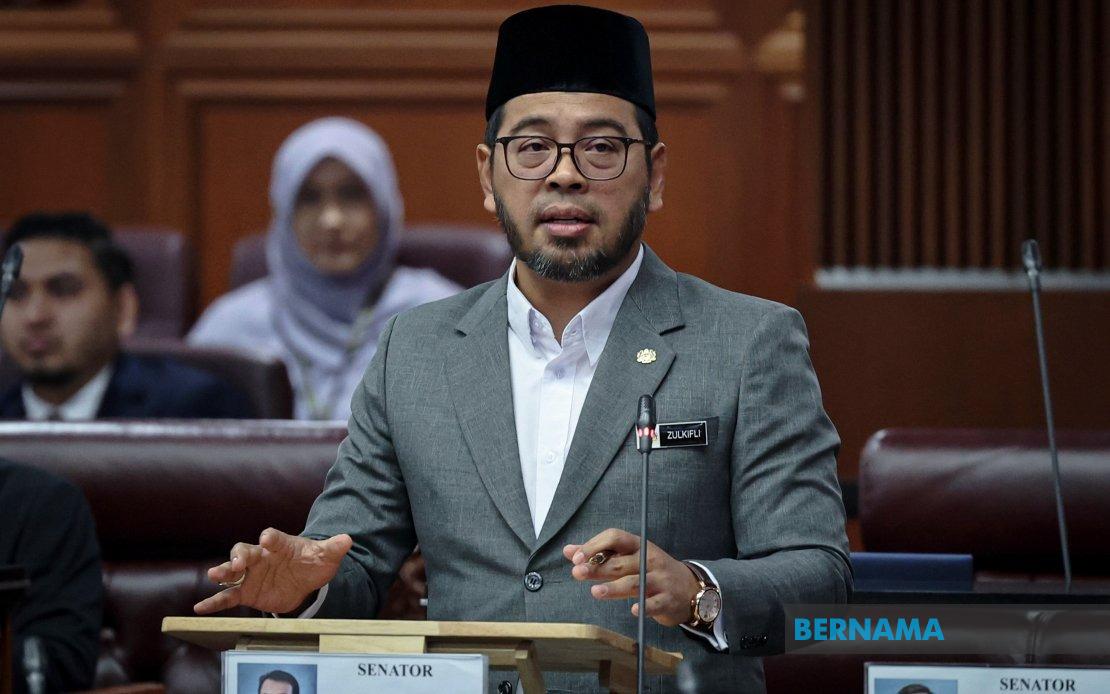
The Malaysian Cabinet will soon consider whether to release the final report of the Royal Commission of Inquiry into Tabung Haji's troubled finances, Religious Affairs Minister Dr Zulkifli Hasan revealed in Parliament this week. The decision comes as public discourse surrounding the pilgrimage savings institution continues to centre on allegations of asset sales and financial mismanagement, prompting calls for greater transparency regarding what transpired during the organisation's near-collapse five years ago.
Zulkifli used his parliamentary statement to forcefully rebut what he characterised as persistent misconceptions about the former Treasury secretary-general's role in Tabung Haji's predicament. He flatly denied claims that strategic assets had been sold off improperly, instead framing the 2018 intervention as an emergency rescue operation designed to preserve an Islamic financial institution at a moment of existential crisis. The minister's intervention suggests the government recognises the reputational damage inflicted by years of speculation and wants to establish a clearer historical record.
The financial emergency facing Tabung Haji in 2018 was far more severe than many Malaysians may realise. When independent auditors and Bank Negara Malaysia scrutinised the institution's books that year, they uncovered a staggering asset-liability deficit of RM10.9 billion, a figure that exposed how deeply troubled the organisation had become following what Zulkifli described as reckless misappropriation of depositors' funds. The scale of this deficit indicated systemic problems that had accumulated over years, not merely isolated instances of poor management.
The confidence crisis that gripped Tabung Haji compounded the structural financial weakness. Within a compressed timeframe, approximately RM6 billion was withdrawn by panicked depositors seeking to salvage their savings, while efforts to secure emergency financing through a standby loan arrangement ultimately proved unsuccessful. This combination of internal insolvency and external loss of depositor confidence created conditions where institutional collapse appeared imminent without dramatic intervention from the government.
The potential consequences of allowing Tabung Haji to fail would have been catastrophic for both individual Muslim savers and the government's balance sheet. The institution's deposits carried full government guarantee, meaning that a collapse would have exposed the Treasury to liabilities exceeding RM74.5 billion, a burden that would have severely strained public finances and rippled through the broader financial system. This was the calculus that prompted Cabinet to authorise the transfer of underperforming and problematic assets to Urusharta Jamaah Sdn Bhd, a specially created government entity, in 2018.
Since that pivotal intervention, Tabung Haji has staged a remarkable financial recovery that vindicates the rescue strategy, though the institution remains under considerable scrutiny. Deposits have surged from RM69.4 billion in 2019 to more than RM95.1 billion as of mid-2024, demonstrating restored confidence from Malaysia's Muslim community and the effectiveness of stabilisation measures. This trajectory suggests that the restructuring, despite initial controversy, has successfully arrested the institution's decline and positioned it for sustainable long-term growth.
Improved returns have accompanied the deposit recovery. The profit distribution rate, which had collapsed to 1.25 per cent in 2018, has rebounded to 3.5 per cent for the 2025 financial year, marking the strongest payout in eight years. For the millions of Malaysian Muslims who depend on Tabung Haji as their primary savings vehicle for the annual pilgrimage to Mecca, this improvement directly translates into higher returns on their accumulated funds and greater financial security for their hajj journeys.
Another measure of the rescue's success lies in hajj affordability. Despite relentless inflation eroding purchasing power across the Malaysian economy over the past three years, the cost of performing the hajj through Tabung Haji has remained frozen at identical levels from 2024 through 2026. This achievement reflects deliberate government policy to shield Muslim Malaysians from pilgrim-cost escalation at a time when other expenses have risen substantially, effectively subsidising access to one of Islam's five pillars for lower and middle-income households.
The decision to consult Cabinet before releasing the RCI report suggests awareness within government that public understanding of the Tabung Haji episode remains incomplete and potentially distorted by misinformation. An official, comprehensive account would establish authoritative facts about what occurred, who bore responsibility for pre-2018 failures, what remedial actions were taken, and how performance has evolved subsequently. For Malaysian taxpayers and depositors alike, such transparency could help settle lingering questions and build confidence that institutional safeguards now prevent recurrence of similar crises.
The timing of this proposal also reflects broader governance trends in Southeast Asia where citizens increasingly demand access to official reports on matters of public financial importance. Malaysia's decision to contemplate public release of the RCI findings positions the country alongside regional peers embracing greater parliamentary and public accountability regarding state institution performance. Releasing the report could establish precedent for transparency in handling other sensitive institutional reviews.

