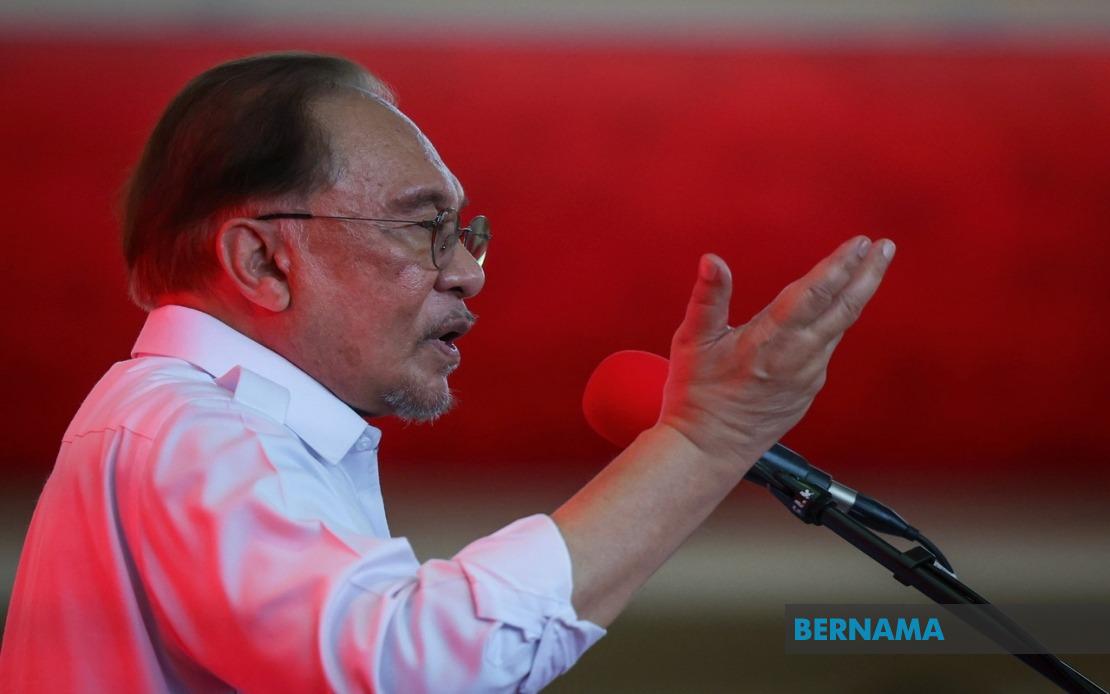
Prime Minister Datuk Seri Anwar Ibrahim said on Saturday that Malaysia's Cabinet will convene on Wednesday to deliberate and ultimately decide whether to make the Royal Commission of Inquiry report on Lembaga Tabung Haji public. Speaking at an event in Tampin, Anwar indicated that the long-awaited report's release has become a matter for Cabinet-level consideration, with the decision expected imminently after the weekly ministerial meeting.
The inquiry into Tabung Haji has been a subject of considerable public interest and political discussion, centring on allegations surrounding the disposal of the Islamic pilgrimage fund's strategic assets. The RCI was established to examine these claims, and the resulting report is expected to shed light on governance issues and potential wrongdoing at the state-owned institution. However, the timing and manner of releasing such a sensitive document—touching on matters of financial management at a body entrusted with millions of Malaysian Muslims' savings—required careful deliberation within government ranks.
Anwar's statement reflected a deliberate approach to the matter, emphasising the separation of powers and institutional roles within Malaysia's constitutional framework. He clarified that the government's responsibility centres on determining disclosure policy, while investigative authorities, the Attorney General's office, and the courts maintain their distinct mandates in pursuing any potential prosecutions. This demarcation sought to insulate the Prime Minister's office from accusations of political interference, a concern that has periodically shadowed previous administrations' handling of high-profile inquiries.
The Prime Minister articulated a principle of transparency that resonates with reform narratives dominating his administration's tenure. His assertion that the public deserves access to the report's findings, coupled with his conditional logic—that wrongdoing, if established, should lead to prosecution and accountability—signalled an openness to disclosure provided appropriate procedural safeguards were respected. Anwar's rhetoric positioned transparency not as an absolute right but as a consequence of institutional integrity and proper governance.
Tabung Haji occupies a unique institutional position within Malaysia's financial ecosystem. As a savings vehicle specifically designed for Malaysian Muslims preparing for the Hajj pilgrimage, it holds significant public trust and religious significance. Questions about the management of its assets therefore carry implications extending beyond conventional corporate governance concerns, touching on matters of faith and community confidence in state-managed Islamic institutions. The RCI's investigation and eventual public disclosure thus possess dimensions that transcend purely financial accountability.
The Cabinet's involvement in determining the report's release reflects administrative protocols around sensitive government inquiries. Last week, Anwar had signalled readiness to make the findings available, pending consultation with the Chief Secretary to the Government regarding whether Cabinet approval was procedurally necessary. This consultation underscores the technical complexities surrounding classified or potentially legally sensitive materials, where premature or improper disclosure could compromise ongoing investigations or prejudice legal proceedings.
For Malaysian investors and Hajj fund contributors, the pending disclosure carries practical implications. Transparency regarding asset management decisions could either restore confidence in Tabung Haji's stewardship or necessitate institutional reforms if mismanagement is substantiated. Either outcome—confirmation of proper governance or evidence of irregularities leading to accountability—would provide stakeholders with information necessary for evaluating the institution's reliability and management competence.
The political dimensions of the decision merit attention as well. Since assuming office, Anwar's administration has positioned itself as committed to transparency and accountability as counterweights to the governance lapses that had allegedly characterised earlier periods. How the government handles the Tabung Haji RCI report will become a test of this rhetorical commitment, with observers across the political spectrum scrutinising both the decision to release and the contents ultimately disclosed.
International observers and regional peers also maintain interest in Malaysian governance standards, particularly regarding transparency in managing public institutions and investigating alleged misconduct. The manner in which the government processes and discloses the RCI findings sends signals about institutional maturity and commitment to rule-based decision-making beyond personalities or political convenience. This dimension extends beyond domestic politics into Malaysia's positioning within regional governance standards.
The Cabinet meeting scheduled for Wednesday thus represents more than a routine administrative decision. It encapsulates broader tensions between transparency aspirations and institutional caution, between public accountability demands and legal process protections, and between political reform narratives and bureaucratic complexity. The outcome will likely shape public perception of Anwar's government's commitment to its stated governance reform agenda while simultaneously determining what information millions of Malaysian Hajj fund contributors will access regarding their institution's management.

