A coalition of twelve states led by California has moved to halt what would be one of the entertainment industry's largest mergers in decades. The lawsuit, filed in Oakland federal court, directly challenges Paramount's proposed $110 billion acquisition of Warner Bros Discovery, targeting a deal that had already cleared scrutiny from the U.S. Department of Justice last month. The action by California, Oregon, Arizona, Colorado, Connecticut, Massachusetts, Minnesota, Nevada, New Jersey, New Mexico, New York, and Washington represents a significant legal obstacle to Paramount CEO David Ellison's ambitions to create a streaming and traditional media powerhouse capable of rivalling Netflix and Disney in the intensely competitive entertainment landscape.
The states' legal challenge rests on the assertion that the merger would fundamentally transform the competitive dynamics of American entertainment by creating what they describe as a "media behemoth" with unprecedented pricing power. According to the filing, the combined entity would capture more than 27 per cent of the market for theatrical film distribution, 30 per cent for blockbuster releases, and 27 per cent of the basic cable channel market. This concentration of control, the attorneys general argue, would translate into tangible harms throughout the distribution chain, from theatre owners and pay-TV providers down to individual consumers who ultimately bear the cost of higher prices and reduced viewing choices. The states contend that such market dominance would allow the merged company to unilaterally determine production volumes and pricing without meaningful competitive constraints.
The lawsuit threatens to significantly complicate Ellison's strategic vision for Paramount, which has struggled to compete with larger, better-capitalised streaming rivals in recent years. The timing is particularly sensitive given that Paramount committed to pay Warner Bros Discovery $650 million in termination fees each quarter should the transaction fail to close by October. Legal experts suggest that similar antitrust cases typically require eight months or longer for judicial determination, meaning the company faces the prospect of mounting financial penalties and mounting uncertainty even if it ultimately prevails in court. Industry analysts have characterised the state intervention as the most credible threat yet to the deal's completion, with potential consequences ranging from renegotiation demands to complete abandonment of the transaction.
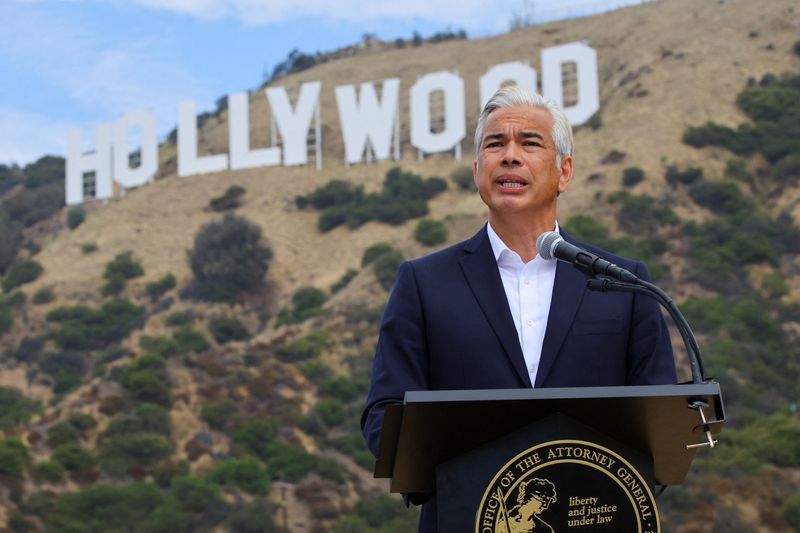
The political dimensions of this case reveal broader tensions within American antitrust enforcement. All twelve states involved are governed by Democratic attorneys general, led by California's Rob Bonta, who explicitly framed the lawsuit as a counterweight to what he characterises as the Trump administration's permissive stance toward corporate consolidation. Critics have noted that Paramount CEO Ellison's father, Oracle co-founder Larry Ellison, has cultivated substantial ties with Republican President Donald Trump, raising questions about whether political connections facilitated federal regulatory approval. The Democratic-led challenge thus represents an effort to reassert state-level antitrust authority and to address public frustration with rising consumer costs and corporate market concentration—concerns that have transcended traditional partisan lines in recent years.
Paramount has vigorously disputed the states' characterization of the competitive landscape, arguing that the lawsuit misrepresents settled antitrust principles and misconstrues the actual dynamics of modern media competition. The company contends that rather than reducing output, the merger would generate operational efficiencies that enable increased content production. Ellison has publicly committed to releasing thirty theatrical films annually from the combined studios after completion of a planned $6 billion reduction in redundant infrastructure, corporate overhead, and marketing expenditures. The company emphasizes that contemporary entertainment consumption patterns, dominated by streaming services and on-demand viewing, differ fundamentally from traditional theatrical and cable television models that the states' lawsuit appears to privilege in its market analysis.
State regulators counter that Paramount's efficiency promises are essentially unenforceable commitments that provide insufficient protection against post-merger price increases and quality degradation. The attorneys general point out that even if the company adhered to its pledge to release thirty films annually, the reduced competition between the two studios would grant the merged entity substantial latitude to raise licensing fees demanded of theatres and pay-television distributors. These distributors, lacking alternative sources for premium content, would have little choice but to accept higher prices—costs they would inevitably pass along to consumers through increased subscription fees and ticket prices. Furthermore, the states argue that the merger would eliminate productive rivalry between Paramount and Warner Bros for prime theatrical release dates and premium television channels including CNN, MTV, HGTV, Cartoon Network, and Nickelodeon.
The potential impact on creative workers and theatrical operators forms a crucial component of the states' case. Tens of thousands of writers, actors, film crews, and theatre employees across the twelve states could face adverse employment consequences, the filing suggests, as the combined company optimizes production schedules and potentially consolidates redundant operations. Theatre owners have independently registered opposition to the transaction, fearing that reduced competition for prime release dates would ultimately translate into fewer theatrical releases and diminished audience choice. These concerns reflect anxiety within traditional entertainment sectors about the ongoing structural transformation of the industry, where streaming platforms have fundamentally altered distribution economics and consumer behaviour, potentially rendering theatrical exhibition and cable television increasingly marginal to the overall market.
The lawsuit also reflects a growing trend of politicization in American antitrust enforcement, as state and federal officials have increasingly weaponized competition law to address broader economic anxieties about inflation, corporate consolidation, and diminishing consumer choice. Democratic attorneys general in particular have pursued high-profile cases against Live Nation and Nexstar's acquisition of Tegna, with Republican colleagues joining some but not all of these efforts. California's Bonta explicitly invoked the Trump administration's perceived deference toward major corporate transactions, characterizing Republican leadership as supportive of what he terms a "rigged economy." This transformation of antitrust from a technical regulatory domain into a vehicle for expressing partisan economic grievances adds an unpredictable element to the Paramount-Warner Bros proceeding.
The financial markets appeared relatively sanguine following the lawsuit announcement, with Paramount shares rising 2.9 per cent and Warner Bros Discovery shares advancing 2.6 per cent. This modest positive response may reflect investor assessment that the legal challenge, while serious, faces substantial hurdles in prevailing against a transaction already blessed by federal regulators. Nevertheless, the prospect of extended litigation imposes genuine costs on both parties, creating ongoing uncertainty about deal completion and potential triggers for renegotiation. Should the case proceed to trial without preliminary resolution, the combined company might face pressure to accept modified transaction terms or accept the substantial risk that final judicial disposition could invalidate the merger entirely.
For Malaysian and Southeast Asian observers, this proceeding illuminates how even the world's largest media conglomerates remain subject to complex, overlapping regulatory scrutiny across multiple jurisdictions and political constituencies. Regional media companies seeking to expand internationally or to compete with American entertainment giants must navigate similar antitrust frameworks, particularly in developed markets where government intervention in mergers remains robust. The Paramount case demonstrates that technical antitrust analysis, political economy, and partisan positioning increasingly intertwine in determining whether transformative deals proceed, a reality that shapes strategic calculus for regional media operators contemplating international expansion or consolidation. The outcome will likely establish precedent for how American regulators assess media consolidation in an era when traditional television and theatrical distribution coexist uneasily with streaming platforms and digital competition.

