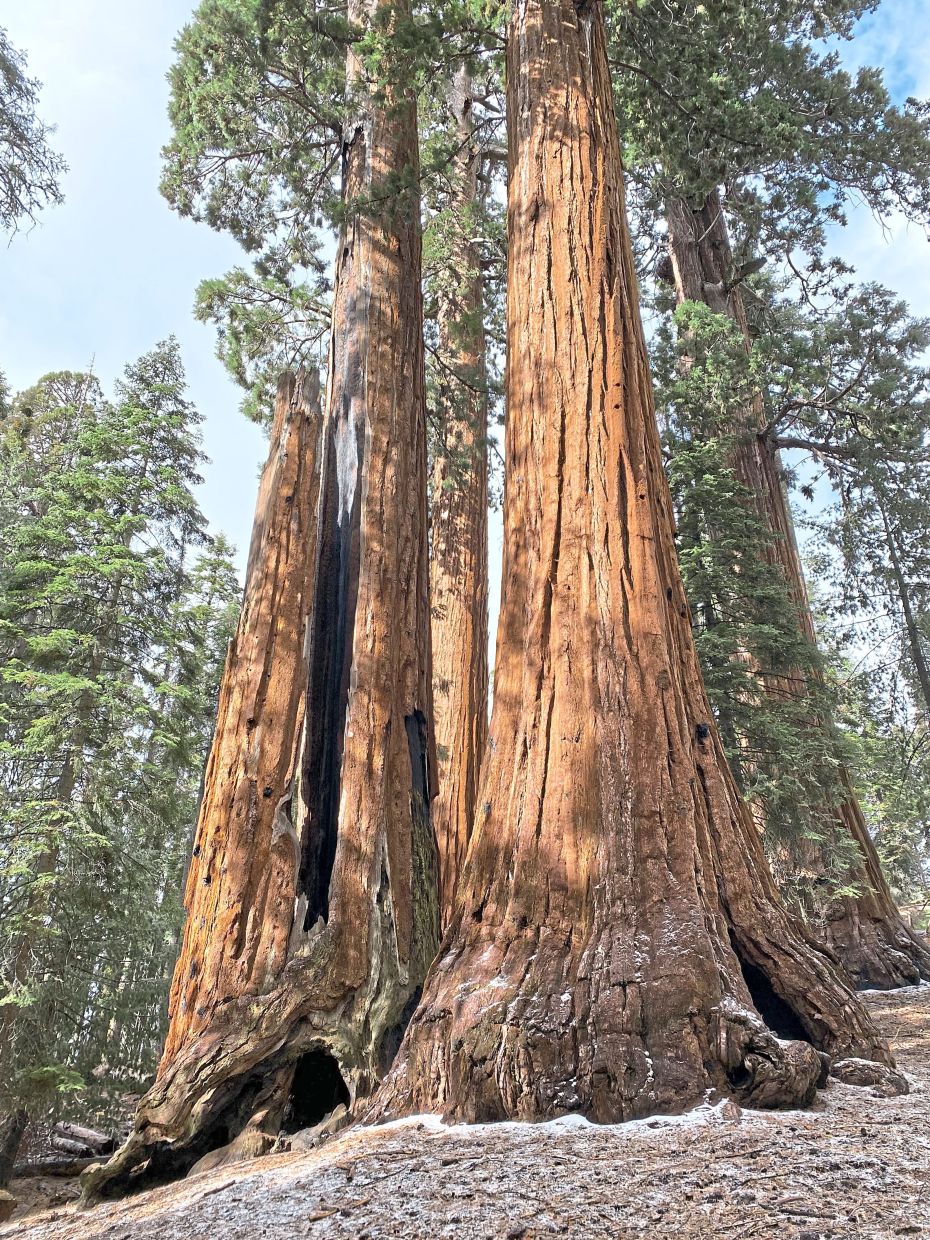
Nearly two decades of towering giant sequoias in California's Sierra Nevada were reduced to ash during the catastrophic wildfires of 2020 and 2021, marking a watershed moment for conservation efforts on the American West Coast. The fires devastated multiple protected areas including Sequoia National Park and surrounding forests, claiming approximately 20 percent of the world's remaining giant sequoias—ancient titans that can reach 91.5 metres in height and persist for three millennia. The scale of this loss galvanised scientists, park administrators and environmental advocates into action, culminating in the formation of a comprehensive restoration initiative aimed at preventing similar ecological disasters.
The Giant Sequoia Lands Coalition represents an unusual coming together of eight primary stakeholders, ranging from Cal Fire and the National Park Service to the Tule River Indian Tribe of California and academic institutions like UC Berkeley. These organisations collectively oversee the 94 remaining groves where the majority of giant sequoias are found, spanning the region between Tahoe National Forest and Bakersfield. An additional nine supporting organisations contribute research expertise, financial resources and logistical backing. This institutional architecture reflects a growing recognition that forest management at scale demands collaborative governance structures rather than siloed institutional approaches. For Malaysian policymakers overseeing vast tracts of biodiverse forest, the model demonstrates how competing interests can align around concrete conservation objectives.
The partnership's efforts have accelerated markedly since commencing in 2022. Across four years of intensive labour, restoration teams have mechanically thinned overgrown vegetation and smaller tree species from 44 of the 94 giant sequoia groves. The debris clearance—removing accumulations of white fir, red fir, incense cedar and drought-killed pines—has encompassed more than 9,409 hectares. Simultaneously, workers have planted 682,000 sequoia seedlings in severely burnt zones, attempting to regenerate groves that were nearly sterilised by extreme heat. This combination of mechanical intervention and active reforestation reflects an understanding that passive protection alone cannot reverse decades of ecological mismanagement.
The urgency motivating this restoration stems from a profound ecological paradox. Giant sequoias evolved over millennia in a regime of frequent fire, with their massive cones requiring heat to release seeds and their thick, fibrous bark providing insulation against flames. Indigenous peoples and natural lightning strikes historically ignited low-intensity fires sweeping through groves every ten to twenty years, maintaining forest structure and preventing fuel accumulation. However, nearly a century of aggressive fire suppression beginning in the early 1900s fundamentally altered this dynamic. Dense thickets of smaller trees and accumulated deadwood created conditions for catastrophically intense burns that modern sequoias, despite their evolutionary adaptations, cannot withstand. This narrative of well-intentioned but ultimately destructive fire suppression carries direct implications for tropical forest management in Southeast Asia, where similar interventions in natural fire regimes have produced unintended consequences.
Climate change has amplified the vulnerability considerably. Successive droughts spanning 2012-2016 and 2020-2022 killed millions of non-sequoia trees across the Sierra Nevada, creating additional fuel loads whilst simultaneously desiccating soils and living vegetation. The combination of unnaturally dense forest structure and climatic stress created conditions for the record-breaking wildfires of 2020-2021. Kristen Shive, a forest ecology specialist at UC Berkeley, observed that the shock of witnessing millennia-old trees killed predominantly through human mismanagement catalysed the urgent policy shift. The realisation that forest protection could inadvertently enable catastrophe forced a fundamental reorientation of management philosophy. This cautionary tale resonates across Southeast Asia, where climate change is similarly intensifying fire danger in previously stable forest systems.
The restoration strategy hinges on recreating historical forest conditions through mechanical thinning and controlled burns. Workers systematically remove smaller tree species that create dense, fuel-laden understories, whilst chainsaws fell large pines that succumbed to drought. The harvested material is either piled and burned during safe seasons or, on private land and demonstration forests, sold to lumber companies to defray operational costs. This economic component proves crucial for political viability, transforming restoration from a pure expense into an activity generating revenue streams. Kevin Conway, Cal Fire's state forests programme manager, emphasises that the objective extends beyond fire suppression to restoring genuine ecological function—creating more open forest structures with enhanced sunlight penetration, permitting sequoia seedlings to establish and maturing trees to access soil moisture more effectively.
Controlled burning represents the second pillar of restoration, deliberately reintroducing fire under managed conditions to restore natural disturbance regimes. The coalition employs traditional burning techniques descended from indigenous management practices, acknowledging that native tribes maintained these forests for centuries through sophisticated fire ecology understanding. Controlled burns not only reduce fuel loads but also trigger seed release from sequoia cones, enabling natural regeneration alongside human planting efforts. The decision to incorporate indigenous knowledge systems alongside scientific forestry reflects a broader shift in conservation practice toward recognising that Western conservation approaches often discounted millennia of effective stewardship. For Southeast Asian nations, this integration of traditional ecological knowledge with modern scientific management offers an alternative pathway to purely technocratic approaches.
Legal challenges have briefly impeded progress, illustrating how restoration initiatives remain contested terrain. The Earth Island Institute sued the National Park Service in 2022 to halt fuel reduction projects at Merced Grove within Yosemite National Park, arguing that insufficient environmental assessment had preceded the work. A federal district court dismissed the suit, and the Ninth Circuit Court of Appeals upheld that decision in 2023, establishing legal precedent supporting adaptive management responses to ecological crisis. Significantly, Merced Grove had experienced six fire threats in the preceding fifteen years, demonstrating that inaction itself constitutes a management choice with consequences. The successful legal defence of active restoration projects may encourage similar interventions elsewhere, though political opposition to fuel reduction—particularly on public lands—remains substantial in many jurisdictions.
The scale of work completed since 2022 provides grounds for cautious optimism, though leaders acknowledge the task remains monumental. Steve Mietz, recently appointed president of Save the Redwoods League, characterises the effort as a race against time in which future fire seasons will almost certainly test the restored groves. The coalition has demonstrated that the knowledge exists to reverse ecological degradation and that institutional coordination can be achieved despite competing mandates. However, completing restoration across all 94 groves whilst simultaneously managing ongoing fire risk requires sustained political commitment and funding that extends beyond five-year planning horizons. For Southeast Asian forest managers confronting analogous challenges from altered fire regimes and climate change, California's restoration effort offers both inspiration and sobering reminders about the time and resources required to reverse decades of ecological mismanagement. The giant sequoia restoration project ultimately represents an experiment in whether human intervention, when properly informed by ecological science and indigenous wisdom, can restore landscapes to conditions where both human and natural values can flourish in the face of intensifying climate stress.
The restoration philosophy emerging from this coalition work carries implications beyond California's borders. As Southeast Asian nations grapple with accelerating forest loss and degradation, the recognition that protected areas require active management—not merely preservation—challenges conservation models prioritising complete human exclusion. The giant sequoia case demonstrates that carefully calibrated intervention, grounded in understanding historical ecology and informed by indigenous knowledge, can achieve conservation outcomes that passive protection cannot. The next fire seasons will determine whether this ambitious experiment has successfully restored resilience to ancient groves, providing either a template for adaptive management or a cautionary tale about the limits of restoration ecology.

