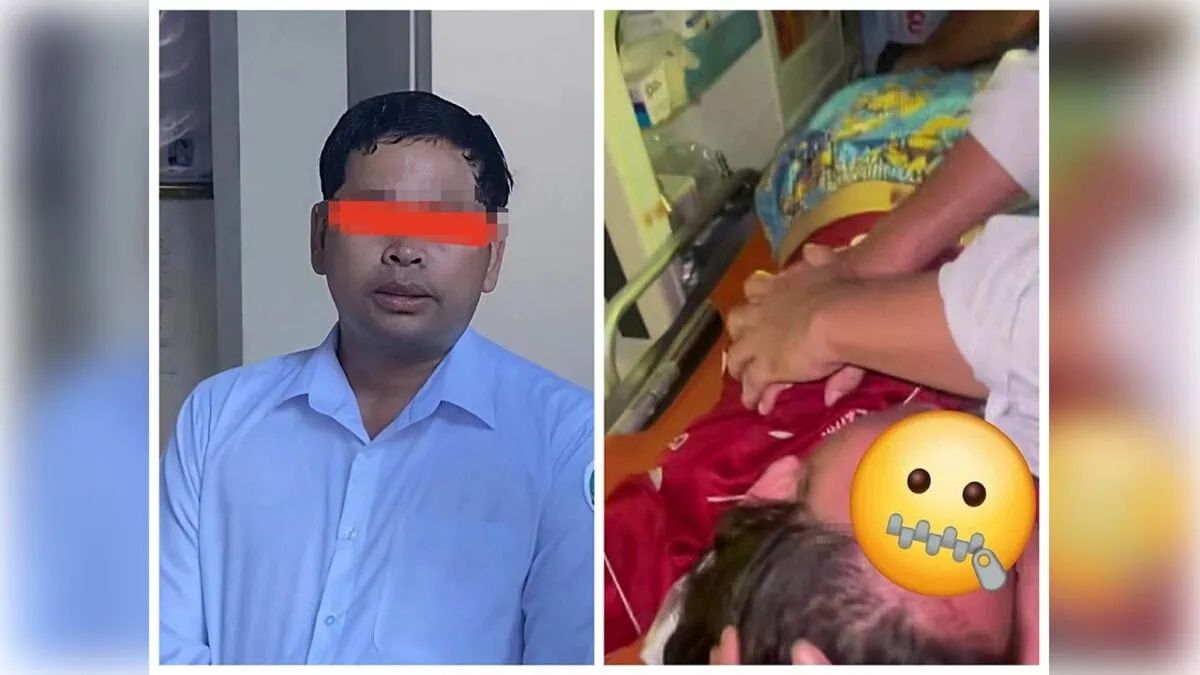
The head of a rural health facility in Cambodia's Kandal province has been stripped of his leadership role following an administrative decision that underscores growing scrutiny over medical conduct in the country's healthcare sector. Governor Kuoch Chamroeun issued an order on Tuesday, August 4, formally removing Chhun Phally from his position as chief of Setbo Health Centre. The directive, which took effect immediately, reassigned Phally to work as a health administrator under the provincial government, a lateral move that effectively distances him from direct patient care responsibilities.
The administrative action emerged in response to a video that spread rapidly across social media platforms, showing Phally providing first-aid treatment to a 17-year-old female patient who had been brought to the facility in distress. The clip ignited a firestorm of online commentary, with many viewers questioning whether the emergency response adhered to proper medical standards and professional protocols. Critics voiced concerns that extended beyond clinical competence, with social media users alleging the manner of treatment constituted harassment and infringed upon the patient's dignity and personal rights. The controversy reflects broader anxieties within Cambodia regarding patient protection mechanisms within the healthcare system.
According to details disclosed by the patient's family, the teenager arrived at Setbo Health Centre after experiencing seizures and respiratory difficulties, conditions that would reasonably necessitate urgent intervention. A family member initially recorded the treatment session with the straightforward intention of documenting the girl's medical status for other relatives unable to be present at the facility. However, the footage subsequently circulated beyond its original private audience, gaining traction on social media platforms where it generated intensive debate about appropriate emergency medical practice. The incident illustrates how rapidly medical situations can become public controversies in the age of smartphone documentation and viral content distribution.
Governor Chamroeun's decision, while not explicitly detailing the reasons for Phally's reassignment in the formal order, clearly represented a response to mounting public pressure and reputational damage to the provincial administration. The removal signals official acknowledgment that the incident warranted administrative consequences, even though determining culpability and establishing exactly what occurred remains an ongoing process. This approach reflects a common governmental response pattern in Southeast Asia, where public-facing administrative actions sometimes precede thorough investigations, partly to mitigate immediate political fallout.
The Kandal provincial health department promptly initiated a formal investigation to establish whether procedures followed during the emergency treatment conformed to medical standards. Acting provincial health director Kiem Piseth outlined the investigative scope, indicating that authorities would examine both the technical appropriateness of medical interventions and whether any professional misconduct or harassment had transpired. Notably, Piseth's statement suggested that potential consequences could extend beyond administrative reassignments, explicitly mentioning the possibility of legal prosecution should investigators determine that misconduct or sexual harassment had occurred. This escalatory language indicates the seriousness with which provincial authorities regard the matter and reflects recognition that public confidence in healthcare institutions may hinge on transparent accountability.
Chhun Phally subsequently issued a public statement addressing the controversy and the backlash he had faced. His apology acknowledged that his actions during the emergency treatment may have generated misunderstanding among the public and the patient's family members. Phally maintained that his motivations were entirely medical, emphasizing that preserving the teenager's life represented his sole objective during the incident. He categorically denied allegations of inappropriate conduct or sexual harassment, framing the emergency response as a necessary clinical intervention undertaken in circumstances requiring immediate action. Such denials, while potentially sincere, often reflect standard damage-control messaging in high-profile healthcare disputes.
The episode has revived substantial discussion within Cambodia regarding professional standards and ethical frameworks governing healthcare delivery across the country. Commentators and healthcare advocates have seized upon the incident as an opportunity to underscore the necessity for institutional mechanisms designed to safeguard patient dignity and privacy throughout medical encounters. Simultaneously, observers emphasize that healthcare workers require comprehensive training in emergency medical procedures, suggesting that both protective measures and competency development represent essential components of healthcare system improvement. This dual emphasis reflects recognition that patient protection need not come at the expense of clinician capability.
The incident also carries implications for healthcare delivery patterns across rural Cambodia, where facilities like Setbo Health Centre serve populations with limited access to advanced medical infrastructure. Public controversies affecting rural health centre staff can create hesitation among healthcare workers to respond decisively during medical emergencies, potentially affecting care quality in underresourced settings. Conversely, heightened scrutiny of medical conduct, if channeled constructively, could catalyze improvements in training standards and institutional oversight that benefit patients throughout the province and beyond.
Authorities have not yet announced findings from the ongoing investigation or disclosed whether Chhun Phally faces additional disciplinary measures or criminal charges. The investigation's outcome will likely establish precedent for how similar disputes involving medical conduct and patient protection are handled within Cambodia's healthcare governance structure. The case demonstrates the evolving intersection of digital media, public accountability, and healthcare administration in Southeast Asia, where viral content can rapidly transform local incidents into matters demanding provincial and potentially national attention.

