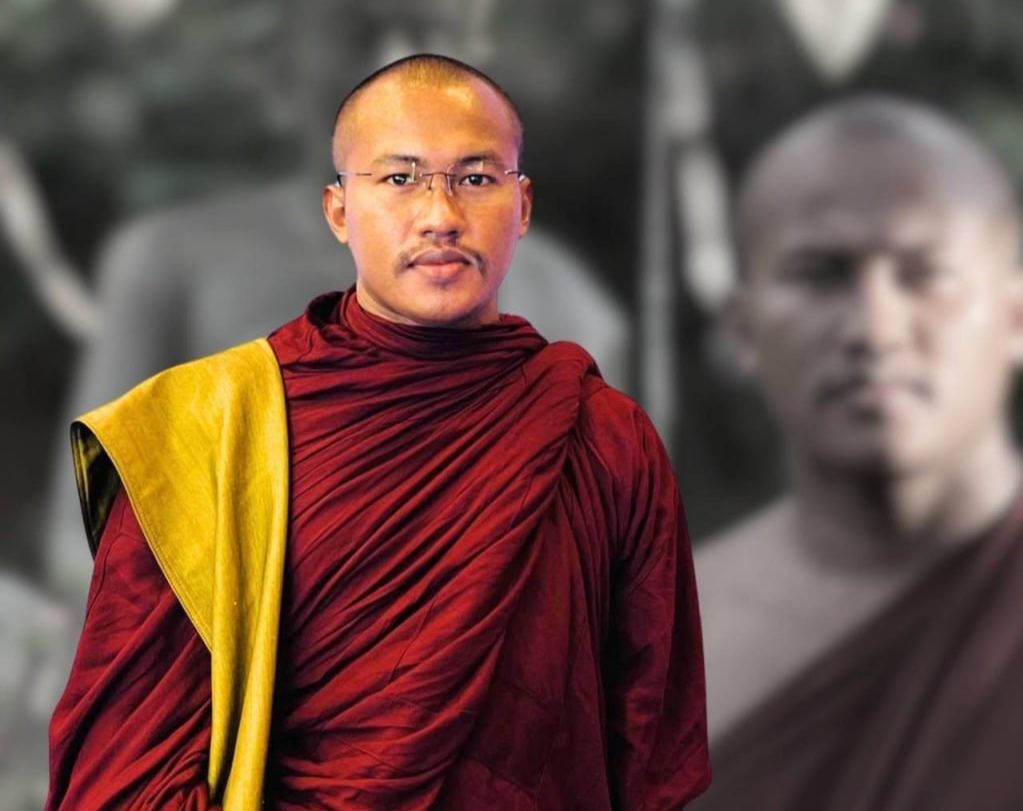
More than fifty Cambodian civil society organisations, labour unions and community networks have united in calling for the immediate release of Chea Vuthy, a 27-year-old former monk and citizen journalist, following his conviction on incitement charges. On August 19, the Phnom Penh Municipal Court sentenced Vuthy to 18 months in prison and imposed a fine of two million riel—approximately $500—under Articles 494 and 495 of Cambodia's Criminal Code. The coordinated response from such a broad coalition underscores deepening anxiety within Cambodia's civil society about the trajectory of press freedom and the government's handling of online speech, particularly in politically sensitive contexts.
Vuthy's prosecution stems from a single comment he made in August 2025 within a private Messenger group comprising roughly twenty people. The remark concerned provincial territories and the treatment of individuals displaced by fighting along the Cambodia-Thailand border—a topic the government has treated with considerable sensitivity. Significantly, Vuthy acknowledged crafting the message within the closed group but explicitly denied publishing it to a wider audience. Despite this distinction, authorities charged and convicted him based solely on evidence of the private communication, raising fundamental questions about the scope of criminal liability for remarks confined to intimate digital spaces.
Through a joint statement released on August 20 by the Cambodian League for the Promotion and Defense of Human Rights (LICADHO), the coalition expressed grave concern that the conviction fundamentally violates principles governing restrictions on freedom of expression. The organisations contended that a message shared only within a small private group cannot reasonably carry sufficient public reach or potential impact to warrant criminal prosecution, much less a prison sentence approaching two years. They characterised the punishment as grossly disproportionate to any legitimate governmental interest, particularly when the communication never entered the public domain and posed no demonstrable threat to state security or public order.
The groups anchored their objection in international human rights standards to which Cambodia is formally bound. Article 19 of the International Covenant on Civil and Political Rights (ICCPR)—which Cambodia has ratified—permits restrictions on expression only when they are prescribed by law, pursue a legitimate aim and satisfy strict necessity and proportionality tests. The coalition argued that Vuthy's conviction flunks this framework on multiple grounds: the criminal penalty appears excessive for a private remark, the necessity of prosecution is questionable, and the proportionality calculus fundamentally breaks down when considering the confined audience and absence of public dissemination. This legal analysis carries particular weight for Southeast Asia, where regional democracies increasingly face criticism from the UN Human Rights Council and civil society monitors for weaponising sedition and incitement statutes against legitimate speech.
Vuthy's arrest in April at Wat Por Veal pagoda in Battambang province marked an especially troubling dimension of the case. He was detained by plainclothes provincial police and subsequently forcibly defrocked—a coercive act that violated his religious status and autonomy. Prior to his conviction, he had worked as a citizen journalist documenting environmental degradation, illegal logging and human rights violations, activities central to Cambodia's civil society ecosystem. His removal from this work, whether permanent or temporary, represents a loss of institutional capacity for independent reporting and accountability journalism in a country where mainstream media ownership concentrates heavily among politically connected actors.
The appeal court's rejection of Vuthy's bail request in June signalled that the judicial system was treating the matter with unusual gravity, despite the ostensibly private nature of his remark. His legal counsel, Em Chantha, announced plans to appeal the verdict on grounds that the evidence fails to meet the legal threshold for incitement and that private Messenger comments lack the public dimension ordinarily required for such charges. This appellate strategy may gain traction if Cambodia's higher courts apply international jurisprudence more rigorously, though the track record of Cambodia's judiciary in politically sensitive cases offers limited grounds for optimism.
Vuthy's conviction fits within a troubling pattern of prosecutions related to commentary on the Cambodia-Thailand border dispute. LICADHO has documented multiple cases in which individuals faced incitement charges following social media posts touching on border tensions. A chef received an 18-month sentence in May, whilst a deputy school director was handed a two-year term in June—penalties suggesting that prosecutors view border-related commentary with particular intolerance. This clustering indicates systematic use of the criminal code to suppress public discourse surrounding a geopolitical issue where Cambodian public opinion may diverge from official government positions. For Southeast Asian observers, such patterns echo similar concerns in Thailand, where sedition laws have chilled discussion of sensitive state matters, and in Vietnam, where national security legislation restricts political speech broadly.
The breadth of the August 20 joint statement demonstrates institutional consensus across Cambodia's civic sphere regarding the severity of the threat to freedom of expression. Signatories included major organisations such as the Cambodian Center for Human Rights (CCHR), Cambodian Human Rights and Development Association (ADHOC), Cambodian Center for Independent Media (CCIM) and Cambodian Journalists Alliance Association (CamboJA), alongside labour rights organisations including the Center for Alliance of Labor and Human Rights (CENTRAL) and grassroots networks like Prey Lang Community Network. This coalition-building suggests that civil society recognises the case as a harbinger—a warning that privacy protections for digital communication may be eroding and that the boundary between private expression and punishable incitement is contracting dangerously.
The Ministry of Information's response, delivered by spokesperson Tep Asnarith, adopted a stance of studied non-interference, asserting that the executive branch does not meddle in judicial proceedings and that courts exercise independent authority. However, this position invites scrutiny: in Cambodia, as across much of Southeast Asia, the separation of powers remains formally elegant but practically porous, and assertions of judicial independence carry limited credibility when courts consistently rule in directions aligned with executive preferences. Asnarith's invitation to civil society to assess cases "with balance and accuracy" came across less as an opening for dialogue than as a gentle admonition to moderate criticism.
For Malaysian and Southeast Asian stakeholders, the Vuthy case exemplifies a regional drift toward instrumentalising criminal codes to restrict speech on geopolitically fraught topics. While Malaysia's own sedition laws and national security legislation have undergone judicial and legislative scrutiny, Cambodia's apparent willingness to criminalise private remarks about border displacement offers a cautionary precedent. The case also underscores the fragility of press freedom and digital expression rights across the region, where governments increasingly leverage antiquated or broadly worded statutes to suppress legitimate journalism and civic participation. The response from Cambodian civil society demonstrates resilience and clarity, but Vuthy's continued imprisonment and the looming appeal process will test whether international pressure and principled domestic advocacy can reverse trajectories that many observers fear are calcifying into authoritarian patterns. His ultimate vindication or continued detention will send powerful signals about the future of free expression across mainland Southeast Asia.

