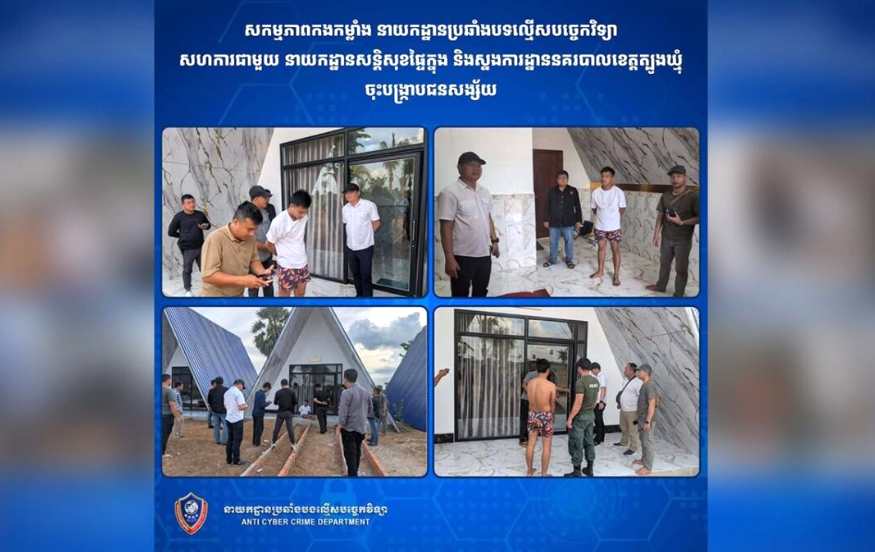
Cambodian authorities have dismantled an intricate cybercrime operation that extracted over US$110,000 from unsuspecting online shoppers through a multi-layered deception involving fake Telegram accounts and impersonations of government officials. The arrest, secured on June 20 by the Anti-Cyber Crime Department working in coordination with the Internal Security Department and Tbong Khmum provincial police, marks a significant enforcement action against a sophisticated fraud network that exploited the intersection of social commerce and institutional trust.
The suspect's criminal operation hinged on a calculated understanding of contemporary Southeast Asian shopping habits. By monitoring Facebook Live broadcasts—a popular medium for vendors hawking everything from clothing to fresh fruit—the perpetrator identified customers placing orders and subsequently created counterfeit Telegram accounts mimicking the legitimate business owners. This initial deception proved remarkably effective, as customers receiving follow-up communications believed they were communicating with the merchants they had just patronised.
Once contact was established under false pretences, the scammer deployed a fabricated narrative designed to create urgency and compel immediate payment. He claimed that customers had made errors during the money transfer process, resulting in complications with the vendor's banking infrastructure or payment gateway system. These fictitious technical problems allegedly led to the temporary freezing of the business account—a plausible scenario for those unfamiliar with financial systems. The con artist then demanded supplementary payments allegedly needed to unlock the frozen accounts and complete transactions.
When victims expressed reluctance or outright refusal to send additional funds, the suspect shifted tactics dramatically, revealing the psychological sophistication underpinning the entire scheme. He would establish separate fake Telegram profiles impersonating high-ranking government ministers, police commissioners, or other senior National Police officers. From these fabricated official accounts, he threatened victims with arrest and legal consequences unless they complied with monetary demands. The leverage of state authority, combined with the fear of law enforcement action, proved psychologically coercive enough to overcome the resistance of many targets.
The Cambodian authorities characterised this methodology as an innovative adaptation of cybercrime that deliberately weaponised public confidence in state institutions and respected authority figures. Officials noted that the perpetrator's exploitation of governmental imagery and official titles represented a deliberate erosion of institutional credibility in the digital sphere. By successfully impersonating state officials through widely accessible technology platforms, the suspect demonstrated how digital fraudsters can manipulate the very symbols and structures that citizens normally trust for protection and recourse.
According to police documentation, this particular operation encompassed approximately 50 distinct fraudulent transactions, though the investigation may yet uncover additional victims who have not formally reported their losses. The cumulative damage—exceeding US$110,000—represents a substantial financial loss that has almost certainly caused hardship for individual victims and merchants who inadvertently became vectors for the scam by having their identities stolen and their reputations compromised.
The timing of this arrest carries particular significance within Cambodia's regulatory environment. Just months prior, the nation enacted the Law on Combating Technology-Based Scams, legislation that established more stringent criminal penalties for online fraud operations and organised cybercrime networks. This new legal framework reflects growing recognition across Southeast Asia that traditional criminal codes require updating to address the sophisticated threat landscape created by digital communication platforms and financial technologies. Cambodia's legislative move positions it alongside other regional neighbours seeking to modernise their cybercrime enforcement capabilities.
For Malaysian and broader Southeast Asian audiences, this case illustrates vulnerabilities that extend well beyond Cambodia's borders. Facebook Live commerce has gained traction throughout the region as merchants in less developed markets leverage the platform's accessibility and real-time engagement features. The same technological affordances that enable legitimate small businesses to reach customers also create opportunities for sophisticated fraudsters. The impersonation methodology documented here—where scammers monitor legitimate transactions and then exploit established customer relationships through forged official communications—represents a template that could easily be adapted and deployed across the region.
The case also underscores the particular effectiveness of impersonating government officials and law enforcement as a coercive tactic in societies where state authority carries substantial weight. In many Southeast Asian contexts, references to official action carry psychological force that can overcome rational scepticism. Scammers have clearly recognised and exploited this cultural dynamic, understanding that victims experiencing threats framed in official language face heightened psychological pressure to comply rather than seek verification.
Cambodian police have forwarded the suspect through proper judicial channels to the Phnom Penh Municipal Court, where he faces charges and the prospect of extended proceedings under the new technology-based fraud legislation. However, authorities have acknowledged that individual prosecutions, while important for deterrence and justice, must be accompanied by public awareness initiatives. Officials released explicit guidance urging citizens to exercise heightened scrutiny when receiving unsolicited messages via social platforms or messaging applications, particularly those making unverified claims or containing threats.
The advisory specifically cautioned against transferring money based on assertions or intimidation originating from unknown digital accounts, even when those accounts display official imagery or invoke state authority. This guidance reflects an important reality: in an era of sophisticated digital impersonation, visual confirmation and official verification processes have become essential safeguards. Legitimate government agencies and commercial entities increasingly employ multi-factor verification and official communication channels rather than relying on social media platforms alone.
Authorities have additionally urged the public to report suspicious online activity to law enforcement agencies immediately, rather than attempting to navigate such situations independently. Early reporting creates opportunities for investigators to identify patterns, track perpetrators, and potentially prevent additional victimisation before more people suffer losses. This crowdsourced intelligence approach recognises that cybercriminals often operate multiple simultaneous schemes, and information from even a single victim can establish connections to broader criminal networks.
As Southeast Asian economies increasingly integrate digital commerce platforms into their commercial ecosystems, cases like this one serve as cautionary reminders of the parallel emergence of sophisticated fraud operations specifically designed to exploit these new economic channels. The convergence of social commerce, messaging applications, and the capacity to impersonate institutional authority creates a particularly potent fraud environment. Regulatory frameworks, enforcement capabilities, and public awareness will all prove essential to maintaining consumer confidence in these platforms as they continue to expand their economic role throughout the region.
%22%2F%3E%3C%2Fpattern%3E%3C%2Fdefs%3E%3Crect%20width%3D%22100%25%22%20height%3D%22100%25%22%20fill%3D%22url(%23ph4sj74g)%22%2F%3E%3Crect%20width%3D%22100%25%22%20height%3D%22100%25%22%20fill%3D%22url(%23ph4sj74p)%22%2F%3E%3Ctext%20x%3D%2250%25%22%20y%3D%2250%25%22%20text-anchor%3D%22middle%22%20dominant-baseline%3D%22central%22%20fill%3D%22rgba(255%2C255%2C255%2C0.95)%22%20font-family%3D%22Georgia%2C%20'Times%20New%20Roman'%2C%20serif%22%20font-weight%3D%22700%22%20font-size%3D%22170%22%20letter-spacing%3D%22-0.02em%22%3EMalaysia%3C%2Ftext%3E%3C%2Fsvg%3E)
%22%2F%3E%3C%2Fpattern%3E%3C%2Fdefs%3E%3Crect%20width%3D%22100%25%22%20height%3D%22100%25%22%20fill%3D%22url(%23ph51v0dg)%22%2F%3E%3Crect%20width%3D%22100%25%22%20height%3D%22100%25%22%20fill%3D%22url(%23ph51v0dp)%22%2F%3E%3Ctext%20x%3D%2250%25%22%20y%3D%2250%25%22%20text-anchor%3D%22middle%22%20dominant-baseline%3D%22central%22%20fill%3D%22rgba(255%2C255%2C255%2C0.95)%22%20font-family%3D%22Georgia%2C%20'Times%20New%20Roman'%2C%20serif%22%20font-weight%3D%22700%22%20font-size%3D%22170%22%20letter-spacing%3D%22-0.02em%22%3EMalaysia%3C%2Ftext%3E%3C%2Fsvg%3E)