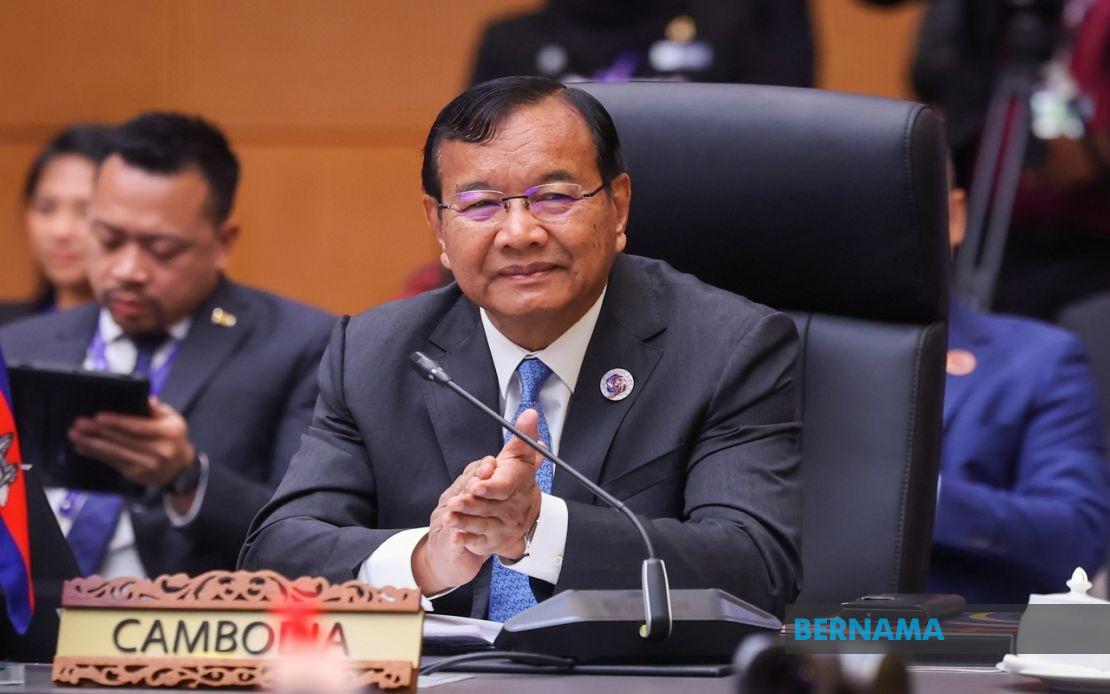
Cambodian Deputy Prime Minister and Minister of Foreign Affairs and International Cooperation Prak Sokhonn touched down in Malaysia on August 3 for a two-day official visit designed to reinvigorate the diplomatic and economic ties binding the two Southeast Asian neighbours. His arrival at Kuala Lumpur International Airport Terminal 1 at 1.48 pm marked the beginning of a significant engagement that underscores the strategic importance both nations place on their partnership at a time when regional cooperation mechanisms are increasingly vital for economic growth and stability.
The visit arrives at a moment of considerable momentum in Malaysia-Cambodia relations. Trade figures paint a compelling picture of strengthening commercial ties, with bilateral commerce expanding dramatically by 27.4 per cent year-on-year to reach RM5 billion (USD1.17 billion) in 2025. This robust expansion reflects growing business confidence and deepening economic integration between the two countries, suggesting that the visit is grounded in genuine commercial momentum rather than ceremonial protocol alone.
Malaysia's investment footprint in Cambodia further illustrates the depth of their economic relationship. As of 2024, Malaysian investors had accumulated USD3.20 billion (RM13.07 billion) across 162 registered projects in the Kingdom, positioning Malaysia as Cambodia's third-largest foreign investor. This substantial capital deployment reflects long-term confidence in Cambodia's economic prospects and demonstrates Malaysian business willingness to invest in the country's development trajectory, making the bilateral relationship increasingly consequential for both economies.
Upon arrival, Sokhonn was received by Cambodian Ambassador to Malaysia Ouk Chandara and Datuk Rozainor Ramli, the Malaysian Government's chief ceremony officer, reflecting the formal yet cordial nature of the engagement. The official reception protocols underscored the significance accorded to the visit by both governments, signalling that this was no routine diplomatic exchange but rather a carefully choreographed engagement aimed at producing substantive outcomes.
Sokhonn's itinerary reflects the depth of the bilateral agenda. His scheduled courtesy call on Prime Minister Datuk Seri Anwar Ibrahim will provide an opportunity for top-level discussion on strategic issues affecting the region and bilateral interests. Such engagements at the highest levels typically encompass not merely ceremonial acknowledgments but substantive exchanges on matters ranging from trade facilitation to regional security and geopolitical developments affecting Southeast Asia.
The centrepiece of Sokhonn's visit is the third meeting of the Cambodia-Malaysia Joint Commission for Bilateral Cooperation, scheduled for August 4 in Kuala Lumpur. This mechanism represents an institutionalized framework for managing the bilateral relationship systematically. The commission's agenda will involve comprehensive review of implementation progress regarding agreed minutes from the second JCBC meeting and previously concluded bilateral agreements, essentially taking stock of what has been accomplished and identifying any bottlenecks requiring attention.
Beyond the formal joint commission proceedings, Sokhonn will engage in bilateral talks with Foreign Minister Datuk Seri Mohamad Hasan. These ministerial-level discussions provide an opportunity to address specific sectoral issues, explore new areas of cooperation, and troubleshoot any difficulties in the relationship. The inclusion of direct foreign ministry engagement alongside the formal JCBC framework demonstrates a multi-layered diplomatic approach designed to maximize the visit's productive potential.
The timing of this visit within the context of broader Southeast Asian dynamics carries particular significance. As ASEAN members, Malaysia and Cambodia navigate an increasingly complex regional environment marked by evolving great power dynamics, trade tensions, and economic transitions. Strengthening bilateral relationships within ASEAN serves not only national interests but also reinforces regional cohesion and collective capacity to address common challenges ranging from climate change to digital transformation and supply chain resilience.
For Malaysian readers and businesses, this visit represents an opportunity to deepen engagement with a neighbouring market that is increasingly integrating into regional and global value chains. The substantial Malaysian investment presence in Cambodia suggests opportunities for further expansion, particularly in sectors such as manufacturing, agro-business, and infrastructure development. The demonstrated trade growth indicates that commercial mechanisms are functioning effectively, though the joint commission's deliberations may yield opportunities to reduce trade barriers and facilitate greater business integration.
Cambodia's perspective on strengthening ties with Malaysia reflects its strategic positioning within Southeast Asia and its interest in building relationships with major economic players. For Cambodia, a robust partnership with Malaysia offers access to Malaysian expertise, capital, and market connections while contributing to regional stability and economic interdependence. The bilateral relationship serves as a foundation for broader ASEAN cooperation and demonstrates how Southeast Asian nations can deepen ties while respecting each other's sovereignty and strategic autonomy.
The investment figures merit deeper analysis regarding sectoral distribution and future potential. Malaysian involvement across 162 registered projects suggests diversification across multiple economic sectors, though the specific composition of these investments remains unclear from available data. Understanding where Malaysian capital concentrates—whether in manufacturing, services, natural resource extraction, or infrastructure—would illuminate the relationship's economic architecture and identify sectors where expansion might prove mutually beneficial.
Looking forward, both nations face opportunities to enhance cooperation in emerging areas. Digital economy development, green technology transfer, human capital development, and innovation partnerships represent frontier areas where Malaysia's more developed economy might contribute to Cambodia's development trajectory while creating commercial opportunities for Malaysian enterprises. The JCBC framework, properly utilized, can serve as a mechanism for identifying and facilitating such partnerships.
This visit ultimately reflects the maturation of Malaysia-Cambodia relations from historical ties into a modern strategic partnership grounded in mutual economic interest and shared regional objectives. The combination of solid trade growth, substantial investment presence, and high-level political engagement suggests a relationship that has transcended ceremonial diplomacy to become genuinely consequential for both nations' development and regional standing.

