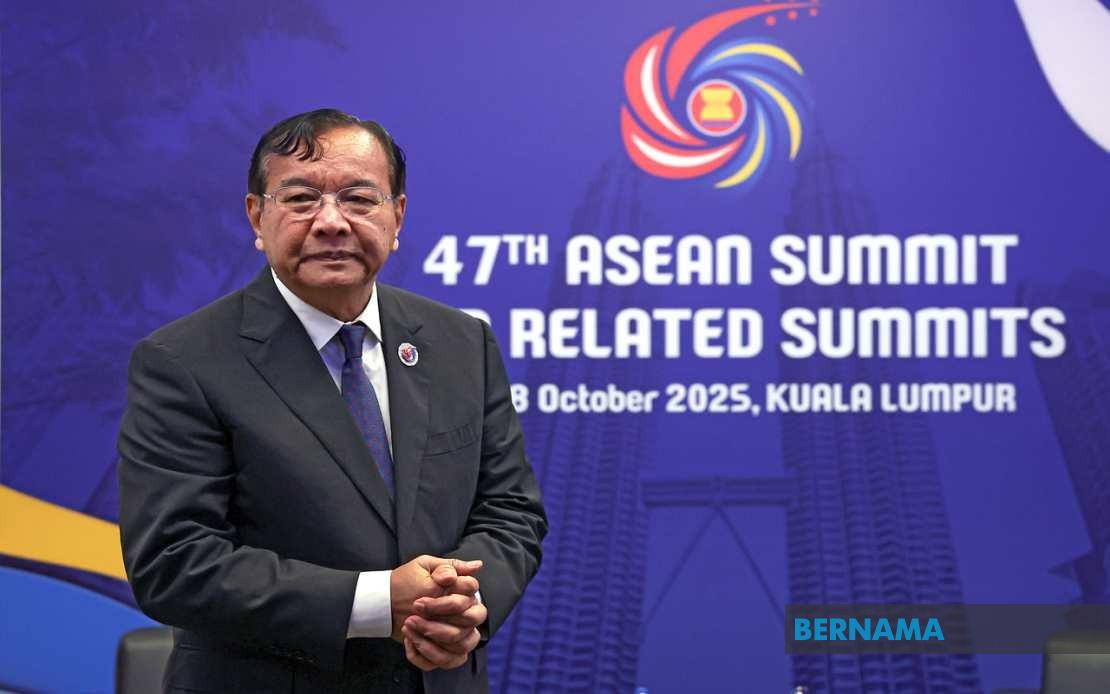
Cambodian Deputy Prime Minister and Foreign Minister Prak Sokhonn has arrived in Malaysia for a two-day official visit aimed at reinvigorating bilateral relations through the resumption of a critical diplomatic mechanism. The centrepiece of the visit is the third Malaysia-Cambodia Joint Commission for Bilateral Cooperation (JCBC) Meeting, which will be co-chaired by Prak Sokhonn and Malaysia's Foreign Minister Datuk Seri Mohamad Hasan in Kuala Lumpur on Tuesday. The revival of this high-level platform comes at a symbolically significant moment for the two nations, as they approach the 70th anniversary of formal diplomatic relations in 2027, underscoring how both governments are committed to deepening engagement after an extended period of reduced institutional dialogue.
The resumption of the JCBC marks a watershed moment in Malaysia-Cambodia relations. The second meeting was held in Siem Reap in 2006, meaning nearly two decades have elapsed without this bilateral commission convening. This substantial gap reflects the broader patterns of engagement between Southeast Asian neighbours—periods of activity followed by dormancy are common in regional diplomacy, driven by shifts in leadership priorities, competing regional commitments, and changing geopolitical circumstances. The fact that both countries have now moved to reactivate this mechanism signals genuine intention to institutionalise cooperation and move beyond ad-hoc exchanges.
During his time in Malaysia, Prak Sokhonn is scheduled to meet with Prime Minister Datuk Seri Anwar Ibrahim on Monday. These courtesy calls, whilst sometimes dismissed as ceremonial, serve critical functions in modern diplomacy. They provide space for leaders to reaffirm shared values, discuss sensitive matters away from public scrutiny, and align on strategic priorities before bilateral meetings. Given Malaysia's position as the third-largest foreign investor in Cambodia, with cumulative investments standing at US$3.20 billion across 162 registered projects as of 2024, the bilateral relationship carries genuine economic weight that goes beyond symbolic significance.
The economic dimension of Malaysia-Cambodia ties has accelerated notably in recent years. Bilateral trade reached RM5 billion in 2025, representing a robust 27.4 per cent year-on-year increase. Malaysia's export profile to Cambodia is particularly strong, with Malaysian goods totalling RM4.13 billion in outbound shipments, while Cambodian imports into Malaysia amounted to RM880 million. These figures demonstrate an imbalanced trade relationship favouring Malaysian exporters, suggesting Cambodian demand for Malaysian manufactured goods, services, and agricultural products remains consistently strong. For Malaysian businesses, Cambodia represents an emerging market with significant growth potential, particularly in sectors where Malaysian companies possess competitive advantages such as petroleum products, electrical machinery, and processed food items.
The investment statistics underscore Cambodia's appeal as a destination for Malaysian capital. At US$3.20 billion in cumulative foreign direct investment, Malaysia ranks third among foreign investors in the Kingdom, behind China and Vietnam but ahead of other regional competitors. This portfolio spans 162 registered projects, indicating diversification across multiple sectors rather than concentration in a single industry. Malaysian investors have typically focused on manufacturing, telecommunications, banking, and hospitality, reflecting the complementarities between the two economies and the trust Malaysian businesses place in Cambodia's investment environment despite the country's challenges.
The context for this revival extends beyond mere bilateral considerations. Within Southeast Asia, Cambodia has become increasingly important to regional stability and ASEAN cohesion. The renewal of the Malaysia-Cambodia JCBC should be viewed within the broader framework of Malaysia's engagement strategy across the region. As ASEAN faces challenges ranging from the South China Sea disputes to humanitarian crises, strengthening bonds with all member states remains crucial for maintaining regional unity and effectiveness. Malaysia's decision to prioritise Cambodia through high-level visits reflects an understanding that no single ASEAN member can be taken for granted.
The Agreed Minutes expected to be signed at the conclusion of Tuesday's JCBC meeting will be particularly significant. These documents typically outline concrete cooperation initiatives across multiple sectors—trade and investment, education, culture, defence and security, and people-to-people exchanges. Given the 20-year gap since the last meeting, the new minutes are likely to reflect evolved priorities and emerging challenges not anticipated in 2006. Climate change adaptation, digital economy cooperation, and cyber security are issues that have become paramount to bilateral relations since the previous JCBC, and the new agreement should address these contemporary concerns.
The timing of this visit, coming in August 2024, positions the relationship for momentum-building leading toward the 70th anniversary in 2027. Rather than allowing that milestone to approach by default, both countries are actively constructing a narrative of renewed engagement and strengthened partnership. This forward-looking approach benefits both nations by creating multiple platforms for dialogue throughout the intervening period and demonstrating to their respective publics and international partners that the bilateral relationship remains vibrant and consequential.
For Malaysian policymakers, the visit reinforces that Cambodia, whilst smaller and less economically developed than Malaysia, remains strategically significant. Cambodia sits at the crossroads of Southeast Asian geopolitics, with implications for Thai-Cambodian relations and broader Indochina regional dynamics. Malaysian interests in regional stability, ASEAN cohesion, and maintaining balanced great power engagement in Southeast Asia all intersect in Cambodian affairs. By revitalising the JCBC, Malaysia demonstrates its commitment to bilateral relationships built on institutional frameworks rather than episodic high-level visits.
The economic relationship deserves attention from Malaysian businesses seeking regional expansion opportunities. The 27.4 per cent trade growth reported represents double-digit expansion that consistently outpaces global trade growth rates. Malaysian small and medium enterprises interested in regional integration should view Cambodia as an accessible market with cultural and geographical proximity to Thailand and Vietnam, offering potential for multi-country operations. The investment figures also suggest that Malaysian companies have already identified profitable opportunities in the Kingdom, and the improved bilateral political climate may ease operational challenges and facilitate new ventures.
Looking forward, the restoration of regular JCBC meetings could become instrumental in addressing bilateral issues more systematically. Previous gaps in institutional engagement sometimes allowed grievances to accumulate or cooperation opportunities to be missed. Regular meetings provide spaces to troubleshoot problems, align regulatory frameworks, facilitate business networking, and coordinate on regional issues. Both nations can benefit from predictable, structured dialogue that goes beyond crisis management or ceremonial visits.
The broader significance of this visit lies in its demonstration that Southeast Asian relationships require continuous investment and renewal. In a region where geographic proximity and shared institutional membership in ASEAN provide natural foundations for cooperation, the willingness to revitalise mechanisms like the JCBC shows maturity in bilateral relations. As Malaysia and Cambodia navigate economic uncertainty, regional geopolitical shifts, and domestic transitions, the partnership between them offers mutual benefits that justify the priority both governments are now allocating to deepening institutional ties and economic cooperation.

