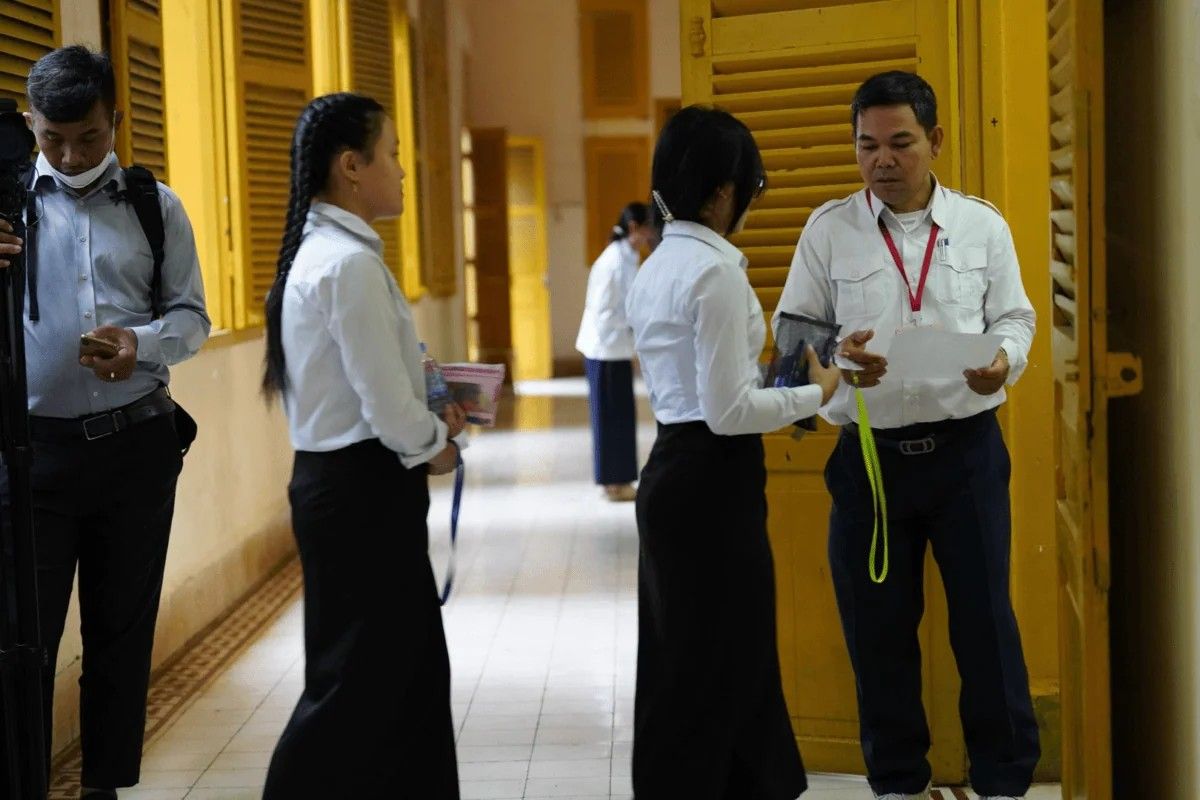
Cambodia's annual Grade 12 examinations commenced on August 10 with more than 150,000 students across the Kingdom sitting for high school graduation tests, marking a return to relative normality despite lingering tensions along the Thai border. The examination season represents a critical milestone for Cambodian youth seeking entry into higher education, yet the ongoing closure of 25 schools in border regions underscores the persistent consequences of cross-border military incursions that disrupted the nation's educational calendar last year.
Education Minister Hang Chuon Naron opened the examination period by acknowledging both the progress made and the continuing challenges facing Cambodia's education sector. He emphasized that this year's testing environment differed markedly from 2025, when exams were administered just one month after the initial armed engagements erupted along the Cambodia-Thailand frontier, creating an atmosphere of uncertainty and insecurity that threatened to undermine students' preparation and concentration. The minister's remarks highlighted how geopolitical instability had previously impacted the educational system, with the previous examination cycle proceeding amid active military tensions that forced schools to adapt to precarious circumstances.
The current examination intake reflects Cambodia's robust student population seeking to progress through formal education channels. The candidate pool divides into two distinct academic tracks: over 37,000 students pursuing science curricula and approximately 130,000 enrolling in social science programmes, demonstrating the nation's continued emphasis on humanities and social studies education over STEM fields. This distribution pattern mirrors broader Southeast Asian trends where humanities education remains the dominant pathway for secondary-level students, though it also reflects persistent gaps in Cambodia's science and technology education infrastructure.
Minister Hang Chuon Naron recounted a poignant anecdote from the previous examination cycle that illustrated student resilience amid adversity. He described encountering a student from Oddar Meanchey province who had been forced to study while riding on tractors as families evacuated areas under Thai military pressure. Despite these extraordinary hardships, the student achieved top academic performance, subsequently gaining admission to a prestigious higher education institution. Such individual successes emerged from a broader context of displacement and educational disruption that affected multiple communities in border regions, demonstrating how Cambodian students persevered despite circumstances far exceeding normal examination pressure.
The closure of 25 schools across border provinces remains the most visible indicator of unresolved territorial tensions between Cambodia and Thailand. These educational institutions, located in areas under Thai military control or occupation, have effectively been rendered inaccessible to their regular student populations, forcing thousands of pupils to seek alternative learning arrangements or abandon their studies temporarily. The Cambodian government has formally demanded international recognition of its territorial sovereignty and the restoration of full educational access, framing the school closures as direct obstacles to the country's development and youth advancement.
Oddar Meanchey province, situated in Cambodia's northwestern region along the contested border, has experienced the most severe educational disruption. Currently, only students from Banteay Mean Rith Lower Secondary School are accessing education through temporary camps established as makeshift learning centres, a partial solution that remains far from ideal given the infrastructure limitations and psychological toll of temporary educational arrangements. The minister indicated that the Cambodian government continues diplomatic efforts to secure full restoration of normal schooling for these displaced student populations, though little progress appears imminent given the entrenched nature of the territorial dispute.
Recognizing that examination integrity had been compromised in previous years, authorities implemented enhanced oversight mechanisms ahead of this year's testing cycle. The Anti-Corruption Unit deployed more than 4,000 trained observers positioned throughout examination centres nationwide, maintaining observer numbers consistent with the previous year's deployment while maintaining stricter enforcement protocols. This substantial observer presence aimed to prevent the paper leakage incidents that had marred the 2025 examination cycle, when mathematics examination materials were reportedly compromised prior to administration, necessitating enhanced security protocols and systemic reforms.
The government emphasized its commitment to conducting corruption-free examinations through comprehensive organizational frameworks and rigorous enforcement mechanisms complemented by multi-stakeholder participation. Beyond ACU observers, various civil society organizations, educational stakeholders, and international observers were engaged in monitoring examination administration, creating multiple oversight layers designed to ensure test security and result integrity. Such comprehensive monitoring reflects lessons learned from previous years' institutional failures and represents Cambodia's acknowledgment that examination credibility remains essential for the legitimacy of educational advancement and national development.
For Malaysian and Southeast Asian observers, Cambodia's examination challenges illuminate broader regional vulnerabilities regarding border stability and educational continuity during geopolitical tensions. The Thai-Cambodian territorial disputes demonstrate how military incursions can devastate education systems and displace students, raising concerns about regional stability and the protection of civilian educational infrastructure. Malaysia's own experience with cross-border security challenges and its commitment to maintaining educational access during security operations provide relevant comparative frameworks for understanding how nations navigate similar circumstances while preserving student welfare and academic progress.

