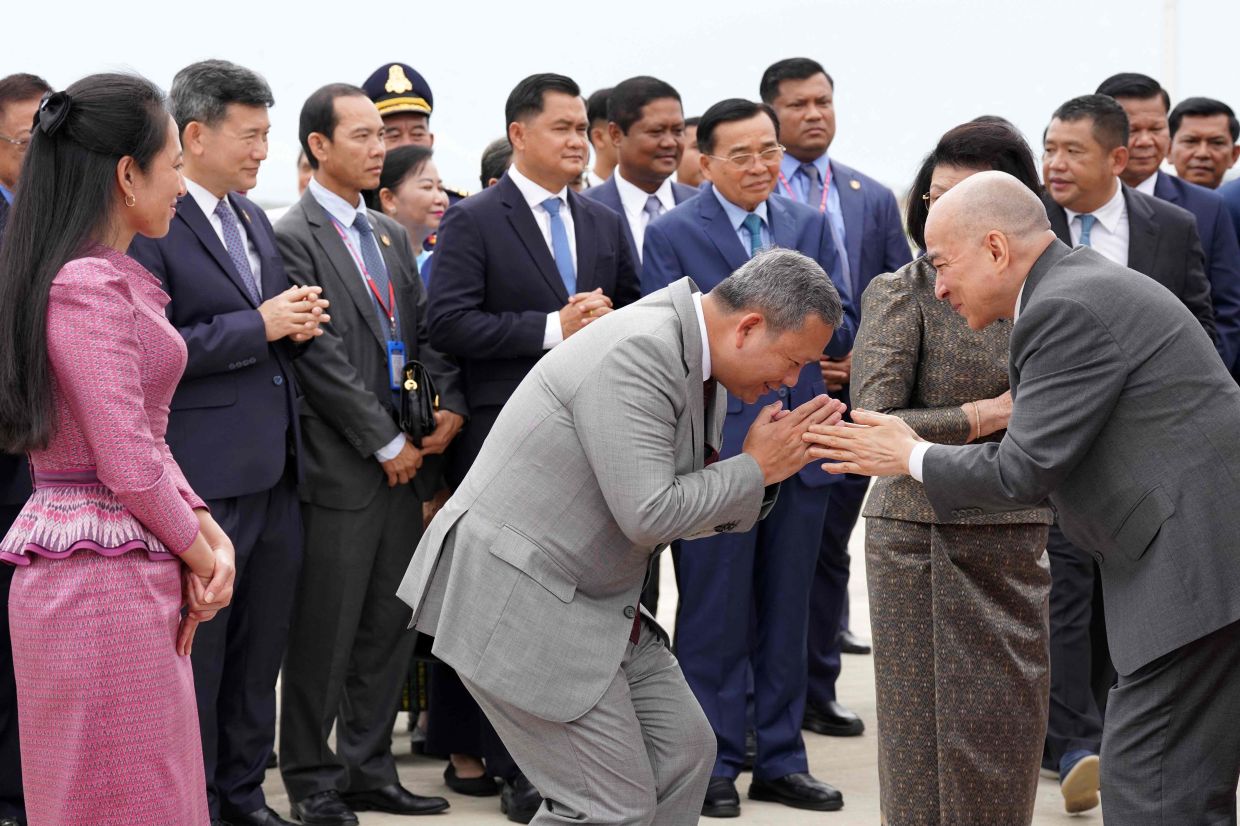
Cambodia's King Norodom Sihamoni arrived back in Phnom Penh on Friday afternoon, concluding an extended medical absence that began with his disclosure of a prostate cancer diagnosis in April. The 73-year-old monarch completed his treatment regimen under the care of Chinese medical specialists in Beijing, with palace officials confirming that his health condition has shown marked improvement following a surgical procedure deemed successful by the Royal Palace.
The king's journey to China commenced earlier in the year as part of scheduled health examinations, but these routine checks led to the discovery of his cancer diagnosis. Rather than managing his condition domestically, the Cambodian leadership opted for treatment at a Beijing medical facility, reflecting the established practice within Cambodia's royal family of seeking specialized healthcare across the border. The decision underscores the prominent role that Chinese medical institutions have come to play in regional diplomacy and the healthcare choices of Southeast Asian elites.
Sihamoni's recovery period extended beyond three months, during which palace communications maintained public confidence by periodically updating citizens on his medical progress. Officials issued a statement just days before his return indicating that the king's overall health trajectory remained positive, suggesting preparations were well underway for his homecoming. The phased disclosure of his condition and gradual updates managed public perception while allowing time for his recuperation away from the demands of state functions.
The monarch's arrival at Phnom Penh airport drew prominent government figures, including Hun Sen, Cambodia's influential former prime minister who continues to wield significant political influence, and Hun Manet, his son who currently serves as prime minister. Their presence at the airport represented an official show of state ceremony and dynastic continuity. Hun Sen himself announced the king's safe arrival through his Facebook page, a modern touch to traditional protocol that also allowed state-controlled broadcaster TVK to cover the homecoming for public audiences.
Sihamoni's path to the throne reflects a cosmopolitan upbringing that distinguished him from many regional monarchs. The king maintained a lifelong commitment to the arts and spent the majority of his adult years living abroad, developing fluency in multiple languages including Khmer, French, Czech and English. This extensive international exposure and cultural engagement shaped his character long before he ascended to Cambodia's highest office in 2004. His background demonstrated that the Cambodian monarchy could accommodate individuals with unconventional life experiences and global perspectives.
The circumstances of Sihamoni's accession themselves carried echoes of medical necessity. He inherited the crown following his father King Norodom Sihanouk's decision to step down from the throne. Sihanouk's own abdication came after he underwent cancer treatment in the same Chinese capital, establishing a precedent within the family for managing serious health challenges through Beijing's medical system. That historical parallel lends additional weight to the family's confidence in Chinese healthcare providers and demonstrates a pattern of cross-border cooperation that has endured across generations.
King Norodom Sihanouk, who served as Cambodia's monarch before Sihamoni, passed away a decade ago in 2012, meaning the current king has now presided over Cambodia for more than two decades. His extended absence for medical treatment represented the most significant interruption to his reign in recent years, highlighting the potential vulnerabilities that can emerge when a nation's ceremonial head requires extended overseas care. Cambodia's governmental structures functioned during his absence, but his return restored full monarchical presence to the kingdom's political landscape.
The successful treatment and recovery carry broader implications for Cambodia's relationship with China, particularly as Beijing continues to expand its influence across Southeast Asia through economic investments, infrastructure projects, and strategic partnerships. Medical cooperation represents one often-overlooked dimension of these deepening ties, as regional leaders increasingly rely on Chinese healthcare expertise and facilities. The Cambodian case illustrates how health diplomacy reinforces broader geopolitical alignments within the region.
Sihamoni's return to active duties also stabilizes Cambodia's institutional framework during a period of political consolidation under Hun Manet's relatively new administration. The younger Hun's elevation to the prime ministership in 2023 represented a significant generational transition, and having a healthy, engaged monarch provides institutional ballast during such transitions. The royal institution's continuity and the king's restored capacity to fulfill ceremonial and symbolic functions strengthen governance structures that depend on stable, predictable leadership.
The king's health challenge and recovery also reflect broader regional patterns of how Southeast Asian health systems interact with capabilities in China and other advanced medical centers. While Cambodia maintains its own medical infrastructure, serious cases frequently require travel to regional medical hubs. This dynamic shapes healthcare access patterns and creates dependencies that influence both individual treatment decisions and national health policy trajectories across the region.

