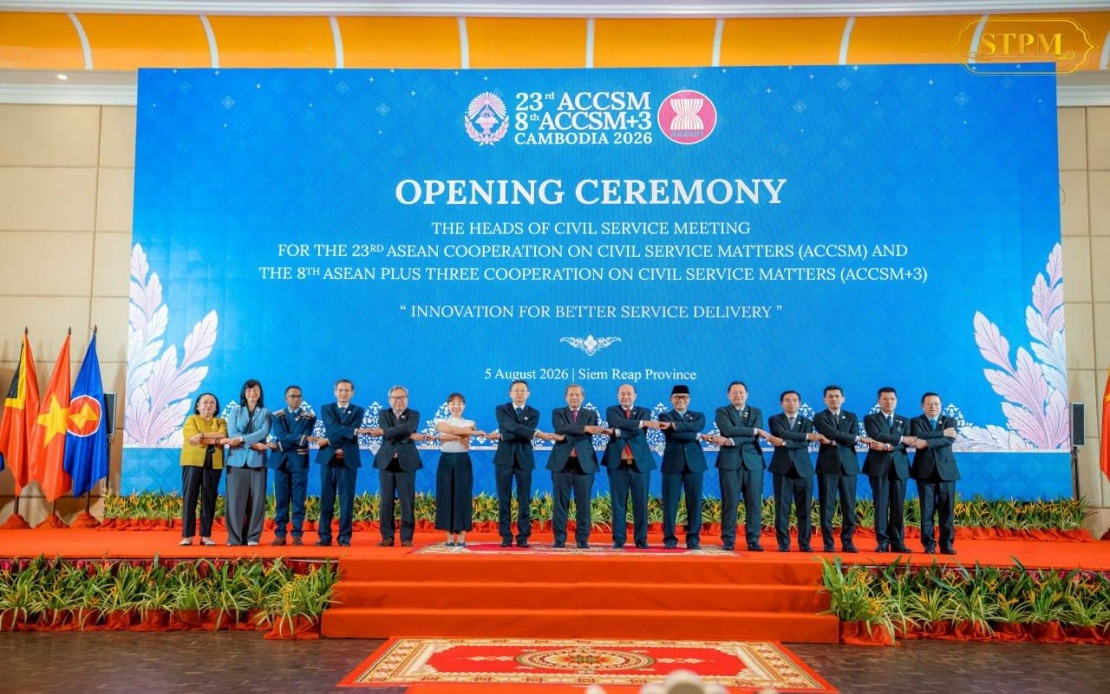
Cambodia's Prime Minister Hun Manet has made a compelling case for ASEAN to harness artificial intelligence and digital innovation as tools for delivering superior public services and addressing regional development disparities. Speaking at joint civil service cooperation meetings held in Siem Reap, Hun Manet positioned technological advancement not as an end in itself, but as a means to genuinely enhance citizens' lives and reduce the significant economic gaps that persist across Southeast Asia's diverse economies.
The Cambodian leader's emphasis on a people-centred approach reflects a growing recognition within ASEAN that digital transformation requires more than merely importing the latest technologies. Rather, member states must tailor their innovation strategies to address specific citizen needs and local challenges. This nuanced perspective carries particular weight given ASEAN's composition of nations at markedly different stages of economic and technological development, from highly digitalised Singapore to developing economies still building foundational digital infrastructure.
Hun Manet stressed that sustainable technology adoption must rest on two critical pillars: institutional capacity and human resources development. This framing acknowledges a persistent challenge throughout Southeast Asia, where technological deployment often outpaces the organisational readiness and workforce skills necessary to maximise its benefits. For Malaysian policymakers and public administrators, this message underscores the importance of investing in civil service training and organisational restructuring alongside hardware and software implementation.
The prime minister explicitly recognised ASEAN's heterogeneous development landscape, cautioning against a one-size-fits-all approach to AI adoption. This stance directly addresses concerns raised by less developed members that rushed digitalisation could widen rather than narrow the development gap. By advocating for differentiated pace and implementation strategies, Hun Manet proposed a more equitable framework for regional progress that acknowledges both the urgency of modernisation and the reality of constrained budgets and technical capacity in certain nations.
The remarks were delivered at the 23rd ASEAN Cooperation on Civil Service Matters and the 8th ASEAN Plus Three Cooperation on Civil Service Matters, both held under the overarching theme of innovation for improved service delivery. These forums represent significant platforms for regional governments to coordinate approaches to public administration modernisation. For Malaysia and other mid-tier ASEAN economies, such venues offer opportunities to benchmark practices, share lessons learned, and collectively address transnational governance challenges.
Hun Manet's call for innovation to strengthen collective regional resilience reflected the growing consensus that many of Southeast Asia's most pressing problems—climate-related disasters, economic imbalances, and poverty—transcend national boundaries and demand coordinated solutions. This perspective aligns with ASEAN's traditional emphasis on regional cooperation while acknowledging the practical limitations of individual nation-states attempting to address complex challenges in isolation.
The Cambodian PM articulated a vision of innovation extending beyond efficiency gains in government operations to encompass broader cooperation frameworks. Knowledge sharing, mutual capacity building, and harmonised policy approaches across member states could amplify the impact of digital transformation investments. For smaller economies with limited resources, participating in such collaborative networks provides access to technological advances and best practices that might otherwise require prohibitive capital expenditures.
Hun Manet's advocacy for ACCSM's role as a vital mutual learning platform positioned civil service cooperation mechanisms as crucial to the broader digitalisation agenda. By maintaining dedicated forums for government officials to exchange experiences and coordinate strategies, ASEAN can avoid duplicative efforts and accelerate the identification of successful approaches worth replicating across the region. This institutional dimension often receives less public attention than headline announcements about AI investment or digital infrastructure projects, yet it frequently determines whether aspirational technology initiatives actually translate into improved citizen outcomes.
The timing of Hun Manet's statements reflects ASEAN's broader acceleration in adopting digital technologies for public administration. Across the region, governments are piloting AI applications in service delivery—from chatbots handling citizen inquiries to algorithms optimising resource allocation. Malaysia, with its relatively advanced digital infrastructure, could potentially contribute valuable case studies from such implementations while also learning from innovative approaches in smaller economies facing resource constraints.
The emphasis on sustainable pacing and institutional readiness carries implications for Malaysia's ongoing National Digital Economy Initiative and public sector digitalisation efforts. While Malaysia possesses greater technological capacity than many ASEAN peers, the principle that technology adoption must align with institutional development remains universally applicable. Overambitious digitalisation programmes lacking adequate change management or workforce training often produce disappointing results regardless of initial investment levels.
Hun Manet's framing of innovation as a tool for addressing poverty and economic imbalance within ASEAN also reflects recognition that technological change, while potentially transformative, does not automatically distribute benefits equitably. Deliberate policy choices about how AI systems are designed, deployed, and regulated will ultimately determine whether digitalisation narrows or widens existing socioeconomic disparities. This consideration particularly matters for Malaysia, which continues navigating regional development disparities despite its status as a relatively prosperous economy.
The convergence of civil service cooperation with broader ASEAN digital transformation discussions suggests that public sector modernisation is increasingly viewed as a strategic priority across the region. For Malaysian officials responsible for public administration, this regional momentum creates both pressure to maintain competitive standards and opportunities to participate in collective problem-solving. The ACCSM forums provide formal channels for such engagement while allowing governments to maintain policy flexibility suited to national circumstances.

