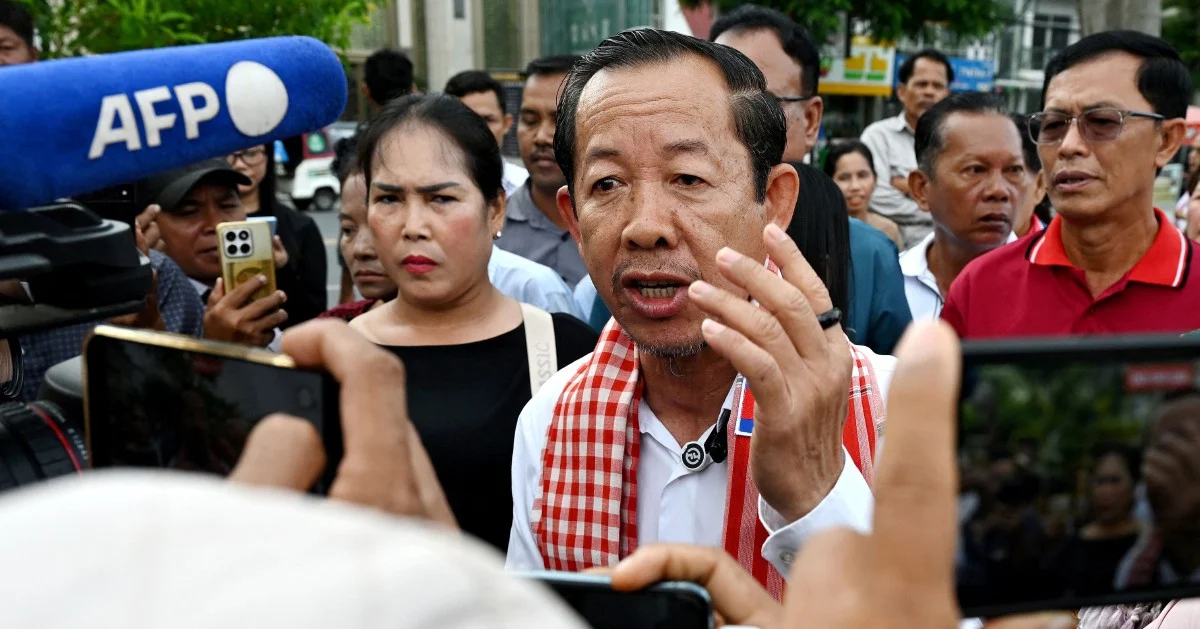
Cambodia's highest judicial authority has issued a mixed verdict on opposition politician Rong Chhun's case, suspending his prison sentence while maintaining the ban that prevents him from seeking elected office. The decision, announced through his legal counsel on Friday, represents a partial concession by the country's top court, though the core restriction on his political participation remains firmly in place.
The suspended sentence signals a degree of leniency in the court's handling of Rong Chhun's case, yet the upheld election ban represents a more consequential outcome for the opposition figure. This combination of judicial moves reflects the complex political landscape in Cambodia, where the courts navigate between domestic political pressures and international scrutiny regarding democratic practices. The election ban effectively neutralises Rong Chhun's ability to influence governance through direct electoral participation, a significant limitation on his political influence regardless of his freedom from incarceration.
For Southeast Asia observers, Cambodia's treatment of opposition figures carries broader implications for democratic development in the region. The case demonstrates how electoral restrictions can function as a mechanism of political control that operates independently from criminal punishment, allowing authorities to sideline challengers through legal mechanisms that appear procedurally legitimate. This approach differs from outright imprisonment but achieves similar political outcomes by removing candidates from electoral competition without technically denying them freedom of movement.
Rong Chhun's situation reflects Cambodia's complex relationship with political opposition during a period of significant electoral scrutiny. The opposition movement in the country has faced considerable pressure in recent years, with various restrictions implemented against key figures. The court's decision to suspend the prison term while maintaining the electoral disqualification may reflect an attempt by judicial authorities to balance competing political interests—appearing moderate in one respect while remaining firm on the fundamental restriction.
The broader context of Cambodia's political system reveals why such electoral bans carry particular weight. Elections represent the primary mechanism through which opposition parties can challenge the ruling establishment, making restrictions on candidacy potentially more impactful than temporary prison sentences. A politician barred from running cannot mobilise voter support or build institutional power through elected positions, effectively sidelining their influence during critical electoral periods. For Rong Chhun and supporters of Cambodia's opposition, the maintained ban represents a substantial obstacle to political participation.
International observers and human rights organisations have increasingly focused on Cambodia's electoral processes and restrictions placed on opposition figures. The treatment of politicians like Rong Chhun draws attention to questions about whether Cambodia's judicial system operates independently or whether political considerations influence legal outcomes. The suspended sentence might be interpreted as a concession to international concern about harsh punishments, while the upheld ban demonstrates that Cambodia's authorities remain committed to restricting opposition political activity.
For Malaysian readers, Cambodia's situation offers comparative perspective on how electoral systems in the region manage political opposition. While Malaysia has experienced its own debates about political restrictions and electoral fairness, Cambodia's approach illustrates an alternative model where judicial decisions limit political participation more explicitly. The contrast between different Southeast Asian democracies highlights how varied regional approaches to governance and opposition management have become.
Rong Chhun's case also illuminates the technical mechanisms through which electoral restrictions operate in practice. Election bans typically specify timeframes during which affected individuals cannot register as candidates, effectively removing them from competitive contests during crucial political moments. Even after such bans expire, the intervening electoral cycles may have already reshaped the political landscape in ways that benefit incumbent parties, potentially weakening opposition competitiveness long after the formal restrictions conclude.
The suspension of Rong Chhun's prison sentence potentially reflects recognition that imprisonment of opposition politicians attracts negative international attention and criticism. Cambodia's government and judiciary face diplomatic pressure regarding democratic governance, particularly from Western nations and international organisations. Suspending the prison term may represent a calibrated response that appears responsive to such concerns while maintaining the core political objective of preventing opposition participation in elections.
Looking forward, the implications of this decision extend beyond Rong Chhun's individual situation. Other opposition politicians facing similar restrictions will view the outcome as precedent for what electoral bans entail and how courts balance imprisonment against candidacy restrictions. If election bans consistently remain in force even when prison terms are suspended, this establishes a clear pattern that opposition participation in future electoral contests will remain constrained regardless of sentencing outcomes.
Cambodia's judicial decisions regarding opposition figures warrant close monitoring from regional observers concerned with democratic development. The case exemplifies how legal mechanisms can restrict political participation while maintaining formal procedural legitimacy, a distinction worth examining for those interested in understanding how electoral restrictions function across Southeast Asia's diverse political systems. The outcomes of such cases shape not only individual political careers but also broader trajectories of democratic practice and opposition capacity throughout the region.

%22%2F%3E%3C%2Fpattern%3E%3C%2Fdefs%3E%3Crect%20width%3D%22100%25%22%20height%3D%22100%25%22%20fill%3D%22url(%23ph2nm9dg)%22%2F%3E%3Crect%20width%3D%22100%25%22%20height%3D%22100%25%22%20fill%3D%22url(%23ph2nm9dp)%22%2F%3E%3Ctext%20x%3D%2250%25%22%20y%3D%2250%25%22%20text-anchor%3D%22middle%22%20dominant-baseline%3D%22central%22%20fill%3D%22rgba(255%2C255%2C255%2C0.95)%22%20font-family%3D%22Georgia%2C%20'Times%20New%20Roman'%2C%20serif%22%20font-weight%3D%22700%22%20font-size%3D%22272%22%20letter-spacing%3D%22-0.02em%22%3EZahid%3C%2Ftext%3E%3C%2Fsvg%3E)