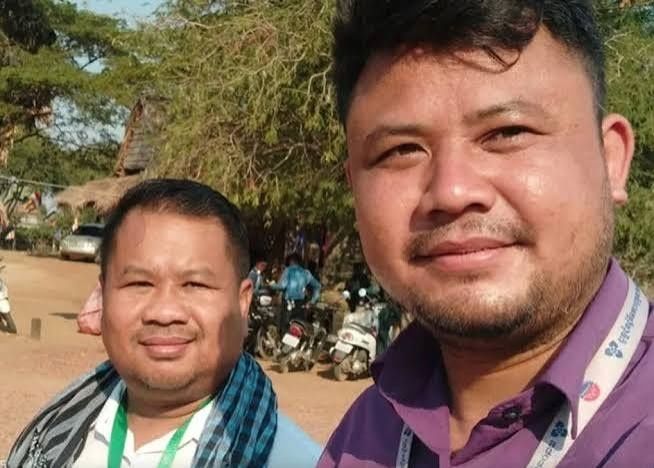
Cambodia's Supreme Court was scheduled to deliver its decision on Thursday, June 25, on whether to overturn the treason convictions of two journalists sentenced to 14 years in prison for publishing photographs taken near the country's disputed border with Thailand. The anticipated ruling has become a focal point in an increasingly contentious debate over judicial independence in the Kingdom, as international observers and human rights organisations scrutinise whether Cambodian courts operate free from political influence.
Phorn Sopheap, who works for Battambang Post TV Online, and Pheap Pheara of TSP 68 TV Online were arrested in July of the previous year as they returned from reporting assignments along the contested frontier. Authorities alleged that the pair had photographed sensitive military locations within a restricted zone and subsequently distributed those images through Facebook. Both journalists have consistently maintained their innocence, asserting that they possessed proper authorisation to access the area where they conducted their reporting work. Their legal team has asked the Supreme Court to discard the lower court's verdict and restore their freedom.
The photographs at the centre of the case became particularly controversial when one image depicting land mines circulated widely among Thai news organisations. That single image proved instrumental in bolstering Thailand's position in the territorial dispute, as Bangkok argued it provided visual evidence that Cambodia had deployed fresh mines along the boundary in violation of international conventions. Cambodia's government categorically rejected such allegations, insisting that the country adheres to international treaties prohibiting landmine manufacture and deployment. Cambodian officials instead suggested that any mines discovered in the area were remnants from the nation's decades-long internal conflicts, which concluded in the late 1990s.
The border tensions that prompted the journalists' investigative work escalated into significant armed clashes between Cambodian and Thai military forces during July and December, creating a humanitarian crisis that displaced hundreds of thousands of civilians across both nations. The fighting resulted in approximately one hundred military and civilian deaths before a ceasefire took effect in December. Despite the absence of fresh combat since that agreement, underlying tensions remain unresolved and the frontier remains volatile.
Cambodia's Siem Reap Provincial Court delivered its guilty verdict in December, determining that both journalists had committed treason by supplying intelligence to a foreign power in ways that compromised national security. When a lower appellate court upheld the convictions in March, international and regional journalism organisations mobilised in response, with more than a dozen groups issuing a joint appeal urging the government to abandon prosecution. Their concerns centred on the potential chilling effect such prosecutions might have on legitimate investigative reporting across the region.
The timing of the Supreme Court's June ruling underscores deeper institutional anxieties about Cambodia's commitment to press freedom and judicial impartiality. The decision arrives merely days after the same court affirmed the incitement conviction of Rong Chhun, a 56-year-old opposition figure who was found guilty of stirring social unrest after meeting with residents displaced by state development initiatives. That verdict marked another chapter in what observers characterise as a systematic governmental campaign to marginalise political opponents and restrict critical voices. Human Rights Watch issued a statement suggesting the Rong Chhun decision demonstrated the judiciary's structural dependence on Cambodia's ruling political establishment, though government spokespeople maintained that the Supreme Court operates with complete autonomy.
The evolution from Hun Sen's near four-decade authoritarian tenure to his son Hun Manet's assumption of the premiership in August 2023 initially sparked hopes among democracy advocates that Cambodia might chart a more permissive political course. Hun Manet's American education and younger generation status led some observers to anticipate meaningful reforms. Yet the intervening months have yielded minimal evidence of meaningful liberalisation, and patterns of suppression targeting dissenting voices have persisted largely unchanged. The journalists' case symbolises what many perceive as continuity rather than rupture in Cambodia's governance approach.
The Committee to Protect Journalists, a New York-based advocacy group, has specifically criticised Cambodia's application of sweeping national security legislation to prosecute what it characterises as standard journalistic work. The organisation argues that the government exploits deliberately ambiguous legal frameworks to criminalise ordinary reporting, effectively converting journalism into a prosecutable offence. This interpretive flexibility grants authorities considerable latitude in determining what constitutes legitimate activity versus illegal conduct.
Cambodia's standing in global press freedom assessments reflects this deteriorating environment. The country ranked 161st among 180 nations and territories in the 2025 Reporters Without Borders World Press Freedom Index, positioning it among countries where media conditions are deemed "very serious." This ranking places Cambodia substantially below most Southeast Asian neighbours and indicates a press environment severely constrained by governmental restrictions and legal weaponisation against media practitioners. The trajectory suggests that institutional challenges to judicial independence and press freedom are not temporary anomalies but rather entrenched features of Cambodia's contemporary political structure.

