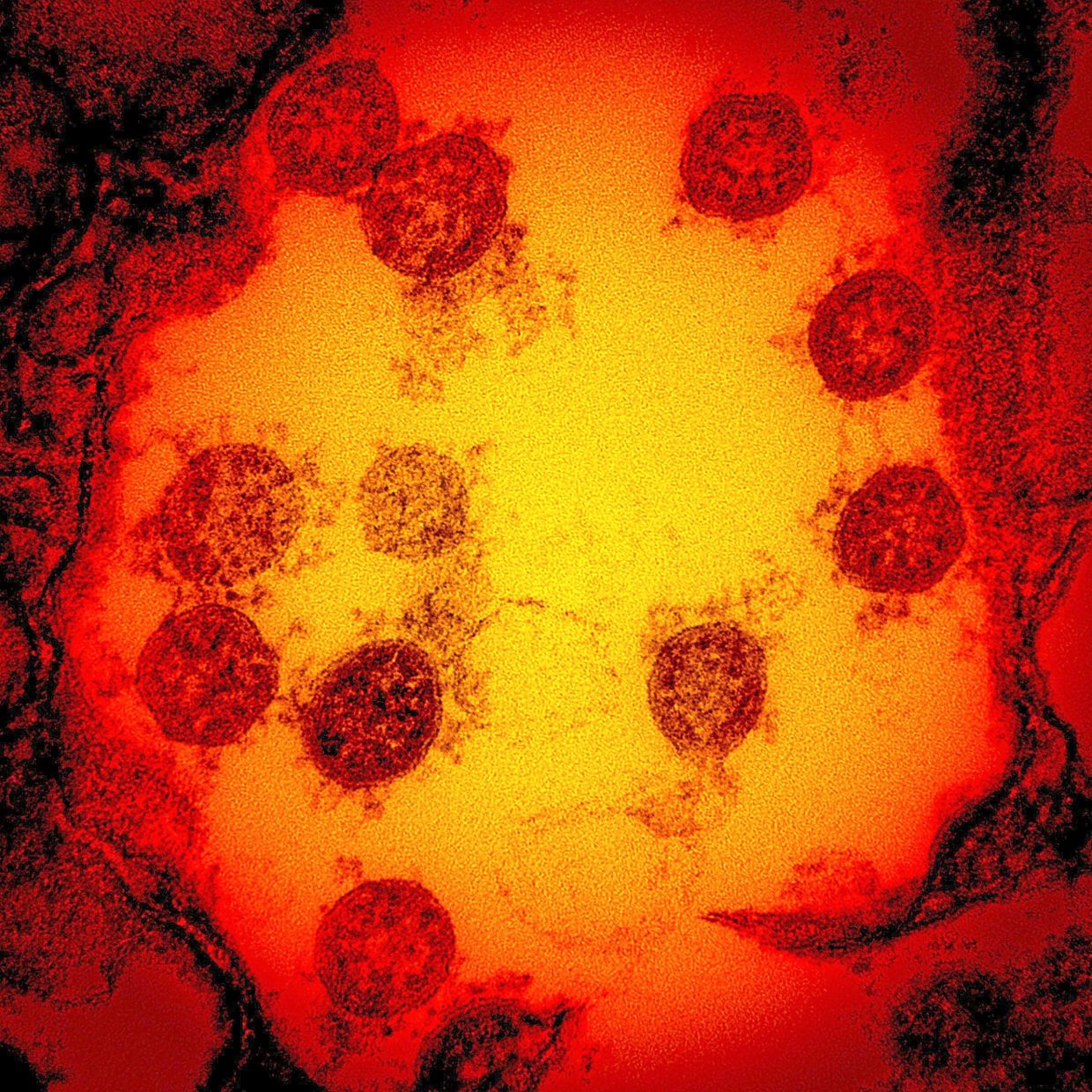
A breakthrough in vaccine development by researchers at Cambridge University promises to fundamentally reshape how the world responds to viral threats. Rather than developing vaccines for individual viruses like SARS-CoV-2, SARS, and MERS as they emerge, scientists have created an artificial intelligence-aided technology that could provide immunity against entire virus families. The innovation addresses a critical vulnerability in current vaccine strategies: by the time a vaccine for a specific strain is developed and deployed, new variants often circulate in populations, rendering the approach perpetually reactive.
Dr Jonathan Heeney, the lead researcher and professor of Comparative Pathology at Cambridge, describes the technology using a vivid analogy. Rather than needing separate keys for each apartment in a building, this approach functions as a "master key" that opens all of them simultaneously. The fundamental challenge with existing vaccines, according to Heeney, is their inherent obsolescence. A vaccine developed for one strain provides no guarantee of protection against variants that emerge months later. This temporal mismatch between vaccine development and viral evolution has defined pandemic response for decades, forcing health systems to constantly chase moving targets while populations remain vulnerable.
The impetus for this research emerged from one of the twenty-first century's most devastating outbreaks. When Ebola appeared in West Africa between 2013 and 2016, healthcare workers initially struggled to identify the pathogen, mistaking it for Lassa fever, gastroenteritis, or cholera. For three to four months, critical time elapsed before identification was confirmed, during which the virus spread rapidly from Guinea through Sierra Leone into Liberia. The World Health Organization recorded approximately 11,300 deaths from this single outbreak, many among medical personnel. For Heeney, based in the region during this catastrophe, the experience crystallised a fundamental truth: vaccine development timelines are incompatible with viral transmission speeds.
Returning to Cambridge after witnessing the outbreak's devastation, Heeney committed to reimagining vaccine development entirely. Rather than waiting for each new threat to emerge, his team decided to harness artificial intelligence to identify common immunological targets across entire virus families. By analysing vast datasets containing information about multiple viruses, the researchers identified which viral components consistently trigger immune responses across all variants within a family. This allows a single vaccine to recognise not merely one strain but all current and predictable future variants. The approach represents a paradigm shift from reactive to proactive pandemic prevention.
The methodology leverages AI's capacity to process and synthesise enormous volumes of biological data that would overwhelm conventional analysis. Rather than relying on the traditional approach of understanding each virus individually, the technology identifies universal "signatures" that the human immune system recognises across all members of a virus family. This convergence of immunology and artificial intelligence creates a protective shield that adapts preemptively rather than reactively. Heeney emphasises that this transformation removes the variability that currently defines vaccine strategies, offering instead comprehensive protection against multiple simultaneous eventualities.
The urgency of developing such technology intensifies when considering contemporary disease ecology. Population growth, increasing cross-border mobility, and human encroachment into animal habitats have dramatically accelerated viral emergence. Pathogens that previously circulated harmlessly within animal populations, contained by their hosts' evolved resistance mechanisms, now encounter humans lacking any natural immunity. Without defences against these pathogens, transmission frequently explodes with catastrophic consequences. The frequency and unpredictability of future zoonotic spillovers make reliance on traditional vaccine development increasingly untenable. Southeast Asian nations, experiencing rapid urbanisation and agricultural expansion, face particular vulnerability to such emerging threats.
The Cambridge team, collaborating with British biotechnology firm DIOSynVax, has already advanced beyond theoretical work. An initial trial involving 39 volunteers, sponsored by University Hospital Southampton, has been completed and published. Results have validated the approach sufficiently that researchers are now preparing larger-scale trials. This progression from small proof-of-concept to expanded clinical testing represents significant momentum in translating the technology from laboratory concept to deployable reality. The involvement of established biotechnology partnerships suggests the innovation is attracting both scientific credibility and commercial interest necessary for large-scale manufacturing.
Historical perspective underscores the stakes. The Black Death decimated medieval European populations, while the 1918-1920 influenza pandemic killed an estimated 25 to 50 million people globally. Modern pandemic preparedness remains vulnerable to similar catastrophes despite advances in diagnostics and treatment. Influenza particularly concerns Heeney due to its genetic instability and capacity for rapid mutation. A universal influenza vaccine covering all likely variants would represent an epochal advance in public health. The emergence of novel pandemic threats in recent decades demonstrates that such preparedness is not historical curiosity but urgent contemporary necessity.
Cambridge researchers are now deploying even more sophisticated artificial intelligence capabilities to enhance the platform further. Enhanced computational power enables processing of larger datasets and more granular analysis of viral evolution. The team aims to construct what Heeney describes as a "powerful platform" enabling faster development and response to emerging threats while drawing on ever-expanding medical knowledge. This represents continuous technological evolution rather than a completed achievement. Heeney's vision encompasses not merely developing superior vaccines but fundamentally transforming vaccine manufacturing methodology through AI integration.
The implications for Malaysian and Southeast Asian public health systems are substantial. The region's geographic position, biodiversity, and agricultural practices create conditions favouring viral emergence. A vaccine platform technology capable of providing advance protection against entire virus families would dramatically improve pandemic preparedness. Rather than experiencing the several-month delays that characterised early COVID-19 vaccine development, health authorities could deploy universal vaccines targeting emerging viral families within weeks. This would be particularly valuable for small island nations and countries with limited manufacturing capacity, potentially reducing dependence on wealthy nations for vaccine access during global crises.
However, Heeney acknowledges that moving from promising laboratory results to worldwide adoption requires demonstrating safety, efficacy, and practical superiority over existing approaches. Regulatory approval pathways for fundamentally new vaccine technologies demand extensive clinical data. Manufacturing scale-up presents technical challenges. Public acceptance of novel vaccine platforms may require sustained communication about their benefits. These obstacles, while formidable, appear surmountable given the potential rewards and growing urgency around pandemic preparedness.
Looking forward, Heeney expresses cautious optimism about transforming pandemic response fundamentally. The technology opens possibilities previously beyond reach: comprehensive protection against virus families rather than individual strains, faster response times to emerging threats, and reduced pandemic mortality. Success would mark a transition from perpetual chase towards proactive protection. Whether this represents merely incremental progress or genuine paradigm shift will become apparent as larger trials progress and regulatory processes advance. For now, the work at Cambridge suggests that humanity may finally be developing tools sophisticated enough to stay ahead of viral evolution rather than constantly pursuing it.

