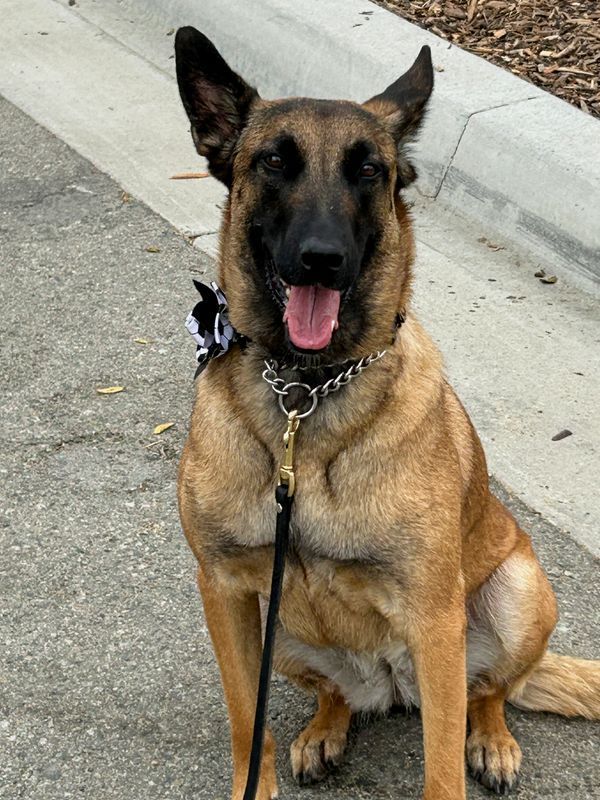
The 2026 World Cup, hosted jointly by the United States, Canada, and Mexico, presented unprecedented security challenges for tournament organisers, requiring an unprecedented mobilisation of canine detection teams across the sprawling three-nation event. Among the hundreds of four-legged officers stationed at stadiums and training facilities was Kali, a five-year-old Labrador Retriever deployed at Los Angeles Stadium, where her role was to intercept potential threats including explosives, weapons, and prohibited items before they could enter venues hosting matches watched by hundreds of thousands of spectators.
The geopolitical landscape surrounding the tournament created exceptional operational demands for security planners. The hosting nations included the United States, which was simultaneously engaged in broader tensions with Iran—a team participating directly in the tournament. The Trump administration's strained relations with numerous nations competing in the event added another layer of complexity to threat assessment. Additionally, inter-team rivalries carried their own security implications, while unrelated incidents such as cartel violence in Mexico shortly before the tournament's commencement underscored the volatile regional context in which organisers had to operate.
These circumstances transformed the World Cup into more than a sporting spectacle. When Iran's national team played matches in Los Angeles, significant political protests erupted outside the stadium, fundamentally altering the security posture required for those specific fixtures. This intersection of sports and geopolitical messaging created what security professionals termed elevated threat environments, demanding more aggressive detection protocols and expanded security perimeters compared to matches involving other nations.
The physical scale of the tournament multiplied logistical challenges exponentially. With matches scheduled across sixteen stadiums spanning three countries, security requirements extended far beyond venue perimeters. Training grounds, team hotels, transportation corridors, and surrounding infrastructure all demanded comprehensive coverage. Allied Universal Enhanced Protection Services, the largest private canine security provider in the United States, deployed approximately three hundred of its thousand operational dog teams specifically for World Cup assignments, reflecting the magnitude of the security operation.
Kali and her colleagues represented a carefully coordinated patchwork of agencies and private operators. The Federal Bureau of Alcohol, Tobacco, Firearms and Explosives maintained dedicated canine units trained specifically for explosive detection. Los Angeles County Sheriff's Department contributed patrol and detection dogs including one named Buck, working alongside handler Anthony Meyers. Private security contractors positioned additional teams at stadium perimeters, where they conducted vehicle screening and monitored foot traffic approaching entrances.
Security professionals recognised that the canine presence served dual purposes that complemented each other strategically. Glen Kucera, president of Allied Universal Enhanced Protection Services, explained that ninety-five percent of the dogs' security impact derived from their visual deterrent effect rather than actual detection incidents. The sight of alert detection dogs created an immediate psychological message to potential threat actors that any attempt to introduce prohibited items faced a formidable first line of defence. This visual signalling proved particularly valuable given the tournament's international composition, as it reassured global spectators that comprehensive protective measures were active.
The choice of dog breeds reflected careful consideration of cultural factors alongside operational requirements. Rather than deploying intimidating German Shepherds or working breeds commonly associated with law enforcement in some nations, organisers predominantly utilised Labradors and other naturally friendly breeds. This selection acknowledged that in many countries outside North America, dogs carry associations with oppressive state security apparatus and generate genuine fear among populations unfamiliar with widespread pet ownership. By presenting security personnel as approachable figures rather than threatening enforcers, tournament organisers attempted to balance protective necessity with visitor comfort—a delicate equilibrium essential for maintaining public confidence in the event's safety profile.
Detection requirements extended beyond terrorism concerns. Football fans from numerous cultures traditionally celebrate goals and victories with fireworks, creating a persistent challenge for security personnel seeking to prevent prohibited pyrotechnic devices from entering stadiums. The dogs proved instrumental in identifying such items during screening processes, preventing well-intentioned supporters from inadvertently violating security protocols.
Different venues and jurisdictions implemented varying canine strategies reflecting local capabilities and threat assessments. In Guadalajara, Mexico, authorities supplemented traditional dog teams with robotic detection systems designed to identify explosive compounds. Vancouver, Canada developed a multi-layered approach integrating canine detection as the primary component of a sophisticated threat-identification framework. These regional variations demonstrated how security coordinators customised their approaches to accommodate local circumstances while maintaining consistent protective standards.
Iran's participation created particularly complex operational scenarios. The Iranian national team was required to remain based in Mexico, flying into the United States only immediately before matches and departing shortly after competition concluded. This compressed scheduling demanded constant security protocol adjustments and coordination between Mexican and American authorities. Matches against New Zealand, Belgium, and Egypt attracted heightened attention, particularly the Los Angeles fixtures where external protests demonstrated the charged atmosphere surrounding Iran's participation. Seattle's hosting of Iran's final group match against Egypt necessitated comparable security infrastructure to that deployed in Los Angeles, requiring geographic distribution of specialist teams across multiple Pacific locations.
Despite the extraordinary operational demands and geopolitical sensitivities, the security apparatus functioned effectively throughout the tournament. The integrated approach combining detection dogs, patrol teams, infrastructure security, and intelligence coordination prevented incidents that could have disrupted matches or endangered spectators. The unprecedented scale of deploying hundreds of canine units across three nations simultaneously represented a logistical achievement that required months of planning, interagency coordination, and resource allocation.
The dogs themselves handled their historic assignment with professional composure. When Reuters personnel attempted to photograph security teams, every canine handler interviewed reported that their charges remained willing and cooperative subjects, demonstrating the discipline and training characterising World Cup security operations. Whether deployed to detect explosives, patrol perimeters, or provide visual deterrence, the dogs proved themselves indispensable components of a complex security apparatus protecting one of the world's largest sporting events during an era of heightened geopolitical tension.

