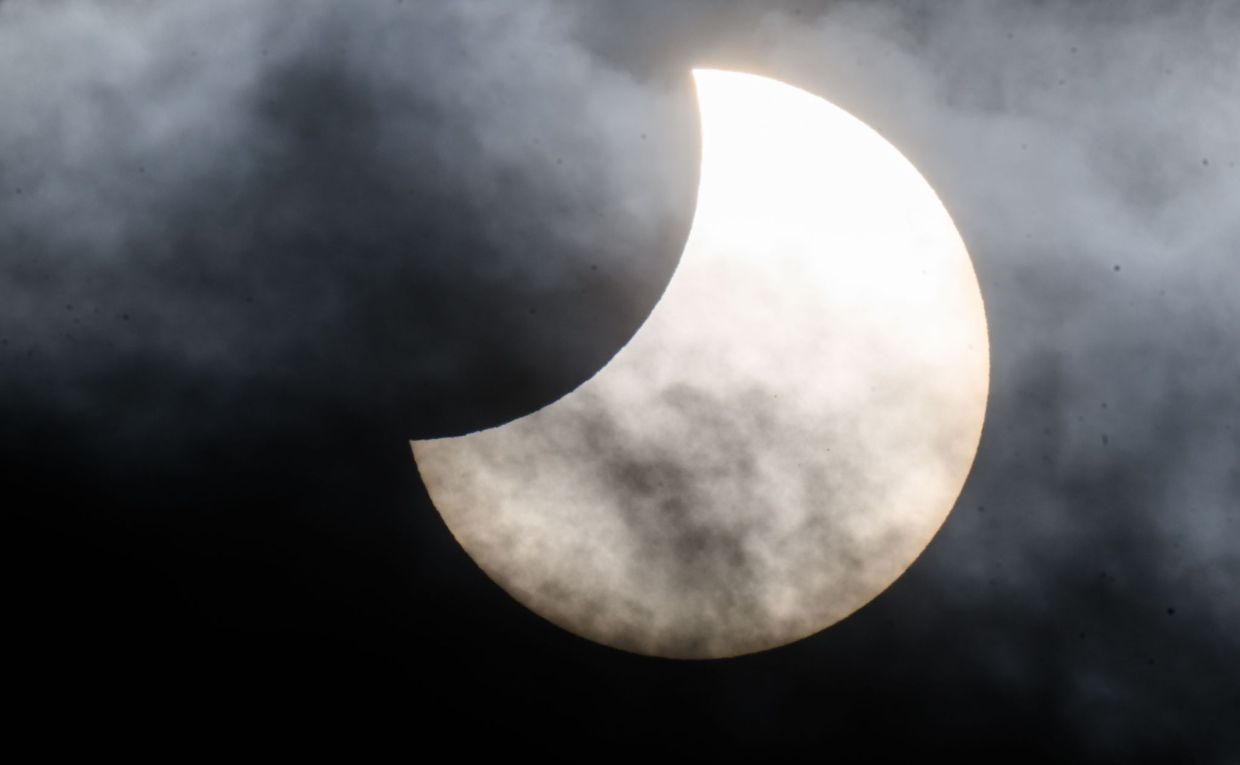
Two extraordinary celestial events will grace August skies this year, offering photography enthusiasts across multiple continents a rare opportunity to document nature's most dramatic displays. While professional astronomers with expensive equipment have long dominated eclipse photography, modern smartphone technology has democratised the ability to capture these moments. The challenge now lies not in acquiring sophisticated gear but in mastering the techniques and settings that coax the best results from devices most people already carry in their pockets.
The first event occurs on August 12, when a total solar eclipse will sweep across eastern Greenland, western Iceland, and portions of Spain including the Balearic Islands and western Mediterranean regions. The eclipse will commence around 5 pm GMT, visible from Scandinavia and Greenland, then progress southward through Europe with increasing prominence. Peak eclipse conditions will occur between 6:15 pm and 6:45 pm GMT. Beyond the path of totality, partial eclipse conditions will dominate across much of Europe and North Africa. Countries including Ireland, the UK, France, Portugal, Italy, Switzerland and Algeria will experience approximately 90 per cent solar obscuration, while observers stretching as far as Ukraine and Morocco will witness partial phases.
August's second celestial offering arrives on the 28th when a partial lunar eclipse occurs, with optimal viewing conditions across Latin America and the western coasts of North America. The full moon positioned in the constellation Aquarius will pass through Earth's umbral shadow, creating an eclipse so substantial that 94 per cent of the moon's apparent diameter will lie within the shadow zone. Most observers in the Western Hemisphere will perceive this as nearly a total lunar eclipse, presenting compelling photographic opportunities that differ dramatically from the solar eclipse's requirements and character.
For readers in Malaysia and Southeast Asia, these events carry particular significance as they underscore the region's place within a globally connected astronomical community. While the totality path remains distant, the increasing sophistication of smartphone imaging technology means that enhanced images of these phenomena will soon dominate social media feeds and news outlets worldwide. Understanding how to capture such events provides both practical knowledge and insight into where technology and natural science intersect in contemporary life.
Successfully photographing either eclipse begins with location selection. Finding the darkest possible environment dramatically improves results, particularly for the lunar eclipse where ambient light becomes the enemy of detail. Online resources such as the Light Pollution Atlas provide detailed maps showing sky brightness by region, enabling photographers to distinguish between genuinely dark locations (displayed in green or blue) and those compromised by urban illumination (shown in red or yellow). This geographical intelligence transforms an otherwise haphazard search into a purposeful quest.
Once at a suitable location, smartphone users should prepare their devices for low-light performance. Reducing the display brightness and activating night mode through settings allows human eyes to adjust to darkness while preserving the camera's sensitivity. This counterintuitive step prevents the bright phone screen from washing out the camera's ability to detect faint celestial details. Activating your device's dark mode extends this principle across all interface elements.
The critical next step involves selecting appropriate camera modes. Contemporary smartphones increasingly offer dedicated astrophotography capabilities engineered specifically for night sky capture. Google Pixel devices automatically detect suitable subjects and darkness levels, triggering astro mode without manual intervention. When activated, the camera executes extended exposures—often lasting four minutes—during which the phone accumulates light information that would remain invisible to conventional photography. Samsung Galaxy users can leverage the Expert RAW application for comparable functionality. Devices without dedicated astro modes should employ the widest available lens setting and set focus to either "Wide" or "Far" modes to ensure celestial objects remain sharp.
Stabilisation equipment fundamentally changes eclipse photography outcomes. Smartphone tripods, widely available for approximately RM40 to RM47, prevent the subtle camera movement that destroys fine detail during long exposures. Budget alternatives exist for those lacking tripods: setting the self-timer function to a three-second or ten-second delay, then placing the phone flat on steady ground, eliminates the blur introduced by finger contact with the device. Modern smartphone image stabilisation technology has improved substantially, but mechanical stability always outperforms electronic compensation.
Solar eclipse photography demands particular caution given the sun's capacity to cause permanent vision damage. Standard sunglasses provide insufficient protection, and direct viewing through smartphone screens without eclipse glasses risks eye injury. However, a careful technique allows safe solar photography: by adjusting brightness settings to their absolute minimum and carefully pointing the camera at the sun while keeping your eyes directed elsewhere, you can capture eclipse images without retinal damage. The smartphone acts as a barrier between your eyes and the sun itself. For children particularly, projection methods prove superior—using mirrors or pinhole cameras to project the sun's image onto a bright surface allows safe, engaging eclipse observation without requiring protective eyewear.
The lunar eclipse presents fewer safety concerns but demands different technical approaches. Since the moon reflects rather than generates light, lunar eclipse photography benefits from different camera settings entirely. The near-total lunar eclipse on August 28 will display significant tonal variation as portions of the moon remain illuminated while others darken dramatically within Earth's umbra. This tonal range requires careful exposure metering to preserve detail across both bright and shadowed regions.
The convergence of two major celestial events within August represents an extraordinary opportunity for both casual observers and serious photography enthusiasts. For Malaysian readers, these occurrences exemplify how advances in consumer technology have transformed what were once exclusive pursuits into accessible experiences. Smartphone manufacturers' investment in computational photography—the algorithmic enhancement of captured images—has effectively placed advanced imaging capabilities within reach of anyone willing to learn fundamental techniques. As these August eclipses approach, millions worldwide will attempt to capture and share their experiences, with many discovering unexpected creative satisfaction in the process.
Beyond the technical mechanics, eclipse photography connects participants to a tradition spanning millennia. Ancient civilizations marked these events as pivotal moments, and modern photographers continue that legacy of documentation and wonder. The smartphone, often dismissed as a source of distraction, becomes in these moments a genuine tool for scientific observation and artistic expression. Whether your August includes direct eclipse observation or simply viewing others' photographs, understanding the technology that makes modern eclipse documentation possible enriches appreciation for both the celestial events themselves and the remarkable instruments we carry daily.

