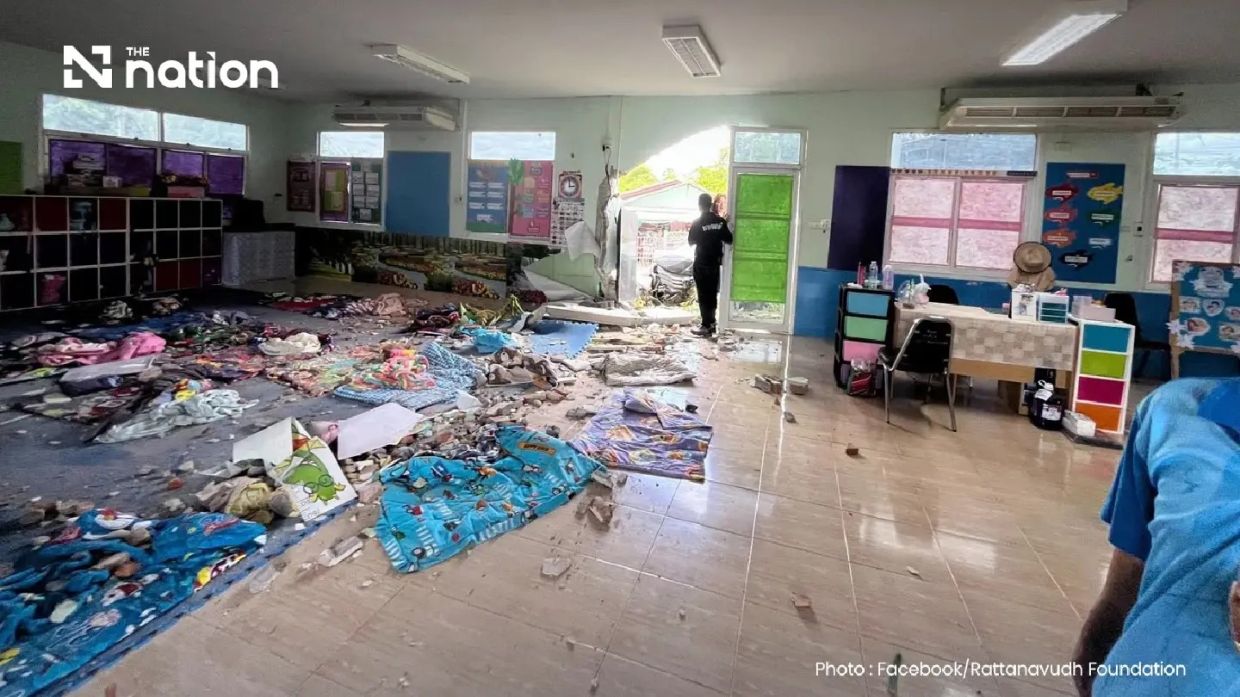
A vehicle lost control and smashed through the walls of Ban Nong Song Ton Child Development Centre in Kanchanaburi's Mueang district on Friday, August 7, 2026, leaving 15 children injured in what residents described as a terrifying incident that shattered the calm of a typical afternoon. The private saloon car penetrated deep into the facility, its impact concentrated on a classroom where pupils had settled down for their usual midday rest period, a scenario that raises fresh questions about safety protocols at childcare facilities across Thailand and the wider region.
The collision caused substantial structural damage to the building, with debris and fragments scattered across the classroom where the youngest charges had been lying on mats. Children sustained head injuries and cuts from the wreckage, while several others experienced severe psychological shock from the sudden and violent intrusion into their space. First responders arriving at the scene found a chaotic environment where frightened staff members were tending to distressed youngsters amid damaged furniture and building materials.
Emergency personnel from the Rattanavudh Foundation and the Phithak Kan Foundation mobilised swiftly, rendering initial medical assistance before coordinating the evacuation of all injured children. The affected pupils were transported to Phaholpolpayuhasaena Hospital where medical teams conducted comprehensive examinations. Hospital officials subsequently confirmed that all 15 injured children remained in stable condition with no life-threatening injuries reported, though several required treatment for moderate wounds and observation for potential complications.
The incident unfolded at a facility responsible for the care and development of young children, a responsibility that carries immense weight given the vulnerability of the age group involved. Staff records indicated that 34 children had been enrolled for care that day, meaning approximately 56 per cent of the facility's daily cohort sustained injuries. The remaining 19 children escaped physical harm, though many likely experienced psychological trauma from witnessing the accident and its immediate aftermath.
Local authorities coordinated an emergency response that involved clearing roads in Mueang Kanchanaburi district to allow rescue and medical vehicles rapid passage to the hospital. Residents in the vicinity observed the unusual flurry of sirens and emergency activity, with many learning of the crash through word of mouth and community networks. The incident sparked concern among parents and guardians throughout the district, prompting questions about the adequacy of safety measures at childcare establishments.
While the immediate medical outcomes proved fortunate, the accident highlights persistent vulnerabilities in how childcare centres across Thailand manage environmental hazards and unexpected emergencies. The fact that a vehicle could penetrate so deeply into an active classroom suggests potential gaps in perimeter security, structural reinforcement, or vehicle control measures that many facilities may not have adequately addressed. Kanchanaburi and other provinces throughout the region may now face pressure to review their safety standards and implement preventative measures.
The circumstances surrounding the vehicle's loss of control remain under investigation. Preliminary accounts suggest mechanical failure or driver error, though authorities had not released definitive conclusions as of the latest updates. Understanding the root cause will be essential for determining whether this represents an isolated incident or a symptom of broader safety issues that extend beyond the childcare facility itself.
For Malaysian readers and those across Southeast Asia, this incident serves as a sobering reminder that childcare safety encompasses more than the traditional concerns of infection control and supervision ratios. Modern facilities must contend with environmental hazards that earlier generations did not anticipate, including vehicle intrusions and structural vulnerabilities. Childcare operators and regulatory authorities in Malaysia should examine whether current building codes and safety protocols adequately protect children from similar scenarios.
The psychological impact on affected children cannot be minimised. Early childhood exposure to sudden violence or trauma can produce lasting effects on development and emotional wellbeing. The facility and medical authorities will likely need to provide counselling and psychological support services to help the injured children process their experience. Parents of uninjured children at the centre may also seek reassurance and information about how the facility plans to prevent recurrence.
As the investigation proceeds and the children recover, the broader question of how childcare facilities should balance accessibility with security becomes increasingly relevant. Installing protective barriers around buildings, implementing vehicle speed controls in surrounding areas, and establishing emergency protocols could help mitigate risks without compromising the welcoming environment that quality childcare requires. The Kanchanaburi incident may ultimately catalyse important conversations about child safety standards across Thailand and the region.

