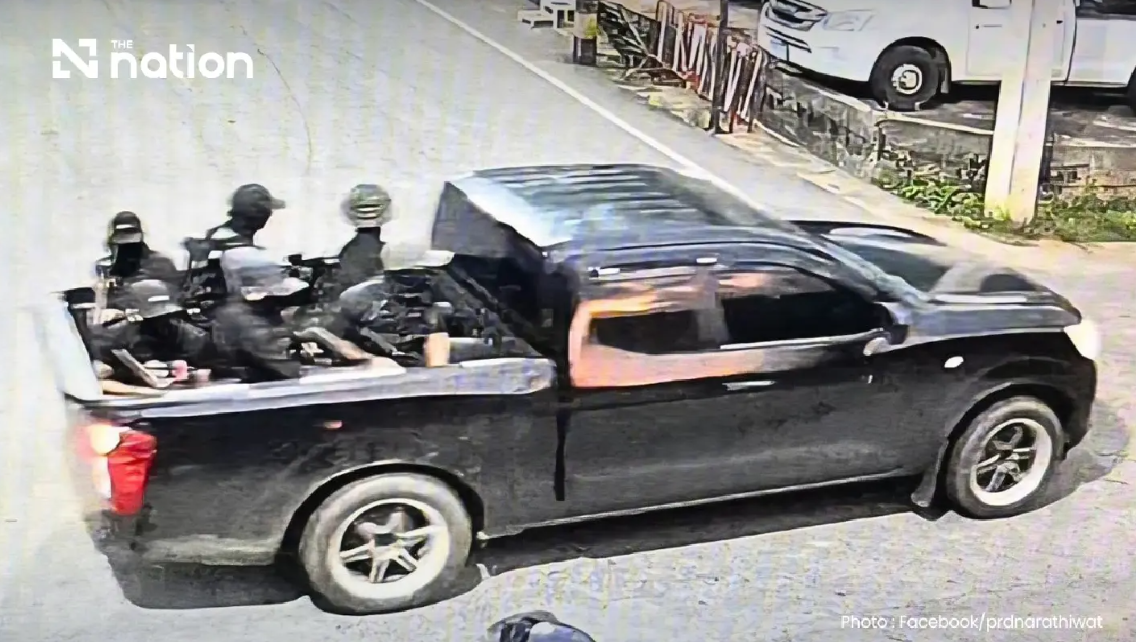
A swift and coordinated assault on the Bukeh Sami checkpoint in Narathiwat on the evening of July 22 has been meticulously documented by security cameras, revealing the operational sophistication of a nine-member attack group that overwhelmed the position in little more than a minute and a half. The raid resulted in the deaths of five paramilitary rangers and injuries to six civilians, marking a significant security incident in Thailand's troubled southern region. The footage provides rare visual evidence of how armed groups operating in the area plan and execute such operations, offering investigators crucial details about tactics, equipment, and coordination methods that may help shape future security responses.
Initial assessments by authorities underestimated the scale of the attack, with investigators first believing only six people were involved in the assault. However, careful review of multiple camera angles positioned both outside and across from the checkpoint revealed the true composition of the raiding party. The attackers operated in two distinct teams, suggesting a level of training and planning consistent with groups that have carried out previous strikes in the southern border region. This organisational structure would have allowed the group to concentrate firepower while maintaining flexibility and providing covering fire during their withdrawal.
The primary assault force consisted of seven individuals who travelled to the checkpoint in a black Nissan pickup truck bearing a Songkhla registration. One member of this team drove the vehicle while the remaining six occupied the truck bed, all dressed in black clothing that resembled paramilitary uniforms and wearing broad-brimmed hats that obscured their facial features. This deliberate mimicry of official security forces' appearance could have been designed to reduce suspicion as they approached the checkpoint from the direction of Tanyong Mat market. The vehicle's registration, listed as ผน 6866, provided a starting point for investigators attempting to trace the origin and movement of the attackers.
A support team operating from a red-and-white Honda Wave motorcycle provided rear security for the operation. The rider, dressed in ordinary white clothing and a helmet, was reportedly armed with an 11mm pistol, while the passenger wore a black women's hijab as a disguise and carried an AK-type rifle. This dual-team approach mirrors tactics employed by insurgent groups elsewhere in Southeast Asia, where one element creates chaos and confusion while another provides security against counterattack. The motorcycle's role appears to have been surveillance and rearguard protection as the primary assault team conducted the raid, though its registration number could not be determined from available footage.
The attack unfolded with devastating speed and tactical coordination. Three rangers were standing at the roadside checkpoint position when the pickup truck slowed before them. Attackers in the truck bed immediately opened fire with M16 and AK-type rifles, dropping the three officers within seconds. Following their initial volley, several members of the assault team dismounted from the vehicle and maintained suppressive fire towards the checkpoint's fortified bunker, where two additional rangers were stationed. This methodical progression from initial ambush through consolidation of the position showcases training in basic infantry tactics that goes beyond opportunistic violence.
The attack force then conducted what appeared to be a deliberate search of the checkpoint position, removing weapons and equipment before withdrawing. As the group retreated, one attacker threw a pipe bomb towards an elevated structure positioned near a bridge beside the checkpoint, possibly to destroy evidence or deter pursuit. The pickup and motorcycle then fled towards Dusongyo subdistrict in Ra-ngae district, with both vehicles subsequently disappearing from the secured area. All five paramilitary rangers—Sergeant Major First Class Theerayut Somakerd, ranger volunteers Sakiriya Jena, Wimon Dabthong, Nattasit Kaewsena, and Salahudin Pi—were killed at the scene, with six civilians also wounded during the assault, including a ten-year-old child.
Forensic examination of the attack site through the night revealed the intensity of the firefight that occurred. More than 100 spent cartridge cases were recovered across the checkpoint area, representing rounds fired from M16 rifles, AK-pattern weapons, and an 11mm pistol. Investigators also collected ammunition fragments believed to have been ejected from weapons as attackers cleared jammed rounds, a detail suggesting the engagement was sustained and at close quarters. The checkpoint's bunker bore visible evidence of the fusillade directed against it, with bullet marks peppering its exterior walls. Evidence related to the pipe bomb detonation was recovered near the raised structure beside the bridge.
Initial inventory checks indicated that the attackers removed four folding-stock AK-type rifles, one 11mm pistol, four ammunition magazines, and four bulletproof vests, though authorities acknowledged that casualty accounts varied and a comprehensive assessment of missing equipment was still being completed. The black Nissan pickup used in the assault was subsequently discovered abandoned and deliberately burned, apparently an attempt to eliminate forensic evidence linking the vehicle to the attackers. This destruction of the primary getaway vehicle suggests either a deliberate protocol within the attack group or desperation to avoid identification and pursuit.
The response by security forces was swift and substantial. Narathiwat Governor Boonchuay Homyamyen joined Provincial Police Region 9 commissioner Pol Lt Gen Piyawat Chalermsri, Narathiwat police chief Pol Maj Gen Prayong Khot Sakha, and Col Witthaya Sariya, commander of the 45th Ranger Regiment Task Force, in overseeing the overnight investigation. Bomb-disposal officers, tactical police, and forensic teams worked through the night to document the scene and collect evidence. Security forces rapidly deployed checkpoints and roadblocks along potential escape routes in and around Ra-ngae district, though the attackers had secured sufficient time and knowledge of local roads to slip away before the perimeter could be fully established.
The Bukeh Sami checkpoint attack underscores ongoing security challenges in Narathiwat and the broader Thai south, where armed groups have demonstrated the capacity to plan and execute coordinated strikes against government positions. The nine-member force composition, use of two operational teams, deployment of multiple weapon types, and apparent targeting of specific equipment suggest capabilities beyond random violence. The incident also highlights vulnerabilities at checkpoint positions that, despite paramilitary manning, remain vulnerable to determined assaults. For Malaysia and other Southeast Asian nations concerned with border security and transnational militant activity, the Narathiwat attack serves as a reminder of the operational sophistication that armed groups in the region can achieve and the importance of continuous updating of security protocols and checkpoint hardening measures.

