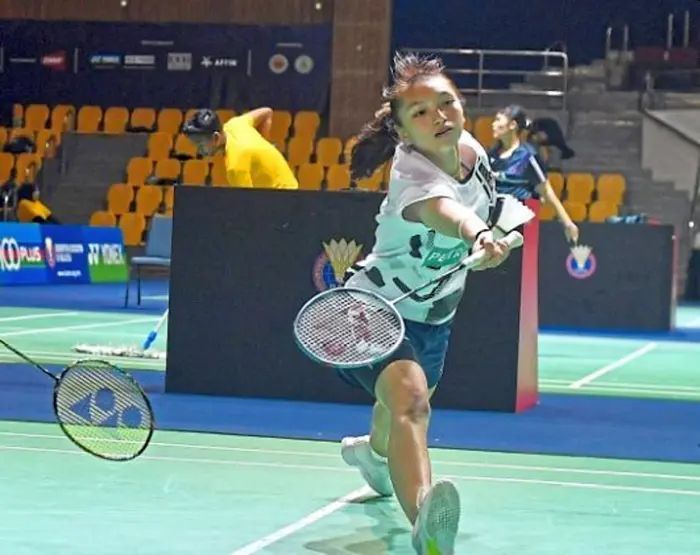
Nineteen-year-old badminton shuttler Noraqilah Maisarah Ramdan has demonstrated remarkable prowess across multiple disciplines on the court, yet her mixed doubles coach Nova Widianto argues that building an unshakeable character will prove equally important as technical refinement in determining her trajectory at the sport's elite level. The coaching team has resisted accelerating her development despite clear potential, focusing instead on a more measured approach that addresses both competitive capability and personal growth.
Nova's perspective reflects a philosophy grounded in experience rather than speculation. Having observed Noraqilah since her formative years, he recognised her exceptional technical ability from an early stage, readily acknowledging her superior skill set. What concerns him more, however, is ensuring the young athlete maintains psychological equilibrium as recognition and praise increase. The coach articulates a concern common among seasoned mentors: that early success and surrounding validation can psychologically destabilise developing athletes, particularly those transitioning to senior competition where mental resilience determines outcomes.
The responsibility for managing this psychological dimension falls squarely on the coaching staff, Nova maintains. He notes that Malaysia's badminton ecosystem produces numerous technically gifted players, yet distinguishing those who reach the podium from those who plateau depends fundamentally on character development. This emphasis underscores a broader truth about elite athletics: technical excellence without emotional intelligence and mental durability frequently yields disappointing long-term results. For a nation with Malaysia's badminton pedigree, such foundational work during the formative stage becomes strategic rather than merely supportive.
Noraqilah's recent achievements illustrate the foundation upon which this character-building work rests. Competing in women's doubles, she partnered with Ong Xin Yee to claim the title at the second leg of the Under-21 National Championship held in Kuantan, demonstrating her capacity to perform effectively with unfamiliar partners. Simultaneously, her regular pairing with Low Zi Yu reached the Australian Open quarter-finals, a result that elevated their ranking to a career-high world No. 70. These performances showcase versatility that could position her well for competitive longevity across multiple formats.
In mixed doubles competition, Noraqilah's partnership with Loo Bing Kun reached the second round in Sydney, with the pairing currently ranked world No. 115. The fact that she competes across women's doubles and mixed doubles simultaneously reflects current coaching strategy: allowing younger players exposure to diverse competitive environments while their technical foundations remain malleable. This approach, however, carries inherent tensions. Nova acknowledges satisfaction with the balance Noraqilah maintains across multiple disciplines at her current developmental stage, yet he recognises this flexibility cannot indefinitely persist if elite aspirations materialise.
The question of specialisation versus versatility looms inevitably for ambitious junior players. Nova articulates a pragmatic position: reaching the world's uppermost echelons will eventually demand focus on a single discipline, as the technical and physical demands of top-tier badminton increasingly require specialised preparation. The coaching philosophy accepts this reality without rushing toward it prematurely. Competitive breadth during the junior stage provides psychological variety, prevents burnout, and allows athletes and coaches to gather comprehensive data about aptitude across formats before making consequential decisions.
Olympic ambitions, however, sharpen the calculus considerably. Nova suggests that should Olympic medals become the explicit goal, maintaining dual-discipline competition becomes untenable beyond a certain developmental threshold. The Olympic badminton programme's intensity and the concentration of resources required for medal contention in either women's doubles or mixed doubles means that attempting both simultaneously at senior level would compromise performance in both. This creates a future inflection point where Noraqilah will face strategic choices about her career direction.
For Malaysian badminton, Noraqilah represents part of a cohort of emerging talents attempting to sustain the nation's competitive standing in a discipline where regional rivals from Indonesia, Thailand, and China field formidable contingents. The development trajectory that Nova advocates—emphasising character alongside skill—reflects learned lessons from previous generations of Malaysian players. Several high-profile careers have foundered despite technical excellence when psychological pressures intensified or character weaknesses became apparent under elite-level scrutiny.
Nova's insistence on grounding and mental discipline also acknowledges the broader context of professional badminton in Malaysia, where media attention, sponsorship expectations, and national pride can create psychological pressure that undermines younger athletes. By consciously cultivating resilience and emotional maturity now, the coaching team hopes to insulate Noraqilah against future distractions and mental challenges that accompany sustained success at higher rankings.
The coaching approach advocated by Nova represents a departure from talent-maximisation philosophies that prioritise immediate results. Instead, it embraces a longer temporal perspective, recognising that athletes developed with equal attention to character often sustain higher performance levels over extended careers. For Noraqilah, this means the coming years will test not merely her badminton ability but her capacity to remain psychologically centred amid increasing external pressures and opportunities. The outcomes of this developmental experiment will likely inform how Malaysian badminton coaches approach future junior prodigies.

