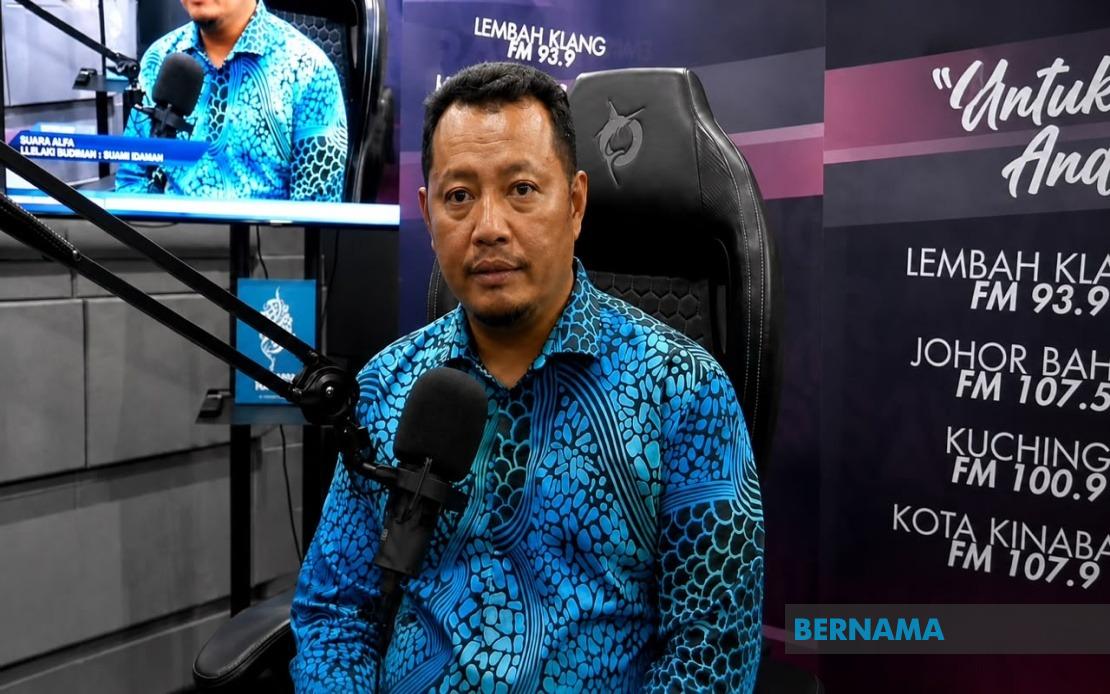
The path to developing responsible and conscientious men lies squarely in the formative years of childhood and adolescence, according to the National Population and Family Development Board (LPPKN). This foundational principle was underscored during a recent radio discussion, where officials from the board outlined how parenting approaches and the behavioral models parents demonstrate directly influence the development of character traits essential for men to thrive as family members and contributing members of society.
Md Noh Saiman, chief assistant director of LPPKN's Counselling and Intervention Unit, emphasized that the window for shaping masculine values is critically important because children absorb and internalize the conduct they witness from their parents during their developmental years. The psychological processing that occurs during childhood means that parental behavior functions as a living blueprint for how young men will eventually navigate relationships, handle responsibilities, and engage with their communities. This mechanism of social learning suggests that efforts to address issues of male responsibility in adulthood must necessarily trace back to examining and improving parenting practices during a child's earliest years.
The concept of a gentleman, as LPPKN frames it, transcends the superficial qualities often associated with courtly behavior or romantic gestures. Instead, the board advocates for a deeper understanding that encompasses authentic character traits such as sincerity, honesty, and an intrinsic commitment to fulfilling obligations without expectation of recognition or reward. This distinction matters considerably, as it redirects cultural conversations away from performative masculinity toward substantive behavioral change. Men who embody these qualities demonstrate reliability and moral consistency regardless of whether their actions receive acknowledgment or public approval, fundamentally altering the dynamics within their households and broader social circles.
Within the domestic sphere, LPPKN identifies active participation in household management and childcare as significant expressions of responsible manhood. When husbands meaningfully contribute to family operations—whether through sharing domestic duties, engaging in parenting responsibilities, or attending to household logistics—they simultaneously advance their own character development and create space for their spouses to pursue ambitions beyond the home. This reciprocal arrangement has implications extending far beyond individual families, as it potentially expands the pool of women able to pursue professional advancement, educational opportunities, and community engagement without bearing the sole burden of domestic management.
The empowerment dimension of shared household responsibility warrants particular attention in the Malaysian context, where women's labor force participation remains below regional averages in certain sectors. When spouses receive genuine support from partners who share family obligations equitably, they gain the psychological freedom and practical capacity to invest energy in career development and skill advancement. The LPPKN perspective thus positions responsible manhood not as an individual virtue but as a social infrastructure that enables broader societal participation and economic contribution from women, creating potential multiplier effects across households and communities.
LPPKN's Lelaki Idaman Programme functions not merely as a recognition mechanism for men already displaying admirable qualities, but rather as a transformative platform for those genuinely committed to personal development and behavioral change. This distinction reflects a pragmatic understanding that character improvement remains possible throughout a man's life trajectory, provided he possesses sufficient self-awareness and openness to growth. The programme's existence acknowledges that not all men receive optimal parenting or environmental conditioning, yet still retain the capacity to consciously cultivate the qualities associated with responsible manhood.
Critical to this developmental approach is the cultivation of emotional maturity and intellectual humility. LPPKN emphasizes that evolved men demonstrate the capacity to receive constructive criticism without defensiveness, recognizing feedback as an opportunity for improvement rather than a personal slight. This psychological flexibility proves essential in modern family contexts, where partnership increasingly requires ongoing negotiation and mutual accountability. The ability to examine one's own behavior dispassionately, regardless of the source offering the perspective, separates individuals who stagnate from those who continuously refine their approach to relationships and responsibilities.
The digital environment presents novel challenges to traditional mechanisms of character formation and cultural transmission. Social media platforms and online communities now compete vigorously with parental example and institutional guidance in shaping young people's perceptions of desirable masculine qualities. These digital spaces frequently promote distorted or exaggerated versions of manhood that prioritize status signaling, competitive dominance, or superficial charm. For Malaysian parents and educators, this reality demands heightened intentionality in discussing with young people the difference between algorithmically-promoted ideals of masculinity and the substantive qualities that generate genuine satisfaction in personal relationships and family life.
The connection between responsible manhood and family stability represents another crucial element of LPPKN's framework. When men actively support their partners and engage meaningfully in family life, the resulting relationship dynamics tend toward greater harmony, reduced conflict, and improved emotional outcomes for all family members, including children who develop healthier models of gender relations and partnership. Conversely, when men remain disengaged or treat household and childcare as exclusively female domains, family institutions experience greater stress and reduced resilience during periods of difficulty. From a policy perspective, this connection suggests that investments in male character development through parenting education and public awareness campaigns potentially generate returns across multiple social indicators including mental health, domestic stability, and children's developmental outcomes.
For Malaysia specifically, where family remains a central organizing institution across diverse cultural and religious communities, the LPPKN emphasis on cultivating responsible manhood through early intervention and ongoing development programmes offers a culturally-resonant approach to strengthening social fabric. The framework respects the critical importance of parental and family influence while simultaneously recognizing that individual men can choose to challenge inherited patterns and chart different trajectories. This balanced perspective—neither wholly deterministic about childhood conditioning nor naively optimistic about instant transformation—provides a realistic foundation for public health and social policy initiatives aimed at improving family functioning and men's contribution to household wellbeing.

