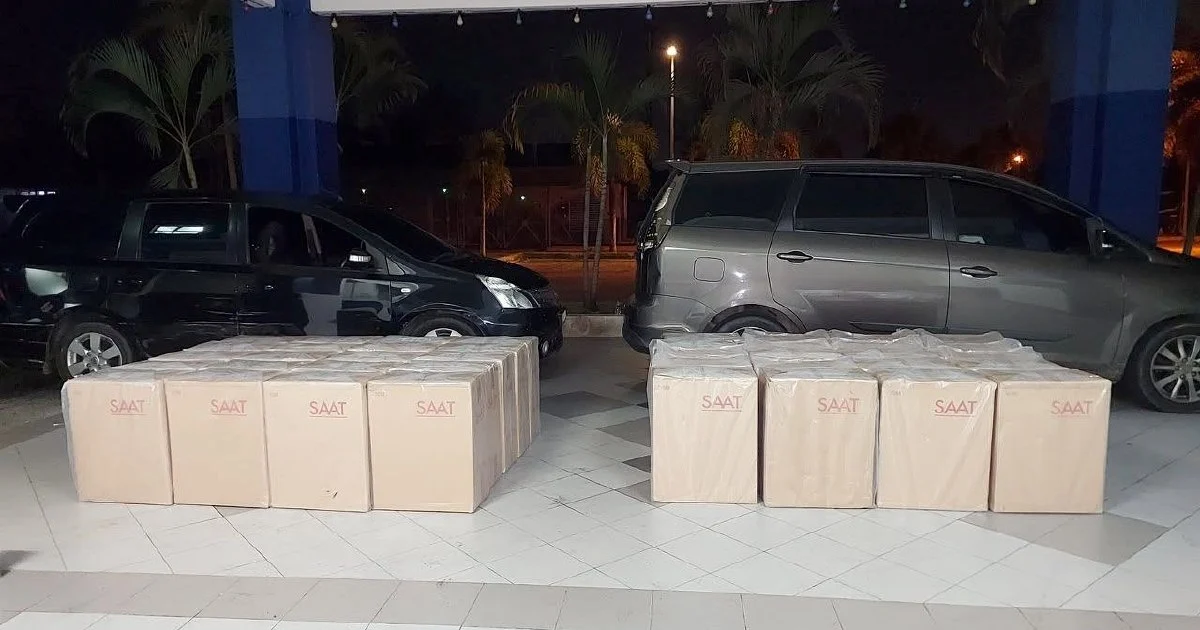
A high-value seizure of contraband tobacco products in Kelantan has resulted in one arrest after law enforcement pursued a suspect through Kampung Pulau Panjang in Kota Baru. The 29-year-old man was detained following the evening operation, which uncovered 400,000 sticks of cigarettes believed to have been smuggled into the country, with an estimated street value reaching RM813,000.
The operation highlights the persistent challenge of illicit tobacco trafficking along Malaysia's borders, a trade that continues to drain government revenue through lost excise duties whilst enriching criminal networks. Cigarette smuggling represents one of the largest contraband operations in Southeast Asia, with porous maritime and land crossings providing easy transit points for organised trafficking groups. The scale of this single seizure—involving nearly half a million individual sticks—underscores the volume being moved through domestic supply chains.
Kelantan's geography makes it particularly vulnerable to smuggling operations. Its proximity to Thailand and lengthy coastline create multiple entry vectors for contraband goods. The state has historically served as a transit hub for smuggled cigarettes destined for other Malaysian states, where they enter black markets and undercut legitimate retail prices. This undermines legitimate tobacco retailers whilst depriving the government of substantial tax revenue that would otherwise fund public services.
The enforcement action represents ongoing efforts by the General Operations Force (GOF) to interdict smuggling networks. These units conduct regular patrols and intelligence-led operations targeting known trafficking corridors and distribution points. However, the sheer quantity recovered in this incident suggests the suspects may have been operating at scale, potentially serving as a distribution hub rather than merely transporting stock for personal sale.
Smuggled cigarettes typically enter Malaysia through fishing vessels, small boats, or overland routes before being distributed through informal networks including petrol stations, convenience stores, and street vendors. The price differential between legitimate products bearing full excise duties and cheaper contraband creates strong demand among price-sensitive consumers. A pack of legal cigarettes in Malaysia can cost significantly more than bootleg alternatives, creating economic incentive for both smugglers and retailers to participate in illicit trade.
The estimated RM813,000 valuation suggests these cigarettes were destined for rapid distribution across retail points. The actual duty loss to the Malaysian government would be substantially higher when accounting for the full excise tax rate applied to legal cigarette sales. Over the course of a year, large-scale smuggling operations can result in hundreds of millions in revenue losses, funds that could otherwise support healthcare, education, or infrastructure programmes.
Whilst individual seizures generate headlines, enforcement agencies acknowledge that intercepting contraband remains a perpetual challenge. Trafficking organisations operate with sophisticated supply chains, employing decoy routes and frequently rotating distribution methods to evade detection. The arrest of this suspect represents success in breaking one segment of a chain, though the broader network likely continues functioning with backup operatives and alternative supply channels.
Criminal syndicates involved in cigarette smuggling often maintain connections to other illicit enterprises including narcotics trafficking and counterfeiting. The profits generated allow them to invest in superior transportation and communication technologies, maintaining operational efficiency despite law enforcement pressure. This interconnection between smuggling operations and broader organised crime represents a significant security concern beyond simple revenue loss.
The incident raises questions about interdiction effectiveness and whether current enforcement resources adequately address the scale of the problem. Successful prosecutions depend on strong evidence handling and secure chain-of-custody procedures to ensure convictions withstand legal scrutiny. The case will likely proceed through Kelantan's courts, though disposal of the seized cigarettes itself presents logistical and environmental considerations.
Malaysia's struggle with cigarette smuggling mirrors challenges across Southeast Asia, where established trafficking infrastructure and demand for cheaper products perpetuate the trade. Regional cooperation remains essential, though differing enforcement priorities and limited resources sometimes hamper coordinated action. Addressing the root causes—including economic disparities that make lower-priced contraband attractive to consumers—requires holistic approaches beyond supply-side enforcement alone.
The arrest signals continued GOF commitment to border security and contraband interdiction. However, stakeholders including revenue authorities, customs services, and state law enforcement recognise that sustained effort and intelligence sharing across agencies remain crucial to disrupting established smuggling networks. This seizure, whilst substantial, represents a single operation within an ongoing operational tempo required to meaningfully suppress illicit tobacco movements.

