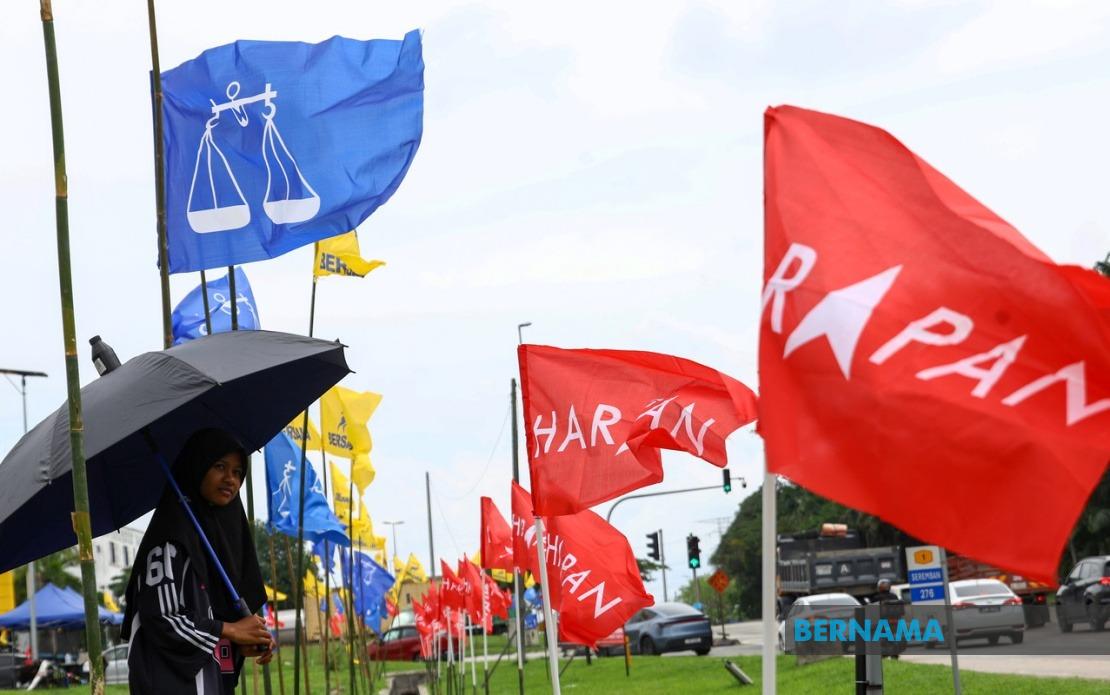
Pakatan Harapan's prospects in the upcoming Johor state election represent far more than a routine electoral contest—they constitute a fundamental question about the future structure of democratic governance in Malaysia's southernmost peninsula state. At a campaign dinner in Kluang on July 3, DAP secretary-general Anthony Loke articulated this broader institutional concern, framing the coalition's ambitions as essential to preventing the concentration of political power that could undermine democratic safeguards.
Loke's central argument centres on the mechanics of parliamentary oversight and accountability. When a single political organisation commands overwhelming majorities in a state legislature, the traditional mechanisms that allow opposition parties to scrutinise government decisions, propose alternatives, and hold the executive to account become largely ineffective. The absence of substantive political competition erodes the practical function of legislatures as forums for meaningful debate and constraint on executive power. This institutional weakness becomes particularly consequential in matters affecting large populations, where unchecked decision-making can have profound consequences for public welfare and resource allocation.
The Johor election, scheduled for July 11 with early voting on July 7, encompasses all 56 state assembly constituencies and involves 172 candidates competing across various parties and coalitions. Pakatan Harapan, comprising PKR, DAP, and Amanah, has fielded candidates in every single seat, signalling the coalition's determination to establish a meaningful presence throughout the state rather than concentrating resources in perceived strongholds. This blanket candidacy strategy suggests leadership believes competitive positioning across diverse geographical and demographic areas remains achievable despite prevailing political currents.
The strategic logic underpinning Loke's emphasis on distributed PH victories reflects concern about what political scientists term "hegemonic dominance." When one political grouping controls legislative processes almost exclusively, the institutional checks that prevent abuse of power—committee scrutiny, parliamentary questioning, legislative obstruction of questionable executive actions—become theatre rather than function. Opposition benches transform into peripheral seats occupied by representatives lacking genuine capacity to influence outcomes. The resulting governance structure, while formally democratic in appearance, loses substantive democratic characteristics.
For Malaysian politics more broadly, and particularly for Peninsular Malaysia's state-level politics, the balance between coalition strength and effective opposition remains perpetually contested terrain. Different regions have experienced periods of single-party dominance punctuated by competitive phases. Each configuration carries distinct governance implications. Strong majorities allow coherent policy implementation but risk authoritarian drift. Competitive balance necessitates negotiation and compromise but can produce gridlock. The optimal institutional design likely involves sufficient opposition presence to meaningfully constrain executive power without paralyzing government decision-making.
Johor's particular political history adds context to these general principles. The state has historically served as a significant political battleground within Malaysian federalism, with control of state apparatus carrying implications extending beyond local administration. How Johor's political configuration evolves therefore influences broader patterns affecting other states and federal structures. A decisive single-coalition victory would signal particular political trajectories; significant PH performance would suggest different underlying electoral dynamics.
The presence at Loke's campaign event of senior DAP figures including deputy national chairman Nga Kor Ming and deputy secretary-general Steven Sim Chee Keong underscored the national significance attributed to Johor outcomes. Malaysian political leadership across coalitions typically recognises that state elections, while technically local contests, accumulate to shape national parliamentary arithmetic and national political momentum. Johor's size and electoral weight make it particularly consequential in these calculations.
Loke's emphasis on preventing single-coalition dominance implicitly acknowledges that electoral competition alone, without distributed victories preventing hegemonic control, fails to deliver substantive democracy. A legislature where one organisation holds overwhelming supermajorities faces minimal institutional pressure to respond to constituent preferences or alternative policy visions. This creates space for governance drift, where policies increasingly reflect narrow organisational interests rather than broader public preferences. Opposition parties with minimal legislative presence struggle to amplify constituency concerns through parliamentary mechanisms.
The practical implications extend to administrative and financial matters. Legislative committees overseeing budgetary allocation, tender processes, and development priorities function most effectively when genuinely competitive political groups participate in oversight. Hegemonic legislatures often see these mechanisms become rubber-stamp bodies endorsing executive initiatives. This functional atrophy of institutional checks has documented consequences for governance quality, resource efficiency, and public accountability.
Southeast Asian democracies have collectively grappled with these institutional questions. Different approaches—from Malaysia's federated system to Singapore's parliamentary model to Indonesia's presidential framework—attempt balancing executive effectiveness against institutional restraint. The tension proves irresolvable; different constitutional designs merely shift emphasis. Johor voters face this classic democratic choice implicitly: what balance between strong government and meaningful opposition serves their interests optimally?
For Malaysian readers observing Johor's election, Loke's framing invites consideration of these deeper governance structures beneath surface electoral competition. Beyond partisan preference, the distribution of legislative seats affects how government actually functions day-to-day, how responsive administrations remain to citizen concerns, and how effectively corrupt practices face institutional exposure and reversal. These structural considerations shape lived experience across diverse policy domains—from education to infrastructure to public health.

