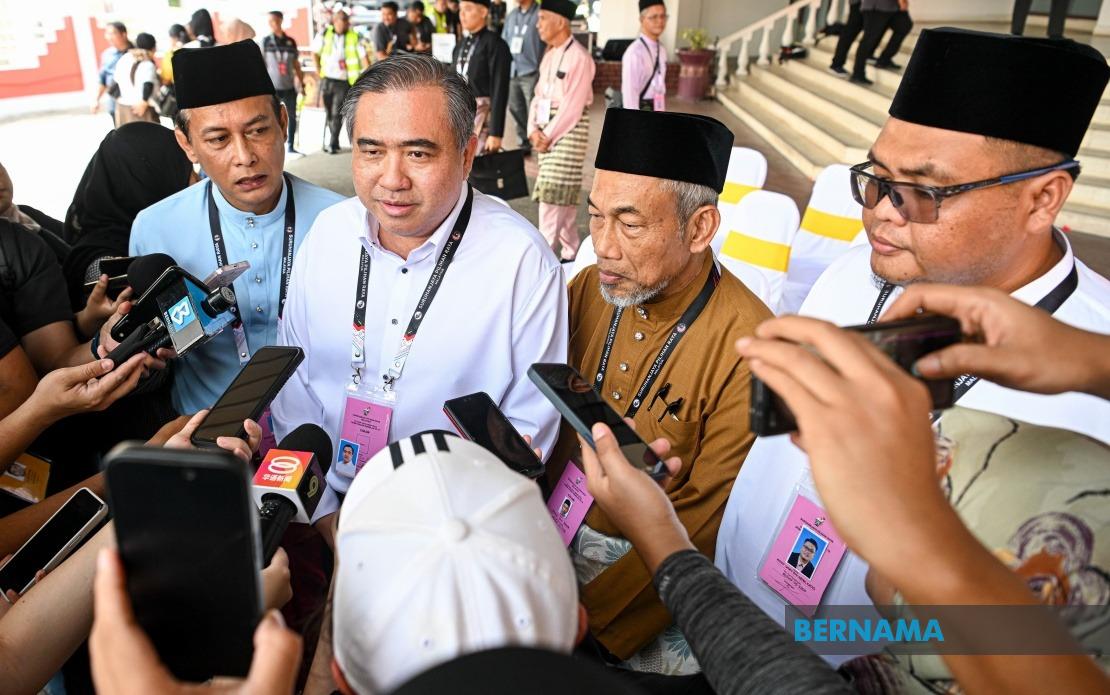
Negeri Sembilan's political landscape has narrowed around a handful of crucial constituencies as Pakatan Harapan prepares for state elections, with Transport Minister Anthony Loke highlighting the Chennah seat within the Jelebu parliamentary constituency as essential to the coalition's retention strategy. Speaking after nomination proceedings in Kuala Klawang, Loke underscored that among the four most strategically important state seats in Jelebu, Chennah stands as a bellwether for PH's broader electoral prospects. The significance of this particular contest extends beyond symbolic value, rooted in historical precedent from the 2018 political realignment that fundamentally reshaped Malaysian politics.
The Jelebu parliamentary constituency itself carries outsized importance for Negeri Sembilan's political composition. When Pakatan Harapan first swept to power six years ago, the party's performance in specific state seats within Jelebu proved decisive in forming the state government. Two constituencies—Chennah and Kelawang—delivered the margin that enabled PH to claim the mandate needed to establish an administration. For Loke and his coalition, this historical pattern suggests that replicating success in these same seats remains central to their electoral calculus for the upcoming campaign.
Loke's confidence stems from what he characterizes as PH's governance record over two consecutive terms. The coalition has maintained continuous control of Negeri Sembilan since 2018, a period during which Malaysia experienced substantial political volatility at the federal level and in several other states. Loke argues that this sustained tenure has generated tangible development outcomes and political stability that voters will recognize. The Transport Minister's narrative emphasizes continuity and proven competence rather than revolutionary change, positioning the incumbent administration as a safer choice than alternatives in the minds of state residents.
The electoral contest in Chennah itself takes on greater significance given its designation as a straight fight. In Malaysian politics, a two-candidate race eliminates the complication of vote splitting across multiple opponents, typically producing clearer mandates and higher participation rates. The simplicity of the ballot structure may also sharpen voters' focus on direct comparison between the two candidates rather than allowing fractured opposition votes to determine outcomes. Loke faces Barisan Nasional candidate Siow Kong Choon in this head-to-head confrontation, making the contest fundamentally a referendum on PH governance versus BN's alternative vision.
The timing of Negeri Sembilan's state election carries broader implications for Malaysian politics beyond the state's borders. As a peninsular state controlled by the governing coalition, PH's performance will serve as an indicator of voter sentiment regarding the administration's national policies and federal initiatives. Opposition parties will scrutinize any losses or narrowed majorities as evidence of deteriorating support, potentially emboldening challenges to federal authority. Conversely, strong PH victories would reinforce the coalition's claim to represent the authentic voice of Malaysian voters and provide momentum for addressing ongoing political consolidation.
For the Jelebu constituency specifically, the concentration of crucial contests reflects the mixed political complexion of Negeri Sembilan as a state. Unlike constituencies with overwhelming majorities for either coalition, Jelebu functions as a competitive zone where electoral fortunes swing based on localized issues, candidate appeal, and voter registration patterns. The identification of four particularly consequential state seats indicates that multiple races within the parliamentary area will determine whether PH or BN ultimately controls the state government. This fragmented scenario demands precision campaigning and strategic resource allocation by both sides.
Loke's invocation of PH's track record as justification for voter support reflects the traditional Malaysian electoral logic where voters evaluate performance over alternatives. During two terms, the Negeri Sembilan government has been required to deliver on basic services, infrastructure projects, economic opportunities, and administrative efficiency. Loke suggests that this constituency will recognize such achievements when making their decision. However, this approach also assumes that voters prioritize continuity and measurable governance outcomes over other considerations such as leadership changes, intra-coalition tensions, or local grievances accumulated over time.
The political mathematics of state government formation in Malaysia often pivot on precisely the kind of seats Loke identifies. Unlike federal Parliament, state assemblies typically contain relatively small total numbers of seats—making individual constituencies disproportionately influential in determining which coalition forms the government. A swing of just two or three seats can reverse electoral outcomes and change which party or coalition claims the mandate to govern. In this context, Chennah's status as one of four crucial seats in Jelebu transforms the race from a mere electoral contest into a potential kingmaker scenario.
Background dynamics within Negeri Sembilan politics also shape how Jelebu constituencies will likely behave. The state has historically been less volatile than federal politics, with voters generally providing incumbent administrations reasonable opportunities to consolidate power. However, the recent years have witnessed increasing political sophistication among Malaysian voters who will punish administrations perceived as ineffective or unresponsive regardless of their coalition affiliation. Loke's emphasis on delivering tangible benefits therefore reflects a calculated strategy to meet rising voter expectations rather than assume automatic loyalty based on party machinery.
The nomination process for Chennah represents the formal commencement of what promises to be an intense electoral battle. As PH seeks to maintain its two-term hold on Negeri Sembilan and BN attempts to reclaim control, the state election will serve multiple audiences—local voters assessing their government, party leadership evaluating coalition strength, and investors and businesses gauging political stability. Loke's identification of Chennah as crucial acknowledges that retaining this particular seat could prove decisive in determining whether Pakatan Harapan successfully extends its governance tenure or whether Barisan Nasional completes a political comeback in the state.

