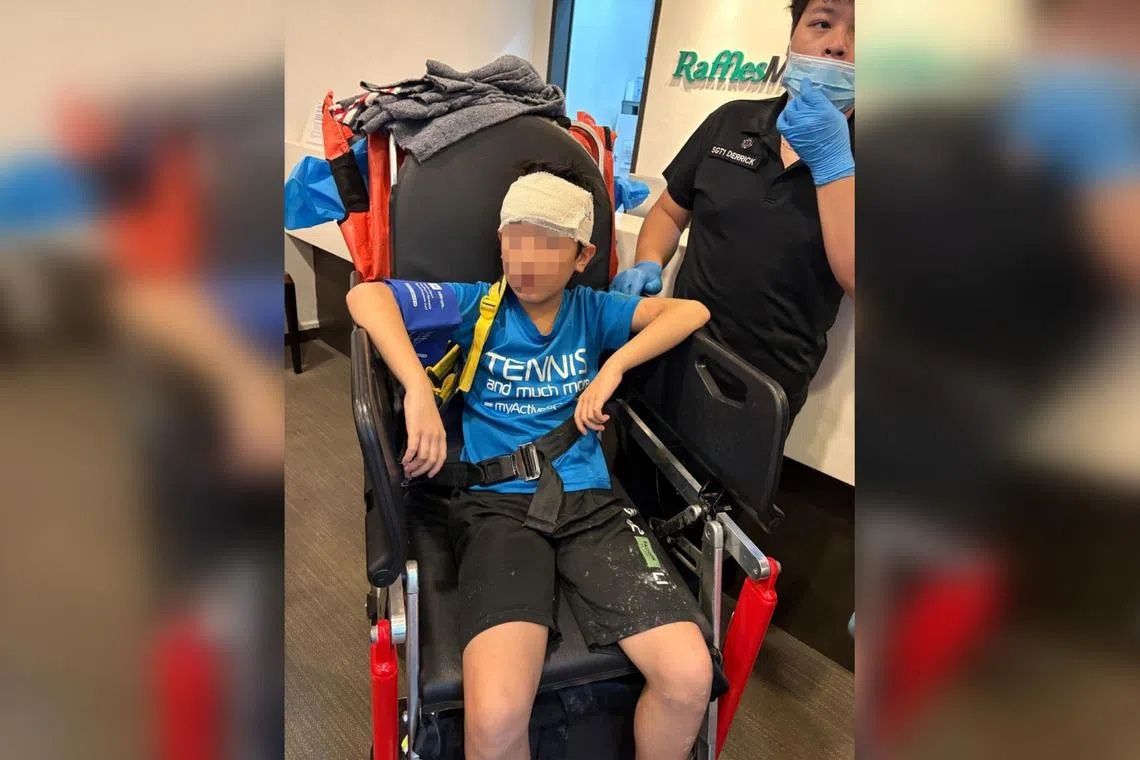
A child required hospital treatment after structural failure at a food retailer in Singapore's Rivervale Mall saw a signboard come crashing down on Saturday morning. Emergency services responded to the incident at the Food Junction outlet located on the ground floor of the Sengkang shopping centre around 10.30am, transporting the injured boy to KK Women's and Children's Hospital for assessment and further care.
The Singapore Civil Defence Force confirmed it received a distress call and provided immediate assistance. Social media footage shared on TikTok captured the aftermath, showing substantial rubble scattered across the entrance to the Food Junction premises, while portions of the suspended ceiling remained partially intact but compromised. Onlookers maintained a cautious distance from the dangerous debris field.
Food Junction management acknowledged the accident and emphasised the speed of their crisis response. The company stated that its team collaborated immediately with mall authorities and emergency personnel to support the affected customer. According to the statement released by a company spokeswoman, the injured child was subsequently discharged to recover at home after receiving proper medical evaluation and treatment at the hospital facility.
Safety became the immediate priority following the collapse. The company indicated it undertook a comprehensive review and detailed investigation to establish the underlying cause of the structural failure. As a result of these findings, Food Junction implemented reinforced safety protocols across all locations, ensuring compliance with guidelines established by the relevant regulatory bodies overseeing workplace and public safety standards.
Operations at the affected foodcourt resumed after the initial emergency response and preliminary clearance work. The company issued a formal apology for the incident, acknowledging the distress and concern caused to customers and the public. The statement underscored Food Junction's commitment to providing safe dining environments for its patrons.
The incident raises broader questions about the maintenance and regular inspection standards for suspended signage and ceiling fixtures in shopping centres across Singapore. Rivervale Mall, located in the residential precinct of Sengkang, serves thousands of shoppers regularly, making the structural integrity of such installations a critical safety concern. The collapse demonstrates the potential risks posed by aging infrastructure or inadequate maintenance protocols in retail environments where families congregate daily.
Authority involvement extended beyond emergency response. The Building and Construction Authority, Singapore's regulatory body responsible for construction safety standards, was engaged to conduct its own assessment of the incident. Such oversight is standard procedure for structural failures in public spaces, ensuring that regulatory frameworks are being followed and that remedial measures meet official requirements.
For Malaysian readers, this incident carries relevance as similar shopping malls operate throughout Southeast Asia, including in Malaysia, often with comparable architectural designs and maintenance challenges. The structural integrity of suspended fixtures in public spaces remains an ongoing concern across the region, particularly in older facilities. This Singapore case illustrates the importance of regular safety audits and proactive maintenance programmes for suspended elements like signage, lighting systems, and ceiling panels.
The rapid response and investigation demonstrated by Singapore authorities reflects the standard expected in the city-state's approach to public safety incidents. However, the fundamental lesson extends across borders: retail establishments and mall operators must prioritise regular structural assessments and maintenance schedules for all ceiling-mounted and suspended installations. Negligence in this area can result in serious injuries, particularly to children who may lack the reflexes to avoid falling debris.
The involvement of multiple stakeholders—the retail tenant, mall management, emergency services, and regulatory authorities—highlights the shared responsibility framework necessary for preventing such incidents. Food Junction's willingness to conduct thorough investigations and implement enhanced safety measures represents a constructive approach, though questions remain about what systemic failures allowed the situation to develop unchecked.
As shopping malls continue expanding across Southeast Asia, with Rivervale Mall representing just one of numerous complexes serving growing urban populations, the maintenance standards and safety protocols governing these spaces warrant closer public scrutiny. The incident, while isolated, serves as a reminder that even established, well-managed retailers operating in developed jurisdictions can experience structural failures, underscoring the need for constant vigilance.