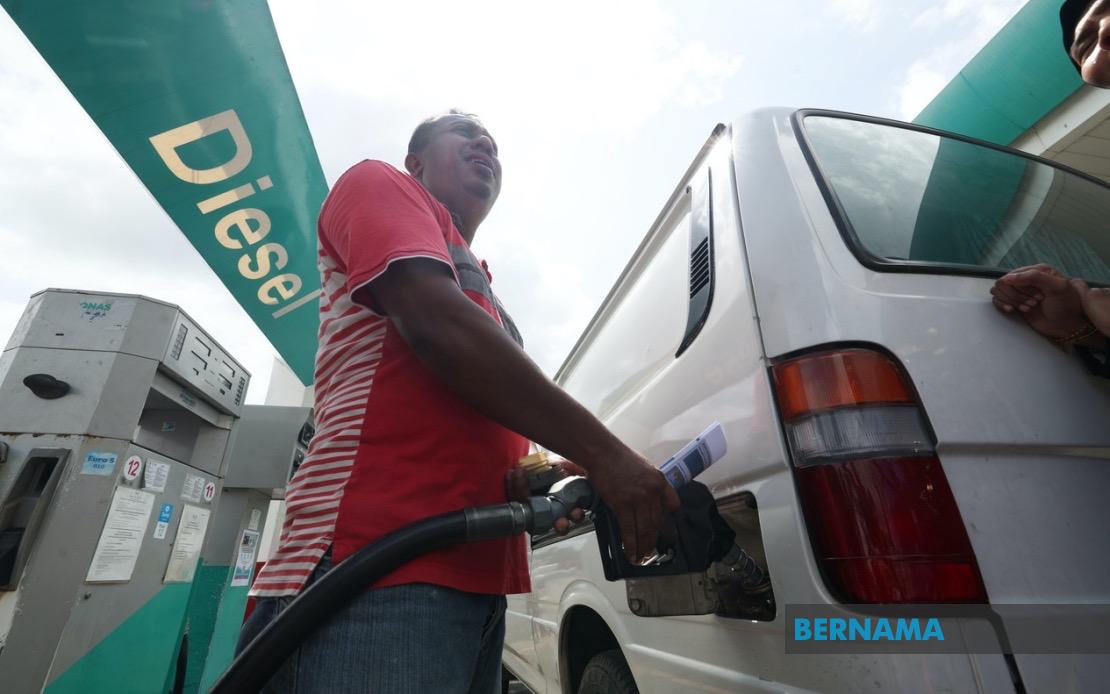
Prime Minister Datuk Seri Anwar Ibrahim has unveiled a significant adjustment to Malaysia's fuel subsidy landscape, announcing that subsidised diesel will be capped at RM2.10 per litre beginning July 2026. The declaration came during his official visit to Bintulu, where he was presiding over the ceremonial handover of cheques related to the conversion of Bintulu Port from federal to state control.
The new pricing structure represents a strategic shift in how the government manages diesel subsidies, moving away from blanket subsidisation towards a more precisely targeted approach. Under this reformed system, eligibility for the subsidised rate will be verified through MyKad, Malaysia's national identification card, creating a digital verification framework that aims to direct government support more efficiently to qualifying Malaysian citizens.
This subsidy model mirrors the successful implementation of the BUDI MADANI RON95 programme, which introduced targeted subsidies for 95-octane petrol through identity verification mechanisms. The parallel approach demonstrates the government's confidence in using MyKad-based verification as an effective tool for administering fuel subsidies at national scale. By applying similar verification protocols across fuel categories, policymakers hope to streamline distribution while minimising wastage and unauthorised access to subsidised fuel.
The timing of this announcement holds particular significance for Malaysia's fiscal management strategy. With global crude oil prices remaining volatile and the nation's subsidy burden continuing to strain government finances, implementing targeted subsidies rather than universal price controls represents a calculated effort to balance consumer protection with long-term budget sustainability. The July 2026 implementation date allows approximately six months for administrative preparation and public communication campaigns.
Finance Minister II Datuk Seri Amir Hamzah Azizan is scheduled to provide comprehensive technical details regarding the implementation framework to media representatives in Kuala Lumpur on the following day. His briefing is expected to address critical operational questions including the mechanics of in-store verification, the process for MyKad registration in the subsidy system, and any transition arrangements for existing diesel users.
For Malaysian motorists and commercial operators reliant on diesel fuel, this policy carries mixed implications. Private vehicle owners may benefit from the subsidised rate if they meet verification criteria, potentially reducing personal transportation costs. However, commercial sectors heavily dependent on diesel—including transport operators, logistics companies, and agricultural enterprises—will need to assess how the new pricing and verification requirements affect their operational costs and supply chain efficiency.
The broader context of this subsidy reform reflects the MADANI Government's stated commitment to fiscal responsibility and targeted welfare delivery. Rather than maintaining universal fuel subsidies that benefit all consumers regardless of income level, the administration has progressively shifted towards needs-based assistance verified through digital identity systems. This philosophical approach aligns with contemporary international trends in subsidy administration, where governments increasingly attempt to concentrate support on those who require it most while encouraging market-based pricing for other segments.
Regional observers note that Malaysia's approach to subsidy targeting could serve as a model for other Southeast Asian nations grappling with similar challenges of maintaining affordable fuel access whilst managing government expenditure. Countries including Indonesia and the Philippines have experimented with various subsidy structures, making Malaysia's implementation of this MyKad-verified system potentially instructive for regional policymakers seeking to balance equity with fiscal discipline.
The conversion of Bintulu Port to state control, announced simultaneously with the diesel subsidy policy, underscores the government's broader agenda of enhancing state-level economic autonomy and revenue generation. By delegating port management to Sarawak state authorities, the federal government aims to stimulate regional development whilst reducing its own operational burdens—a strategic decentralisation that complements the targeted subsidy approach by distributing responsibility across multiple governance levels.
For consumers, understanding the practical mechanisms of the new subsidised diesel system will be crucial. Questions remain regarding registration procedures, documentation requirements, potential pricing variations between retail outlets, and whether the subsidy will apply uniformly across peninsular Malaysia and the East Malaysian states. The Finance Minister's upcoming media briefing will presumably address these operational details, providing clarity that stakeholders require for planning and compliance.
The fiscal impact of maintaining subsidised diesel at RM2.10 per litre depends heavily on actual crude oil prices prevailing from July 2026 onwards. If international oil prices decline significantly, the government's subsidy burden may prove manageable; conversely, persistently elevated crude prices could necessitate further policy adjustments. This pricing framework thus represents a carefully calibrated position reflecting the administration's assessment of medium-term global energy market trends.
Looking ahead, the government's commitment to the BUDI95-style verification approach for diesel subsidies signals confidence in digital identity infrastructure and administrative capacity to manage targeted assistance at scale. Successful implementation could establish a template for other benefit programmes, potentially extending MyKad-based verification to additional areas of social support. Alternatively, implementation challenges could prompt recalibration of the subsidy delivery mechanism.
The announcement also carries implications for Malaysia's commitment to gradual subsidy rationalisation under International Monetary Fund guidelines and World Bank recommendations. By implementing targeted rather than universal subsidies, the government demonstrates progress toward the structural reforms outlined in various international economic agreements, potentially improving the nation's standing with multilateral lending institutions and credit rating agencies monitoring fiscal sustainability.