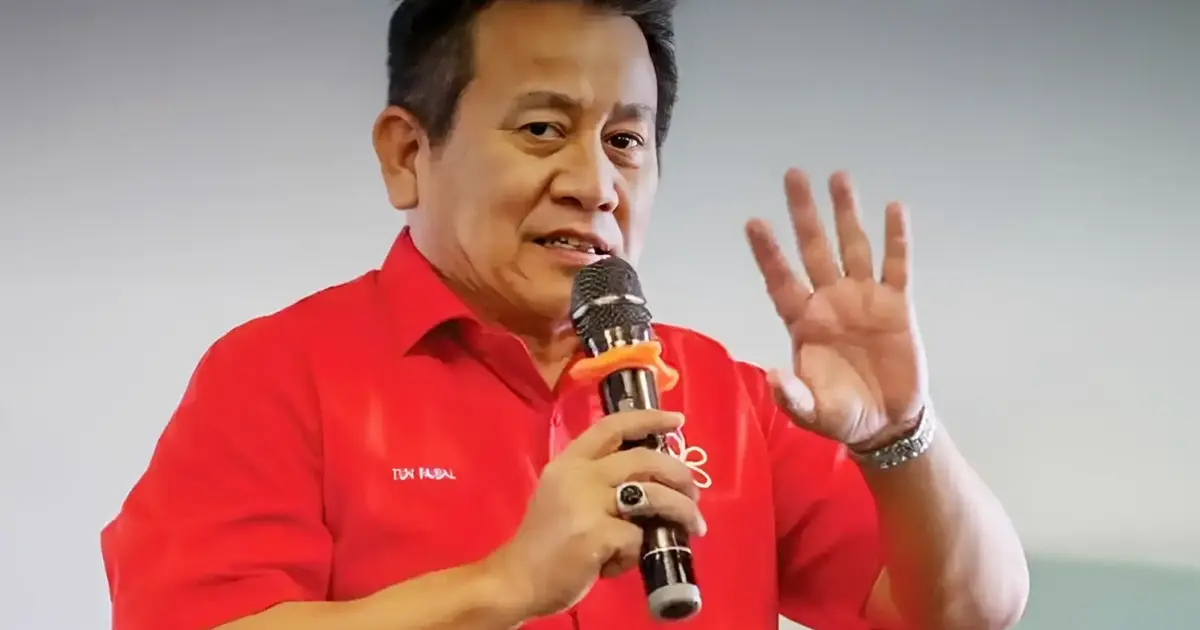
Bersatu chairman Tun Faisal Ismail Aziz has cast doubt on the procedural logic underlying an emergency convening of Perikatan Nasional's top decision-making body, arguing that the mechanism loses its practical value when resolutions must ultimately be ratified by the coalition's constituent parties.
The critique highlights a structural tension within the PN alliance that has become increasingly visible as the multi-party bloc navigates internal disagreements and governance challenges. By questioning whether the Supreme Council possesses genuine autonomous decision-making authority, Tun Faisal has exposed a constitutional ambiguity that raises broader questions about where real power resides within the opposition coalition.
The timing of these remarks underscores growing friction within PN's upper echelons. Coalition partners have previously disagreed on strategic direction, electoral calculations, and policy priorities. When the Supreme Council must defer substantive decisions to individual party committees or general meetings, the entire emergency meeting process becomes largely ceremonial rather than functionally decisive.
For Malaysian political observers, the exchange reveals how coalition governance operates differently from single-party structures. While Barisan Nasional and Pakatan Harapan have experienced similar internal tensions, PN's formal architecture appears less settled. The absence of clear hierarchical authority raises questions about whether the coalition can respond swiftly to crises or political opportunities that demand rapid, unified action.
Tun Faisal's intervention also reflects Bersatu's positioning within the PN hierarchy. As a significant component but not the numerically dominant force, Bersatu has strategic incentives to preserve its institutional autonomy and prevent the Supreme Council from becoming a venue where larger partners can impose decisions. His argument that preliminary decisions require downstream party approval essentially protects Bersatu's veto power over initiatives it opposes.
The Supreme Council structure was theoretically designed to provide PN with a swift-moving leadership organ capable of coordinating across party lines. However, if constituent parties retain the power to reject or revise decisions at later stages, the framework's efficiency is substantially compromised. This creates a two-stage approval process that defeats much of the purpose of an emergency mechanism.
Politically, Tun Faisal's comments may signal Bersatu's reluctance regarding the specific agenda the emergency meeting was convened to address. Rather than directly opposing proposals, questioning the meeting's legitimacy provides a procedurally sophisticated objection that avoids head-to-head confrontation while effectively stalling outcomes.
The broader Southeast Asian context matters here. Coalition governments throughout the region frequently struggle with coordination problems across multiple parties. Thailand's political history demonstrates how coalition mechanics can paralyse decision-making, while Singapore's single-party dominance eliminates such coordination costs. Malaysia's experience with multi-party coalitions positions PN's structural challenges as a practical governance issue with real consequences for the opposition's ability to function as a coherent political force.
For the PN alliance, unresolved questions about decision-making authority threaten its long-term viability. If the coalition cannot achieve consensus through its formal mechanisms, member parties may increasingly circumvent the Supreme Council, negotiating directly with one another or the government on an ad hoc basis. This fragmentation would weaken PN's leverage as a parliamentary opposition.
Tun Faisal's comments also carry implications for Malaysian voters. An opposition coalition that cannot internally resolve procedural questions and streamline decision-making processes may struggle to project competence as a prospective government. Voters naturally ask whether parties that cannot coordinate within their own structures could effectively govern if returned to power.
The Supreme Council's authority remains particularly important given Malaysia's fluid political environment. Changes in government composition, defections across party lines, and shifting coalition alignments all require opposition movements capable of rapid strategic response. PN's procedural uncertainties may handicap its ability to capitalise on political opportunities or effectively counter government initiatives.
Moving forward, the PN coalition faces pressure to clarify its internal governance structures. Explicitly defining the Supreme Council's authority, establishing clear procedures for emergency meetings, and determining whether decisions are binding or merely advisory would reduce ambiguity and strengthen institutional coherence. Without such clarifications, Tun Faisal's concerns about the meeting's meaningfulness will likely resurface whenever contentious decisions require ratification.
Ultimately, Bersatu's leader has identified a genuine structural vulnerability in PN's architecture. Whether the coalition addresses this weakness through formal reforms or manages it through improved informal coordination remains an open question with significant implications for Malaysian opposition politics.