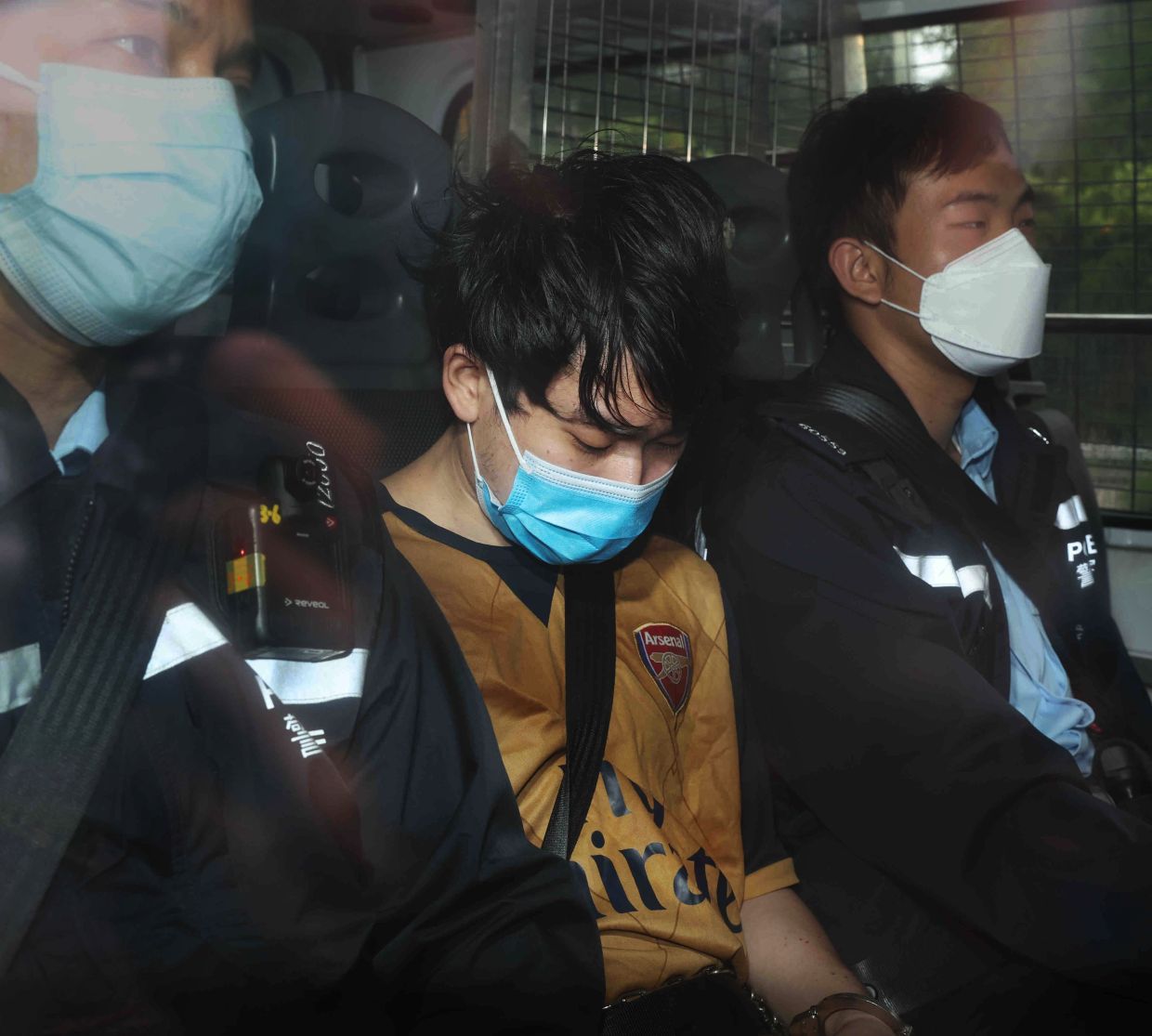
A 29-year-old unemployed man in Hong Kong has mounted a controversial defence in court, claiming he fatally beat his girlfriend by accident while attempting to help her lose weight through sleep deprivation. Ng Ka-sing stands accused of murdering his 30-year-old partner Yip Tsz-ching at their 700-square-foot flat in Galore Garden, Hung Shui Kiu, between April 28 and 29, 2022—a case that remained unsolved for four years before charges were filed. The High Court trial, presided over by Mrs Justice Judianna Barnes and a seven-member jury, has already heard harrowing details about the circumstances surrounding Yip's death and the disposal of her remains.
Ng had initially offered to plead guilty to manslaughter, a lesser charge than murder, but prosecutors firmly rejected this overture. The rejection signals the Crown's confidence in proving the more serious charge and suggests prosecutors believe Ng's actions demonstrate the deliberate intent required for a murder conviction. Beyond the murder allegation, Ng faces a separate charge of preventing the lawful burial of a body after being observed hauling Yip's corpse on a wheelboard along Tin Ha Road in the early hours of April 29, 2022. The grim scene—the body wrapped in a quilt and layers of plastic film—was discovered by joggers at around 6am when a leg protruded from the rolled bundle.
Senior public prosecutor Audrey Parwani opened the case with a stark warning to the jury: the accused has provided multiple conflicting explanations to police regarding how Yip sustained her injuries, particularly the extensive corrosive burns covering 55 per cent of her body. "The prosecution does not accept the accused was telling the whole truth," Parwani declared, setting the tone for a trial expected to last 18 days. Her statement underscores a central prosecution strategy—to demonstrate inconsistency in Ng's narrative and highlight implausibilities in his account of events, thereby establishing he had motive and opportunity to cause deliberate harm.
According to Ng's own statements in a cautioned police interview, he began preventing his girlfriend from sleeping on the night of April 27, striking her with a rod to keep her awake in the belief this would facilitate weight loss. This unconventional and dangerous approach allegedly continued intermittently: from 10pm on April 27 until 1:30am on April 28, and again from 3am to 5:30am on April 28. When Ng questioned whether he should cease the beatings, his sworn sister—who lived in the shared flat—allegedly encouraged him to "continue for a bit longer," a detail that may prove significant in establishing whether others were complicit or negligent in failing to intervene. Ng told police he continued striking Yip because she did not explicitly tell him to stop, a rationale that raises serious questions about consent and the defendant's understanding of the harm he was inflicting.
The defence narrative becomes increasingly difficult to reconcile when examined against the court's emerging evidence. Ng claimed that Yip herself poured drain cleaner over her body, while he only splashed the caustic liquid on the floor to "stimulate" her feet. He further asserted that Yip struck herself against a wall seven or eight times after slipping on the floor, suggesting she bore responsibility for multiple injuries. These explanations appear designed to shift culpability away from the defendant, yet they strain credibility given the severity and extent of her injuries. Around 5am on April 28, according to Ng's account, Yip told him she felt severe pain and feared she would not survive. She fell into a coma after speaking for the last time at 7:21am that same day—a detail suggesting Ng was aware of her critical condition but took no action to seek medical help.
The behaviour Ng exhibited after his girlfriend's death further undermines his accidental death narrative. Witness Lau Kwok-yan, the jogger who reported the case to police, testified that Ng stood passively in the street awaiting police arrival, showing no visible signs of panic or distress. A street cleaner, Wong Ah-sum, reported that when questioned about the body, Ng calmly identified it as a "corpse" and stated his intention to take it to a police station. Upon arrest at 6:36am, Ng's statement—"This was my girlfriend. I hit her to death with a rod by mistake"—contains a confession of the fatal beating, though the framing as "by mistake" suggests he wishes to characterise his actions as unintentional. The composed demeanour Ng displayed contradicts typical behaviour of someone genuinely distressed over an accidental tragedy.
Forensic evidence has painted a gruesome picture of how Yip's body was treated after death. Lo Man-hung, a forensic evidence specialist, discovered that the body was tied to a toppled wooden chair with black rubbish bags and covered with a quilt; her head had been wrapped multiple times in cling film and adhesive tape. This elaborate restraint and wrapping suggests deliberate concealment rather than panicked improvisation by someone who had caused an accident. Government pathologist Dr Foo Ka-chung estimated Yip had been dead for 12 to 24 hours when discovered and identified the cause of death as suffocation following head injuries and extensive burns covering her chest, abdomen, and limbs. The pathologist documented multiple bruises, abrasions, and lacerations consistent with blunt force trauma such as punching and kicking—injuries that would be difficult to explain under Ng's accident theory.
The case carries implications beyond Hong Kong's borders for Southeast Asian observers monitoring domestic violence and crime trends. Ng's defence—that he was assisting his girlfriend—represents a chilling example of how perpetrators may reframe abuse as care or concern. His claim that a weight-loss regimen justified violent beatings, combined with the tolerance shown by his sworn sister, suggests a household environment where escalating violence became normalized. In Malaysia and across the region, where domestic violence remains a persistent problem, this case underscores how abusers manipulate narratives and how bystanders may inadvertently enable harm through inaction. The trial's outcome will test the Hong Kong judiciary's willingness to reject implausible defences and hold perpetrators accountable for systematic, intentional violence disguised as misguided assistance.
The prosecution's case rests on demonstrating that Ng's actions were calculated and sustained rather than accidental, and that his conflicting statements reveal consciousness of guilt. The jury must weigh the pathologist's evidence of deliberate violence, the suspicious behaviour Ng displayed after Yip's death, and the implausibility of the explanations he has offered. Ng's decision to reject the manslaughter plea and proceed to trial on the murder charge suggests either profound denial of culpability or a miscalculation of the evidence stacked against him. As the trial unfolds over the coming weeks, the courtroom will scrutinize whether a purported weight-loss intervention can serve as cover for premeditated domestic homicide.
%22%2F%3E%3C%2Fpattern%3E%3C%2Fdefs%3E%3Crect%20width%3D%22100%25%22%20height%3D%22100%25%22%20fill%3D%22url(%23ph180wag)%22%2F%3E%3Crect%20width%3D%22100%25%22%20height%3D%22100%25%22%20fill%3D%22url(%23ph180wap)%22%2F%3E%3Ctext%20x%3D%2250%25%22%20y%3D%2250%25%22%20text-anchor%3D%22middle%22%20dominant-baseline%3D%22central%22%20fill%3D%22rgba(255%2C255%2C255%2C0.95)%22%20font-family%3D%22Georgia%2C%20'Times%20New%20Roman'%2C%20serif%22%20font-weight%3D%22700%22%20font-size%3D%22170%22%20letter-spacing%3D%22-0.02em%22%3EMalaysia%3C%2Ftext%3E%3C%2Fsvg%3E)